Governments are increasingly using policy tools, such as sanctions, to gain economic and strategic advantages. While sanctions have been deployed for decades, their use has more than tripled since 2019, underscoring the rapid rise of geoeconomic tools, note Partners Robin Nuttall and Ziad Haider. Restrictions on exports of raw materials used in cutting-edge technologies, such as quantum computing and semiconductors, increased fivefold from 2009 to 2023. Countries are also increasingly using investment screening, with the number of instances rising ninefold since 2025. Companies that focus on strong corporate affairs capabilities may more easily navigate policy and regulatory changes, rather than simply be shaped by them.
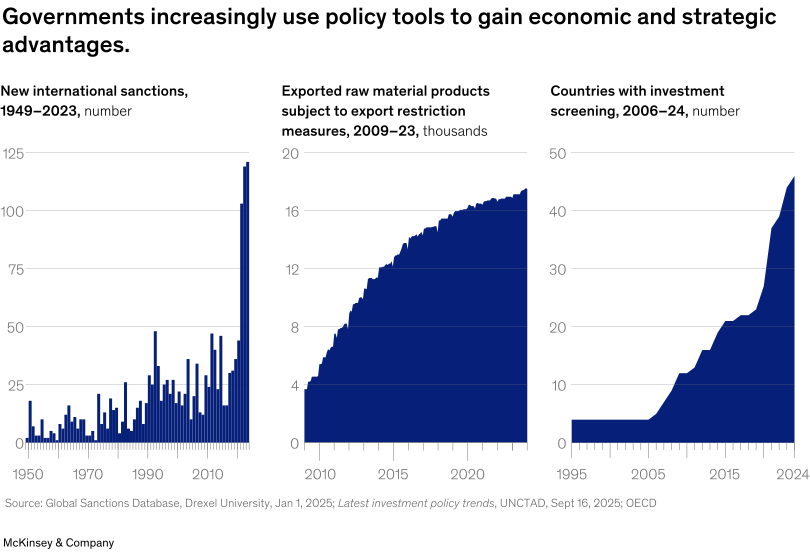
Image description:
A set of 3 bar charts illustrates the increasing use of policy tools by governments to gain economic and strategic advantages. The first segment, subtitled “New international sanctions, 1949–2023, number,” shows a bar graph with a significant spike from 2020 onward, reaching ~125 new sanctions, with a generally increasing trend from the 1990s onward, although with some fluctuations. The second segment, “Exported raw material products subject to export restriction measures, 2009–23, thousands,” displays a steady increase from ~4,000 in 2009 to slightly less than 18,000 in 2023. The third segment, “Countries with investment screening, 2006–24, number,” shows a gradual increase from ~5 countries in 2006 to ~10 in 2015, followed by a sharp rise to nearly 50 countries in 2024.
Note: This image description was completed with the assistance of Writer, a gen AI tool.
Source: Global Sanctions Database, Drexel University, Jan 1, 2025; Latest investment policy trends, UNCTAD, Sept 16, 2025; OECD.
End of image description.
To read the article, see “Upgrading corporate affairs for a new geopolitical era,” October 8, 2025.