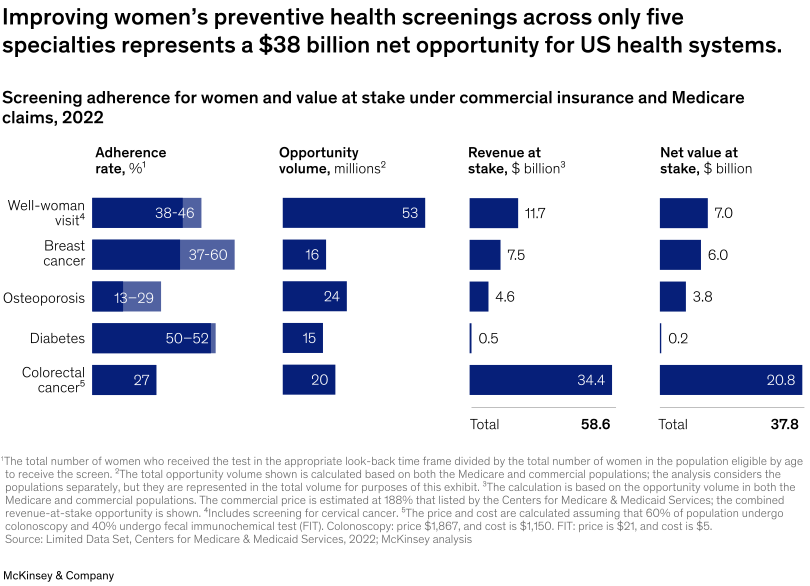
Women in the United States face greater barriers to healthcare than men, leading to preventable suffering and billions in avoidable costs each year. Although women see clinicians more often, they frequently miss essential preventive care. Improving women’s preventive care in just five settings could close the gap of an estimated 130 million missed screenings and generate up to $38 billion in net value. Delayed prevention also increases disease risk and drives more complex, costly care later. Clinical care organizations have an opportunity to improve health outcomes, access, and experience for women while strengthening financial sustainability, say McKinsey’s Jordan VanLare, Pooja Kumar, and coauthors.
Image description:
A horizontal bar chart presents data on US women’s adherence rates to preventive health screenings across 5 specialties—well-woman visits, breast cancer, osteoporosis, diabetes, and colorectal cancer—in 2022, as well as the associated opportunity volumes (in millions) and net value at stake (in billions of dollars) for US health systems under commercial insurance and Medicare claims. Adherence rates vary significantly by specialty, with diabetes screening adherence ranging from 50 to 52%, breast cancer from 37 to 60%, well-woman visits from 38 to 46%, osteoporosis from 13 to 29%, and colorectal cancer at 27%. Opportunity volumes are highest for well-woman visits (53 million), followed by osteoporosis (24 million), colorectal cancer (20 million), breast cancer (16 million), and diabetes (15 million). The net value at stake is greatest for colorectal cancer at $20.8 billion, substantially exceeding the next highest categories: well-woman visits ($7.0 billion), breast cancer ($6.0 billion), osteoporosis ($3.8 billion), and diabetes ($0.2 billion). In total, potential net value across these five screenings amounts to $37.8 billion, underscoring a substantial opportunity for improved health system outcomes if adherence rates are increased.
Note: This image description was completed with the assistance of Writer, a gen AI tool.
Source: CMS LDS (Medicare) and Valerian (commercial insurance) data sets, 2022.
End of image description.