Robots could soon handle labor-intensive work tasks that until recently only humans could do, such as selecting and placing items, directing instruments, and operating handheld equipment. Many tasks in the consumer and manufacturing sectors could be automated, explain Senior Partner Mark Patel and coauthors, such as retail operations, warehouse work, and chemical processing. Although general-purpose robotics may take years to develop, companies can prepare by setting long-term automation goals and upskilling their workforces now.
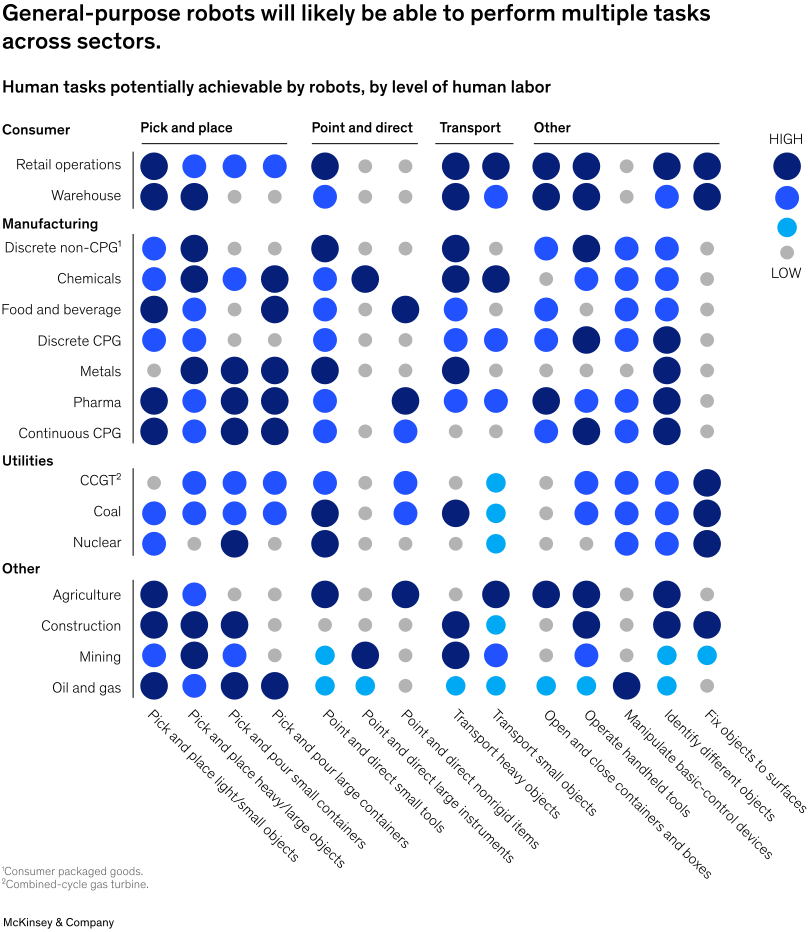
Image description:
A matrix chart illustrates the potential for robots to perform various human tasks across different sectors, with tasks categorized into four groups: “pick and place,” “point and direct,” “transport,” and “other.” The chart is organized by sector, including consumer, manufacturing, utilities, and other, with subcategories such as retail operations, warehouse, discrete non-CPG, and agriculture. Each task is represented by a colored dot, ranging from light blue (low potential) to dark blue (high potential), indicating the likelihood of robots performing that task. The chart shows that tasks such as “Pick and place light/small objects” and “pick and pour small objects” have high potential across many sectors, while tasks such as “identify different objects” also shows significant potential. Notably, the “point and direct large instruments” task has relatively low potential across most sectors, while “pick and place heavy/large objects” has high potential in sectors such as manufacturing and other.
Note: This image description was completed with the assistance of Writer, a gen AI tool.
End of image description.
To read the article, see “Will embodied AI create robotic coworkers?,” June 30, 2025.