In Nigeria, while women’s representation remains steady across the various rungs of the career ladder, entry-level representation is low, at just 33 percent. This initial underrepresentation cascades across the pipeline, constraining women’s representation at more senior positions. Barriers to entering formal employment in Nigeria create a limited talent pipeline of women candidates at the outset, explain Partner Mayowa Kuyoro and coauthors. Surmounting those hurdles is critical to achieving greater gender parity in leadership roles.
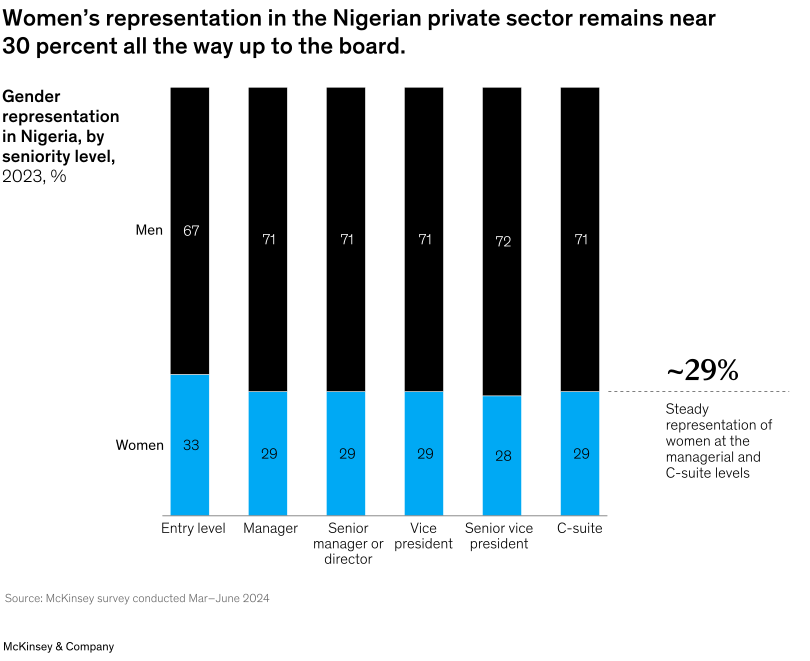
Image description:
A bar chart shows gender representation in the private sector in Nigeria by seniority level in 2023. Each bar is split into 2 sections: a black section at the top, representing men, and a blue section at the bottom, representing women. The percentage of each gender is labeled inside their respective sections. At the entry level, men account for 67% and women account for 33%. At the manager level, senior manager/director level, vice president level, and C-suite level, men account for 71% and women account for 29%. At the senior vice president level, men account for 72% and women account for 28%.
Note: This image description was completed with the assistance of Writer, a gen AI tool.
Source: McKinsey survey conducted March–June 2024.
End of image description.
To read the report, see “Women in the Workplace 2025: India, Nigeria, and Kenya,” May 12, 2025.