Infrastructure underpins global prosperity and modern industry. A confluence of global forces is accelerating the need for infrastructure investment and is changing the very definition of infrastructure, note Senior Partner Ishaan Nangia and coauthors. Traditional structures like roads and power grids now coexist with digital infrastructure such as fiber networks, data centers, and electric-vehicle charging stations—each requiring major, long-term investment. McKinsey projects that $106 trillion in global infrastructure investment will be needed through 2040, spanning seven sectors, led by transportation ($36 trillion), energy ($23 trillion), and digital ($19 trillion). Asia will likely account for two-thirds of the total need due to urban and industrial growth.
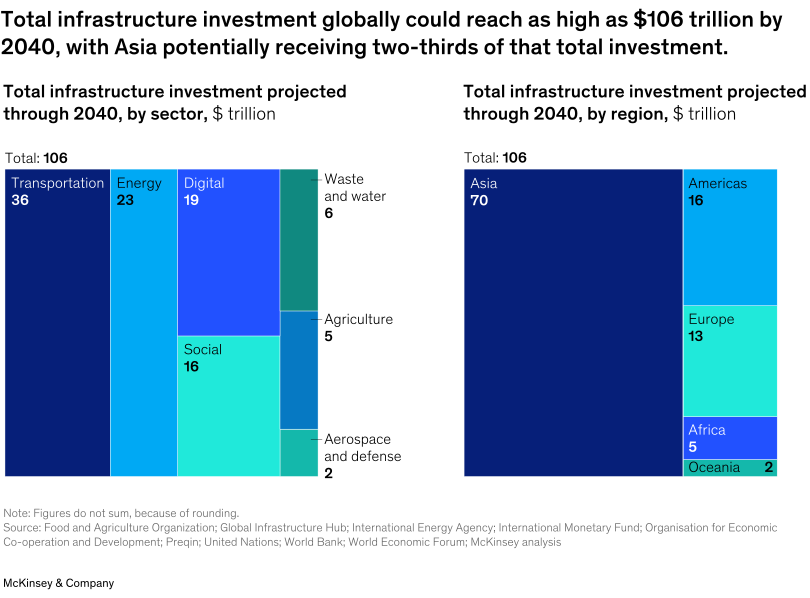
Image description.
A pair of tree map charts compares the total infrastructure investment projected through 2040, by sector and by region, both in trillions of dollars. The chart on the left shows the breakdown by sector, with a total of $106 trillion, and is divided into seven categories: Transportation ($36 trillion), Energy ($23 trillion), Digital ($19 trillion), Social ($16 trillion), Waste and water ($6 trillion), Agriculture ($5 trillion), and Aerospace and defense ($2 trillion). The chart on the right shows the breakdown by region, also totaling $106 trillion, and is divided into five categories: Asia ($70 trillion), Americas ($16 trillion), Europe ($13 trillion), Africa ($5 trillion), and Oceania ($2 trillion). A note at the bottom indicates that the figures do not sum due to rounding.
This image description was completed with the assistance of Writer, a gen AI tool.
Source: Food and Agriculture Organization; Global Infrastructure Hub; International Energy Agency; International Monetary Fund; Organisation for Economic Co-operation and Development; Preqin; United Nations; World Bank; World Economic Forum; McKinsey
End of image description.
To read the report, see “The infrastructure moment,” September 9, 2025.