As companies pursue carbon neutrality, a copper supply deficit looms. Copper recycling, such as through the recovery of postconsumer copper scrap, could help ease supply constraints. The volume of postconsumer copper scrap has increased steadily for 40 years, Partner Sergey Sokolov and colleagues note, adding that it is projected to grow by about 4 percent annually through 2050. The increased use of scrap is due to multiple factors, including more governments and consumers advocating for a circular economy and an increased awareness of the CO2 emissions generated by metal extraction and refining.
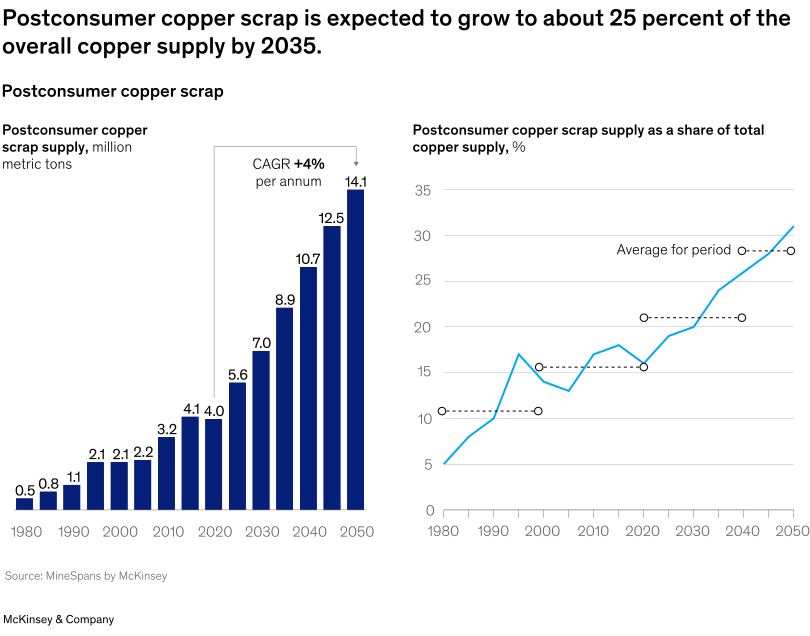
Image description:
A bar chart shows the postconsumer copper scrap supply in million metric tons from 1980 to 2050, and a line chart shows postconsumer copper scrap supply as a share of total copper supply, in percentage, from 1980 to 2050. In 1980, the postconsumer copper scrap supply was 0.5 million metric tons. In 2020, it was 4.0 million metric tons. By 2050, the supply is expected to be 14.1 million metric tons, with a compound annual growth rate of 4%. On average, the share of postconsumer copper scrap supply of the total copper supply was ~10.8% from 1980–2000, ~15.6% from 2000–20, and is expected to reach an average of ~28.3% between 2040 and 2050.
Note: This image description was completed with the assistance of Writer, a gen AI tool.
Source: McKinsey MineSpans.
End of image description.
To read the article, see “Chasing the lost copper: Global scrap and its role in decarbonization,” June 3, 2025.