Canada’s needed health shift for women

Women’s health and productivity are tightly linked, but Canadian women spend 24 percent more time than men in poor health. More than half of the top ten conditions in the country affect women disproportionately and differently compared with men. For example, heart attack symptoms manifest differently, and 78 percent of early warning signs in women are missed. Canada needs a clear, national or provincial strategy to narrow this women’s health gap, say McKinsey’s Laurie Lanoue, Liza VityukLucy Pérez, Marie-Renée B-Lajoie, and Sandrine Devillard. Targeting specific diseases can improve health, reduce early deaths, and strengthen families and communities—in turn potentially boosting the country’s economy by $37 billion annually by 2040—a high-impact investment for the nation.
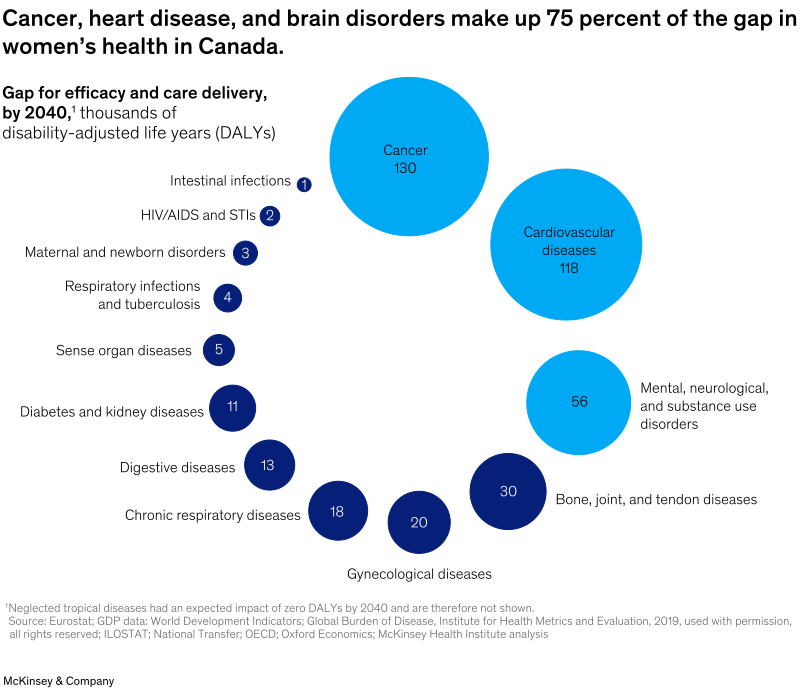
Cancer, heart disease, and brain disorders make up 75 percent of the gap in women's health in Canada.
A bubble chart illustrates the gap in women’s health in Canada by 2040, measured in thousands of disability-adjusted life years (DALYs). The 3 major health conditions are cancer, with 130,000 DALYs, cardiovascular diseases, with 118,000 DALYs, and mental, neurological, and substance use disorders, with 56,000 DALYs. The other health conditions listed on the left include intestinal infections (1,000 DALYs), HIV/AIDS and STIs (2,000 DALYs), maternal and newborn disorders (3,000 DALYs), respiratory infections and tuberculosis (4,000 DALYs), sense organ diseases (5,000 DALYs), diabetes and kidney diseases (11,000 DALYs), digestive diseases (13,000 DALYs), chronic respiratory diseases (18,000 DALYs), gynecological diseases (20,000 DALYs), and bone, joint, and tendon diseases (30,000s DALYs).

To read the article, see “Closing the women’s health gap: Canada’s $37 billion opportunity,” October 22, 2025.