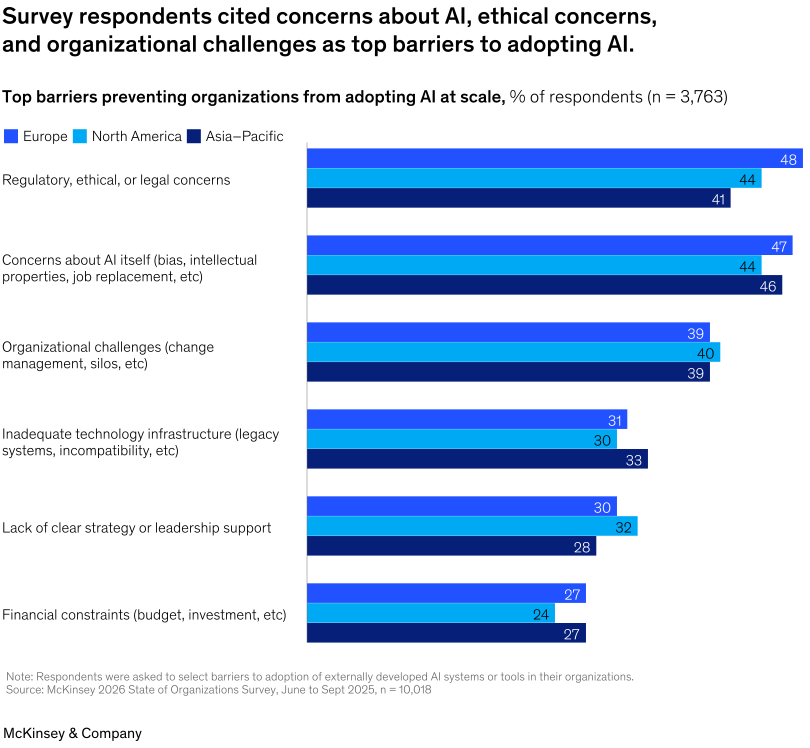
Three tectonic forces are reshaping organizations, according to McKinsey’s latest research—a survey of more than 10,000 leaders across 15 countries and 16 industries: the infusion of technology as AI joins automation and data analytics, growing economic disruptions and geopolitical uncertainty, and workforce changes. Within technology, AI still faces internal resistance despite its potential. The top barriers globally include regulatory, ethical, and legal risk concerns; concerns about AI itself; and organizational challenges such as change management and silos. These survey findings raise questions about how organizations can build a “test, learn, and adapt” mindset and how leaders redefine roles and responsibilities in a world where machines can think, orchestrate, decide, and create, say McKinsey’s Alexis Krivkovich, Damian Klingler, Dana Maor, and Patrick Guggenberger.
Image description.
Horizontal bar chart showing top barriers preventing organizations from adopting AI at scale across three regions. The barriers listed from highest to lowest are: regulatory, ethical, or legal concerns (Europe 48%, North America 44%, Asia-Pacific 41%); concerns about AI itself including bias, intellectual properties, and job replacement (Europe 47%, North America 44%, Asia-Pacific 46%); organizational challenges such as change management and silos (Europe 39%, North America 40%, Asia-Pacific 39%); inadequate technology infrastructure including legacy systems (Europe 31%, North America 30%, Asia-Pacific 33%); lack of clear strategy or leadership support (Europe 30%, North America 32%, Asia-Pacific 28%); and financial constraints including budget and investment (Europe 27%, North America 24%, Asia-Pacific 27%).
This image description was completed with the assistance of Writer, a gen AI tool.
Source: McKinsey State of Organizations 2026 Survey, June to September 2025, n = 10,018
End of image description.