Batteries back the grid

The global energy landscape is undergoing a rapid transformation. As the electric grid grows more complex, battery energy storage systems (BESS) are proliferating. By storing excess energy and discharging it when supply is tight, BESS can reduce system stress and help manage net supply and demand spikes. BESS developers have significant opportunities to create value, help grid operators stabilize their systems, and provide a reserve of swiftly deployable electricity, say McKinsey’s Partners Godart van GendtJesse Noffsinger, and coauthors. A McKinsey analysis of three future scenarios concluded that installed capacity for BESS could grow by about 50 percent annually in each one from 2022 to 2030.
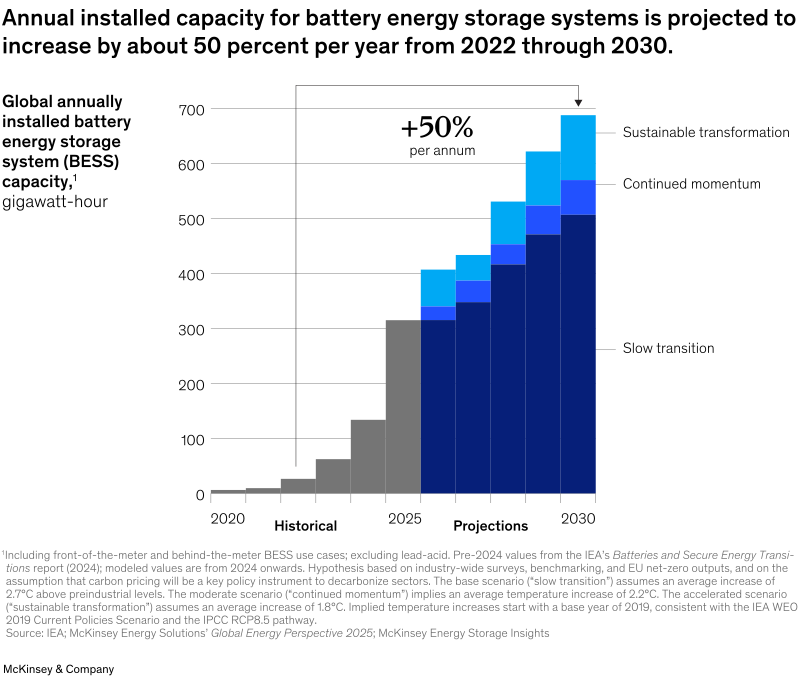
Annual installed capacity for battery energy storage systems is projected to increase by about 50 percent per year from 2022 through 2030.
Image description: A bar chart shows global annual installed capacity of battery energy storage systems (BESS) in gigawatt-hours from 2020 to 2030. Historical capacity grows from near zero in 2020 to about 320 GWh by 2025. From 2025 onward, projections show rapid expansion at roughly 50% annual growth, reaching approximately 500–700 GWh by 2030, depending on scenario. Three scenarios are illustrated: “slow transition” (lowest growth), “continued momentum” (midrange), and “sustainable transformation” (highest growth). Note: This image description was completed with the assistance of Writer, a gen AI tool. Source: IEA; McKinsey Energy Solutions’ Global Energy Perspective 2025; McKinsey Energy Storage Insights. End of image description.

To read the article, see “Powering the future: Strategies for battery energy storage developers,” March 4, 2026.