A new dose for pharmacies

Retail pharmacies—long a critical healthcare resource in the United States—are under mounting pressure that has led to bankruptcies and store closures. Since 2017, roughly 8,600 retail pharmacy locations have closed (13.5 percent), spanning chains, independents, and other types. One reason for that strain is that legacy drug-pricing models have failed to keep pace with rising costs and shifting drug mixes. However, a shift is is underway, note McKinsey’s Alec McLeod, Alok Ladsariya, BJ Tevelow, and Isabella Pesavento: Cost-based reimbursement models—designed to align payment more closely with actual drug and service costs—are gaining traction as an alternative.
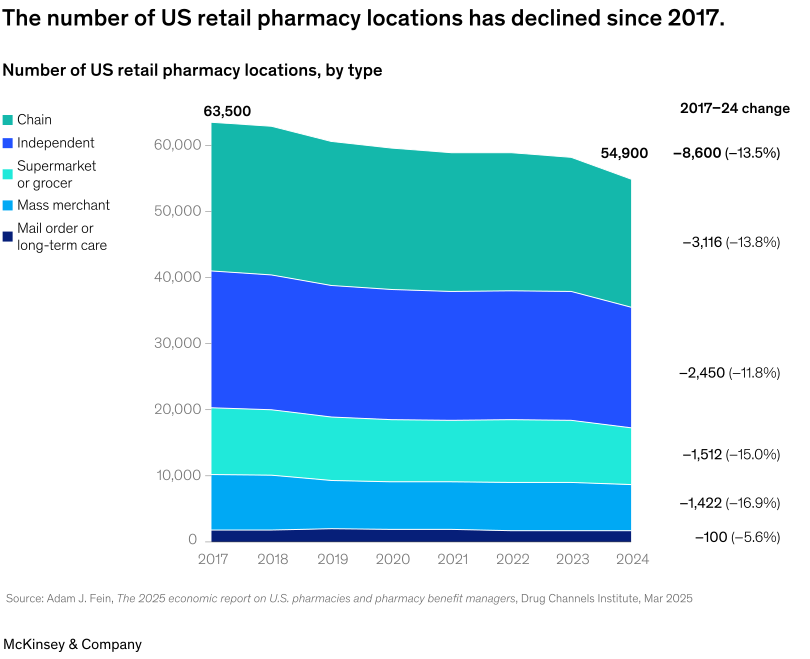
The number of US retail pharmacy locations has declined since 2017
Image description: A stacked area chart displays the number of US retail pharmacy locations, by type, from 2017 to 2024. Total locations decreased from ~63,500 in 2017 to 54,900 in 2024, a 13.5 percent decline. All pharmacy types experienced declines: chain pharmacies decreased by 3,116 locations (13.8%), independent pharmacies by 2,450 (11.8%), supermarket or grocer pharmacies by 1,512 (15.0%), mass merchant pharmacies by 1,422 (16.9%), and mail order or long-term care facilities by 100 (5.6%). Note: This image description was completed with the assistance of Writer, a gen AI tool. Source: Adam J. Fein, The 2025 economic report on U.S. pharmacies and pharmacy benefit managers, Drug Channels Institute, March 2025. End of image description.

To read the article, see “The revival of pharmacy: The rise of cost-based reimbursement,” January 29, 2026.