Retail pharmacies are a critical healthcare resource for patients in the United States, but financial challenges have led to bankruptcies and store closures in recent years. Legacy drug-pricing models have been one area where retailers have struggled. These models have not been able to adapt to shifting drug mixes, and as a result, gross margins from pharmacies have declined. This has had a significant impact on the overall retail pharmacy business because most retail chains today generate 80 percent of their revenue from the pharmacy, versus 20 percent from the front store.1
Today, retail pharmacies rethinking their pricing structures are exploring a new alternative: cost-based reimbursement models. These models could better align the prices of prescriptions with underlying input costs and the services that pharmacies provide. They could also potentially provide greater transparency across the board, bringing much-needed simplicity to a complex system. By helping retail pharmacies address financial challenges and prevent further closures, these models could allow patients to continue accessing care from these critical healthcare resources.
In this article, we outline traditional retail pharmacy reimbursement models and provide an overview of the headwinds the pharmacy industry faces, building on previous McKinsey research.2 We then examine where cost-based reimbursement models stand today and what questions regarding their implementation remain to be answered.
Retail pharmacy is at a critical inflection point
Pharmacy is a central component of US healthcare, with total prescription drug revenue reaching $683 billion in 2024.3 Retail pharmacies play a particularly large role, receiving 13 billion visits per year nationwide, or an average of about 270 million patient visits per week.4
Despite its importance in US healthcare, the retail pharmacy ecosystem has been marked by immense change and challenges in recent years.5 The traditional retail pharmacy dispensing market has experienced greater gross margin compression than many other segments of the US healthcare industry, driven by declining reimbursement and increasing operating costs, including rising labor costs driven by ongoing pharmacist labor shortages.6 At the same time, many retail pharmacies are locked into long-term leases for prime-location real estate.7
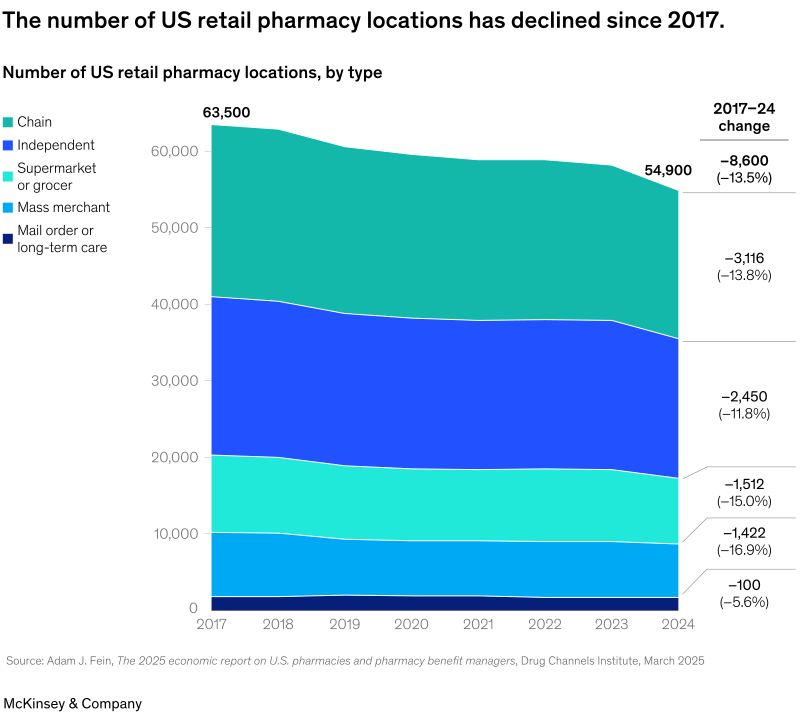
In the face of these financial headwinds, pharmacies across the United States have begun to close, affecting patients’ access to in-person medication pickup and the healthcare services provided by local pharmacies. About 9,000 stores have closed since 2017 across all pharmacy types, including about 3,000 chains, 2,500 independents, 1,500 supermarkets or grocers, and 1,400 mass merchants (Exhibit 1). Looking ahead, some chains have announced additional expected closures, including Rite Aid, which has declared bankruptcy and has sold the pharmacy services of most of its stores.8
As they look for ways to address these challenges, pharmacies find themselves in a bind. Historically, retail pharmacies have mitigated shrinking margins per prescription by growing their overall volumes (for example, through preferred-pharmacy insurance networks) and labor force productivity. However, retailers have exhausted many of these strategies: In 2025, 84 percent of Medicare prescription drug plans had some form of preferred-pharmacy networks, versus 7 percent in 2011.9 More recently, retail pharmacies have meaningfully invested in automation technologies and efficiency innovations to control rising operating costs—such as Walgreens’ 2021 investment in iA to support pharmacy automation initiatives10—yet they still face financial strain.
Neither traditional techniques (such as increasing labor force productivity) nor newer techniques (such as automation and innovation) seem to be sufficient by themselves to address the financial challenges. However, there may still be a way to revive the pharmacy industry by rethinking traditional pricing models.
What is traditional pricing in the pharmacy industry?
In the pharmacy industry, pricing is a complex system involving multiple parties. Drug manufacturers, insurers, and retail pharmacies all affect how much insurers and patients pay for prescriptions. Pharmacy benefit managers (PBMs) were established in the 1960s to coordinate between these parties and help with pricing (see sidebar “Pharmacy benefit managers in the pharmacy ecosystem”).
Historically, PBMs negotiate drug reimbursement rates for pharmacies based on the average wholesale price (AWP) of a drug, an industry-standard pricing benchmark (see sidebar “What is drug reimbursement?”). Contrary to what its name may imply, the AWP generally represents neither the average nor the wholesale price but is rather a published benchmark (historically based on the standard markup for a branded drug’s list price of 20 percent).11
Under this traditional model, pharmacies generate the majority of their margin on generic drugs, whereas they break even (or lose money, in many cases) on branded drugs. This is because generic drugs typically have a more favorable spread between their acquisition costs and their reimbursement rates from PBMs, and therefore better net margins. As a result, retail pharmacies operate under a pricing dynamic called “cross-subsidization,” in which they compensate for negative margins earned on branded drugs with positive margins earned on generics.
Pharmacies’ traditional pricing models have been challenged by ongoing headwinds
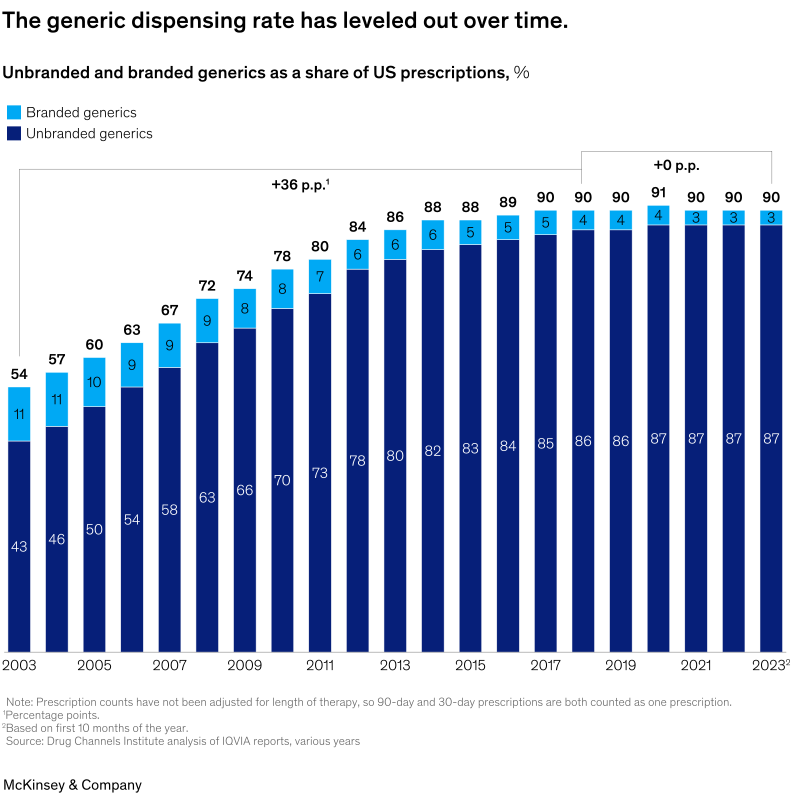
Traditional pricing models were created under different conditions that are no longer at play today. Cross-subsidization worked well for retailers when generic volumes were growing rapidly and new generic launches were occurring as branded drugs lost exclusivity. However, generic dispensing rates have plateaued in recent years (Exhibit 2). The slowdown in generics dispensing is one of the largest factors behind retailers’ financial difficulties today.
The rise in GLP-1s and other popular branded drugs has exacerbated the issue. Branded drugs launch at higher list prices, so the amount of generics needed to cross-subsidize brands increases as the volume of branded drugs grows. Today’s interest in branded drugs, especially GLP-1 drugs, could increase, especially if they become covered by Medicare and other lines of business. This would further compress retail pharmacy margins.
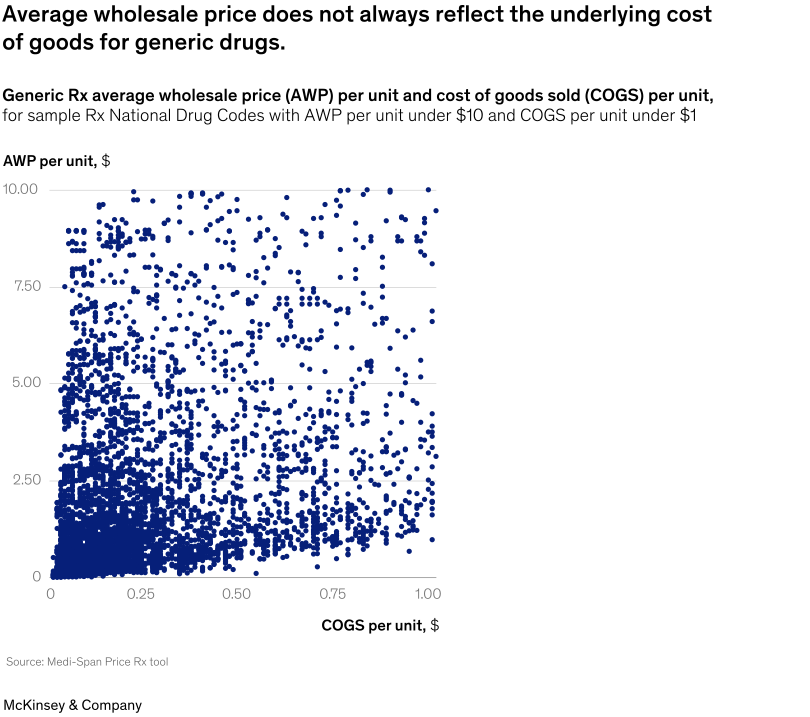
As traditional pricing models make less financial sense, other problems have also come into focus. Under traditional reimbursement models, final reimbursement does not always reflect the underlying cost of goods sold (COGS)—that is, the price that wholesalers charge to retailers. This has created inconsistent pharmacy margins and patient cost shares across products, especially at low dollar amounts (Exhibit 3). This irregularity, combined with the broader complexity of pharmacy pricing as a whole, has contributed to customer confusion and distrust in the system.
To compensate for this disconnect between reimbursement and COGS, an entirely new market has emerged for direct-to-consumer, prescription discount services such as GoodRx, SingleCare, and WellRx. These largely off-benefit services—originally designed for the uninsured but increasingly used by insured patients in place of their benefits—negotiate with PBMs and pharmacies to offer discounts on drug prices at various pharmacies. The emergence of these services has increased patient visibility into medication price differences across channels and has allowed for greater scrutiny into traditional pricing models.
New pricing models have begun to take hold
As pharmacies have become increasingly financially challenged under traditional reimbursement models, some have begun exploring new cost-based reimbursement approaches.
Instead of tying pharmacy reimbursements to the average wholesale price, these models calculate drug reimbursement based on how much it costs a pharmacy to acquire a drug (COGS), plus additional fees and markups to cover costs such as pharmacist counseling, dispensing, and shipping.
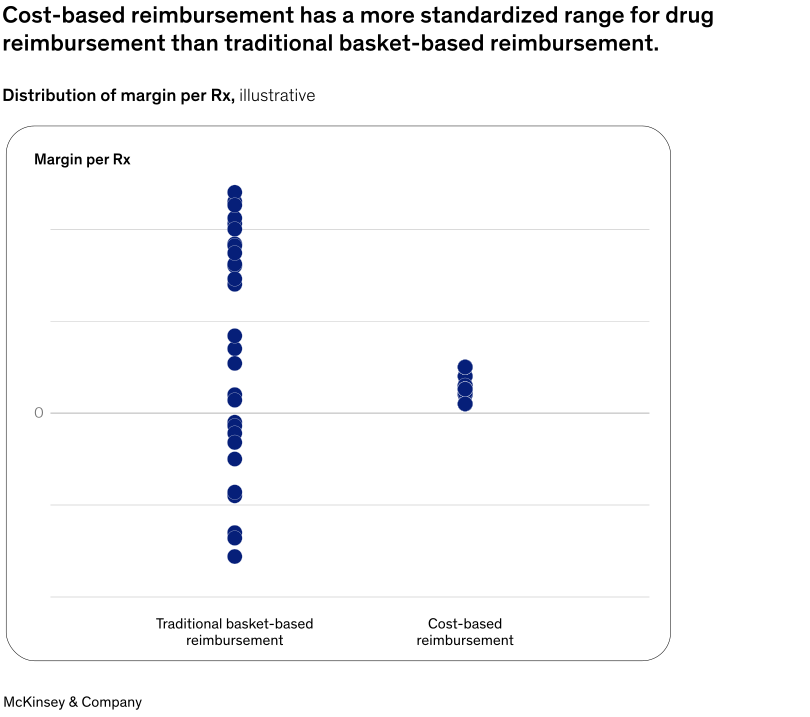
By tying costs to COGS, not the average wholesale price, cost-based reimbursement means retailers do not need to rely on cross-subsidization of branded and generic drugs. It also creates a more transparent, consistent, and predictable margin earned per prescription dispensed, with opportunities down the road to match benefit coverage to respective prescriptions (Exhibit 4).
Cost-based reimbursement alone does not necessarily increase or decrease margin, but it can improve margin composition in a couple of ways. First, reducing cross-subsidization can create more predictable margins. Second, pharmacies can use this enhanced visibility into their cost to fill prescriptions for clearer, more productive conversations with PBMs.
Some players have already built systems based on cost-based reimbursement. For example, Mark Cuban Cost Plus Drug Company (MCCP) carries about 2,300 products primarily through online channels, with reimbursement based on their stated underlying drug costs.12 CVS Pharmacy transitioned its commercial, Medicare, Medicaid, and cash discount contracts to the CVS CostVantage cost-based reimbursement model.13 PBMs have also started to develop their own cost-based models to use with employers, insurers, and pharmacies, such as TrueCost (Caremark) and other newly announced models from other PBMs.
PBM cost-based reimbursement models are still nascent, but their adoption may accelerate in the coming months and years as clients and other stakeholders increasingly call for changes to PBM reimbursement practices.14 For example, West Virginia now requires reimbursement for prescription drugs and pharmacy services to be above the national average drug acquisition cost (NADAC, a voluntary survey-based pharmacy acquisition cost index) and established a preset professional dispensing fee.15 Still, some employer and health insurance plans have raised concerns with recent state legislation on PBM reimbursement, stating that it could increase healthcare costs.16
Cost-based reimbursement models are showing early promise, with some outstanding questions
Cost-based reimbursement shows promise, though it may affect each of the critical players across the pharmacy value chain differently. For retail pharmacies, PBMs, plan sponsors, and patients, a few questions remain.
Retail pharmacies
Cost-based models can remove cross-subsidization, protect against future mix shifts, and allow for more transparent, predictable margins per drug dispensed. In addition, pharmacies can maintain margins on drugs while passing along savings on drug costs (such as for generic medications) from wholesalers or manufacturers to stakeholders across the value chain.
However, pharmacies will still need to negotiate with PBMs on the final total drug reimbursement and mitigate overall script-level margin compression. They will also need to continue to drive increased operational efficiencies.
If cost-based reimbursement expands to become the industry-wide model, there could be industry desire for a universal cost-index benchmark. Pharmacy players such as MCCP and CVS Pharmacy use their own individual COGS to determine prices, but if cost-based models take off more broadly, more pharmacies could explore other cost bases that these models could potentially use—such as NADAC, predictive acquisition cost, wholesale acquisition cost, or an entirely new cost index.
If cost-based models gain prominence, pharmacies should seek to answer the following questions:
- How will overall reimbursement levels unfold under new models? Will pharmacies be able to maintain consistent reimbursement levels, or will historical trends prevail?
- If pharmacy costs and network access become increasingly predictable under cost-based models, how will pharmacies provide an enhanced value proposition for patients? Will pharmacies increasingly need to be centered on patient engagement, convenience, personalization, scope of healthcare services, and innovation?
PBMs
As retailers adopt cost-based reimbursement plans, PBMs will likely need to adopt these models in tandem. Although cost-based reimbursement between pharmacies and PBMs helps create transparency in one part of the drug ecosystem, PBMs will still need to navigate their own contracts and cost guarantees with plan sponsors and employers. These often come up for renewal every three years, whereas contracts between PBMs and pharmacies are often shorter in duration and therefore can be negotiated sooner.
If they develop cost-based reimbursement systems, PBMs will need to wrestle with the following questions:
- If more PBMs create their own cost-based models, how will PBM-driven cost-based models integrate or coordinate with pharmacy-driven cost-based models?
- How will pharmacy network designs and network guarantees offered to employers change? How will consultants evaluate competing cost-based reimbursement proposals?
- How will PBMs manage the risk of cost fluctuations for their clients as underlying drug costs change?
Plan sponsors
Given that cost-based pharmacy models reflect only the reimbursement of PBMs to pharmacies, these models have limited direct bearing on patient out-of-pocket costs. Instead, sponsors (such as employers and health plans) will have a role to play in creating transparency for patients via the broader design of plan benefits.
Plan sponsors can consider the following questions:
- How will plan sponsors buy pharmacy services from PBMs in the future (for example, historical brand effective rate or generic effective rate pricing versus newer cost-based arrangements)?
- How will sponsors change their plan designs (if at all) at the eventual time of renegotiation, taking into account patient visibility and out-of-pocket costs?
- In a cost-based world, as more complex brand drugs are approved and patient demand increases (as it has for GLP-1s), how will sponsors react to increasing drug costs?
Patients
If cost-based models can create more sustainable economics for retail pharmacies, pharmacies may be able to reduce store closures, and patients may be more likely to maintain access to their local pharmacy of choice. The ultimate impact on patient out-of-pocket costs will depend on how plan sponsors adjust plan designs.
Implementing cost-based models raises a few questions regarding patients, such as the following:
- Will employers and health plans adjust plan designs to ensure transparency for patients?
- How will patient out-of-pocket costs change, if at all?
Cost-based reimbursement models are showing early traction among major PBMs, and they could bring the pharmacy value chain up to speed with today’s shifting needs. As a critical step in building trust-based relationships among PBMs, pharmacies, plan sponsors, and patients, these models could bring about much-needed simplicity to a complex system.