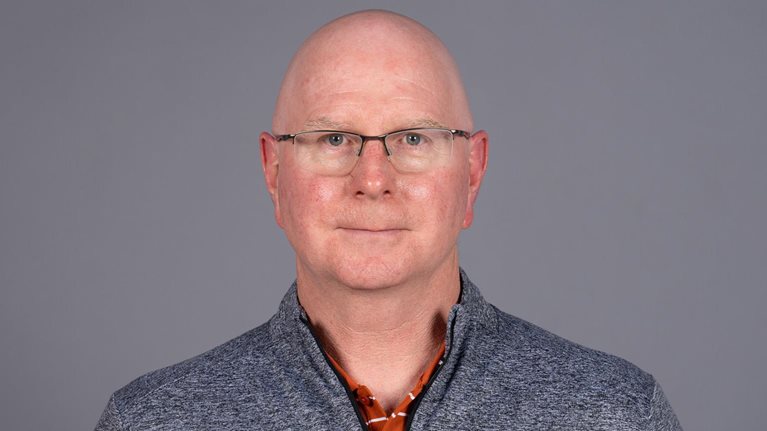
A full-body MRI took about an hour. Then came the call: “We found something. It seems serious.” For McKinsey Senior Partner Seth Goldstrom, it was a stage 1A kidney tumor, caught early and removed. In this conversation, part of the Winning series, Goldstrom and McKinsey Senior Partner Kevin Carmody speak with Andrew Lacy, founder and CEO of Prenuvo, about why he believes he saw the future of healthcare, what a failed pricing experiment taught him about psychology, and how Prenuvo is trying to turn a one-time scan into a lasting health partnership.
The following transcript has been edited for clarity and length.
One scan, one unexpected call
Seth Goldstrom: Andrew, can you tell us what Prenuvo does?
Andrew Lacy: I founded Prenuvo in 2018. We do very detailed whole-body MRI examinations. We go from head to ankle, screening every major organ in the body.
We’re looking for any disease. We provide patients with a detailed report on what we see and what we don’t. Most important, if we see something, we indicate whether there’s anything they should do about it. The goal is to equip our members with the information they need to take control of their health and ideally improve its trajectory going forward.
Seth Goldstrom: Prenuvo saved my life, and I’m very appreciative of that. I thought it would be a good idea to try, so I did the full-body MRI. It took about an hour. Then I got a call from one of your folks: “Well, we found something. It seems serious.” There was a mass in my kidney.
In many respects, I was a poster child. It ended up being a stage 1A tumor, which I was able to have taken out. It’s been a couple of years, and I seem to be in great shape.
Andrew Lacy: That’s fantastic. Thanks for sharing. Those are the stories that fuel the company.
‘I’d seen the future of healthcare’
Kevin Carmody: You’d been an entrepreneur, but what made you want to start this company?
Andrew Lacy: I had entered my early 40s, and I had spent the early part of my career working very hard, not sleeping enough, having a lot of stress, not getting enough exercise. I was basically living the kind of life that the vast majority of us do when we want to get ahead.
I was about to start a new company, and I remember looking in the mirror and saying, “I’m at the precipice.” Then this thought popped into my mind: “How do I know if I’m going to be around to see the outcome of all this effort?”
I heard of someone doing an earlier version of what we now do at Prenuvo, whole-body scans, and I went up to Canada to get one. I was so nervous, I almost canceled a couple of times.
After the scan, I sat down with the radiologist, and we went over my entire body. One, I learned that despite my best efforts, I was generally in good health. Two, I thought it was incredibly cool to get such a comprehensive level of information about my health—information the health system had never given me in my entire life.
I just couldn’t shake this idea that I’d seen the future of healthcare. I talked to about a hundred customers there, and I saw people get all sorts of results. But at the end of those consultations, they typically got up and hugged the radiologist. Regardless of what they heard, they were so grateful to really understand what was going on with their health. So I stopped what I was doing, and I started Prenuvo.
Seth Goldstrom: Roughly what percentage of scans do you find something potentially life-threatening that people had no idea about?
Andrew Lacy: On average, we’re seeing a potentially lifesaving finding in roughly one in 20 people. These conditions may be there for many years, and you want to catch them and do something about them.
Steer toward a North Star, one waypoint at a time
Seth Goldstrom: How do you define winning at Prenuvo?
Andrew Lacy: We call that ambition. I use a sailing analogy: There’s some destination off over the horizon. People are working hard to improve our health system incrementally. But as a result, it’s becoming more expensive, and we’re not really improving outcomes for individuals. We believe we need to completely transform the healthcare system. At Prenuvo, we partner with our patients to deliver proactive health insights and bring the idea of executive health to millions of people. That’s the North Star for us.
Seth Goldstrom: How do you translate that mission into metrics?
Andrew Lacy: I have waypoints. A waypoint might be a year or two into the future. If we’re sailing, we know our destination. But on any given day, week, or month, we need to understand exactly where the winds are blowing us. Day to day, we have strategic initiatives with their own deadlines and KPIs.
If we’re sailing, we know our destination. But on any given day, week, or month, we need to understand exactly where the winds are blowing us.
It also affects what we say to our customers. We see ourselves as that intermediate waypoint. Your daily habits, such as exercise, what you eat, and your sleep patterns, are what you control day to day. We’re the yearly waypoint. The goal is to help you understand, “Did you hit the waypoint you expected to? And how are we going to adjust going forward?”
Reward the experiment, not just the outcome
Seth Goldstrom: What broad set of capabilities are you working on, and what really lets you win?
Andrew Lacy: We’re constantly reevaluating. We don’t know exactly what those activities are, because there aren’t great analogies of other companies that have transformed healthcare. We are trailblazing, to some extent. The most important capability is an experimental mindset: celebrating both the outcomes and the act of experimenting.
As CEO, I absolutely don’t know all the answers. Neither do my executives. We have ideas and hypotheses, and we want a team that is comfortable running with them and that measures activity as much as outcome.
Seth Goldstrom: What are some experiments you’ve tried that have worked and some that haven’t?
Andrew Lacy: We always had a scan that cost around $2,500. But I wanted to have something under $1,000. I figured, “We have a pretty normal, elastic demand curve. The more we can reduce the price, the more demand we’ll be able to tap into.” So one of my first experiments was to offer a cancer screening exam at $999.
It turned out that was probably the least popular exam we ever offered. We still have an inexpensive exam, but most people choose our comprehensive offering. It made me reevaluate how people make choices. They can’t just be making price-versus-benefit decisions. Maybe the most important challenge for the company is figuring out how to change people’s mindsets about healthcare. It set me down this path of trying to understand psychology as much as classic market dynamics.
Why so many people would rather not know
Seth Goldstrom: There’s a set of people who don’t want to know how they’re doing. And there’s a different set who are OK with knowing how they’re doing, but they don’t want anyone else to know. Is that a challenge for you?
Andrew Lacy: When I talk to my classmates from graduate school, they always say, “Hey, how’s Prenuvo going? Such a great idea. I have to come in at some point and get my scan.” And then another year goes by, and they don’t do it.
We have been conditioned by a reactive healthcare system. When you hear about a diagnosis, it’s always advanced, always serious, because that system doesn’t diagnose things early. So why on earth would we want to go looking for things?
When you start to understand that you can diagnose these things early, you realize that disease is not binary. It’s not something you have or don’t have. It’s a process that can play out over decades of your life. If you read the definition of dementia, the clinical symptoms and advanced disease are baked into the definition.
We’ve now imaged well over 100,000 brains. You can start to notice, “OK, blood flow in this person’s brain is changing.” We believe we can start seeing those changes potentially 20 or 30 years before you might ever arrive at a clinical diagnosis. Then our job, together with the patient, is to affect their trajectory so they never arrive at that point for the rest of their lives.
Seth Goldstrom: Are there things you do to try to shift people’s mindsets and learn more about themselves, or is it innate?
Andrew Lacy: There’s no silver bullet. Many people knew someone who ended up in the hospital with COVID or passed away [from the illness], and typically those people had underlying comorbidities they didn’t know about. I think COVID fostered a distrust in the healthcare system and really encouraged people to ask questions: “Well, if they’re not going to look after my health, I need to look after it myself.” The number of people who are receptive to proactive healthcare is growing.
Only a very small percentage of people receive scan results you might consider scary. But about one in five make a significant lifestyle change because of what they see on their scans. The lifesaving scans are fantastic; the number of lives we’re saving is a North Star for the company. But I really like the idea of partnering with people and nudging their health in the right direction.
When you read about blue zones where people live longer, and see where those places are, these people might be living a long time, but they’re living relatively simple lives. We’re all working hard because we want a better life for our families, or we want to change the world. So we’re “debiting” from our health every single day.
Our goal is to make sure we all understand the other side of that equation, so we can make more informed decisions about how we live our lives, without judgment. The list of longevity interventions I personally follow is relatively short. I work very hard, I have a young child, and I got about four hours’ sleep last night. But I’m not going to not have a child just to protect my sleep metrics.
Turning a one-time scan into a lifelong partnership
Seth Goldstrom: How do you use data and look at not just the averages but also the tails and outliers?
Andrew Lacy: We are collecting a tremendous amount of data. We’ve started to combine it with blood, and in the future, we want to combine more modalities. The more patients we get, the more data we have. The more data we have, the more insights we can feed back into the product. That’s the flywheel we’re creating.
The more data we have, the more insights we can feed back into the product. That’s the flywheel we’re creating.
Kevin Carmody: Many of the teams we’ve talked with have developed a customized system of low-friction habits to get people to perform better. Beyond the scan itself, how do you think about changing patients’ habits?
Andrew Lacy: We’ve rebuilt our entire product so that the most important lens is longitudinal. The reason people come in for the first time is not the reason people stay. Maybe they heard about a friend who had a scan. What brings them in the second time is this idea that “I could actually change the trajectory of my health.”
It’s a real challenge for us right now: How do you completely change the relationship people have with the company so they see us as a partner, similar to the way you might see a dentist? You don’t have pain you’re necessarily worried about, but you’re coming in routinely.
Kevin Carmody: How is your team advising patients after the scan so they leave with a plan to improve their health over the next year?
Andrew Lacy: We have a clinical team of about 200 people. After your scan, you sit down with a medical practitioner who goes through your report. You can ask questions, and they provide context. Then we have check-ins throughout the year to see how you’re doing.
Converting skeptical doctors and building a team of pioneers
Kevin Carmody: How do you get doctors on board to help continue to coach their patients?
Andrew Lacy: It’s hard. Doctors are often not early adopters. When I first started the company, I asked a bunch of doctors, “What do you think about this idea?” Almost universally, they said it was a bad idea. But in the very early days, we brought in some doctors to experience it. Maybe 80 percent of them were against it before trying it. Afterward, more than 80 percent of them were referring patients.
So, there’s this information asymmetry. That gave me the conviction to start the company because I think transformative companies are built in the context of information asymmetry.
We now get a lot of referrals from physicians. Through physicians and through customers, we’re being introduced to enterprises. A lot of companies have a chief medical officer who makes decisions about benefits and plans, and now we’re starting to screen employers as well. I hope eventually insurance companies will cover us. There’s a journey you go through, and physicians were a really important step in the process.
Seth Goldstrom: Is it a view around cost versus benefit, false positives, and putting more demand on the system? Or is it that they don’t believe you can influence outcomes?
Andrew Lacy: Traditionally, 80 percent of a physician’s job has been trying to figure out what’s wrong with you. So if a patient comes to me with a detailed picture of their state of health, what’s my job? I’m not a diagnostician anymore. I’m a physician coach.
It’s been one of our challenges in hiring because we’re also asking our internal physicians to play a different role from what they may have done for the past 20 or 30 years, and not everyone can make that leap.
Kevin Carmody: What’s the secret to building a great team at Prenuvo?
Andrew Lacy: For me, it’s about getting a balance of two different things. Inside the company, we call them pioneers and platformers. The pioneers try new things, the majority of which might fail. The platformers build scaffolding around what works. Every company needs a good mix of those two types of people if it’s going to continue to evolve, grow, and scale.
The pioneers try new things, the majority of which might fail. The platformers build scaffolding around what works.
Seth Goldstrom: When you think of the people on your team who are the best at coaching someone to change their behavior, what makes them great?
Andrew Lacy: The typical healthcare interaction is not a very good one. If we can find people who are about empowering customers to take control, in a space where the patient is typically a passenger in their own health, it’s such a fundamentally different relationship.
A lot of people got into healthcare to help people. But if you’re only catching things late, you’re in palliative care. You’re not in healthcare.
Kevin Carmody: As you grow, how do you communicate that culture across the organization?
Andrew Lacy: We have a Slack channel called Why We Do This. Every positive health outcome story we hear, we post in there. And we try to call out everyone who touched that customer. That’s important because the health business is very complex, and a particular person has connections with 20 people inside the organization.
We bring patients back into our monthly all-hands. At our next one, we’ll have a patient speak to the entire company about how our service helped improve their health. Every day, we’re looking for ways to connect people to the mission.
A 40-year-old spine at 25, and why it’s never too late
Seth Goldstrom: We’re all doing things today whose impact may not show up for ten or 20 years. But there are simulations and software tools that can say, “If you do this today, here’s the range of outcomes 30 years from now and what’s most probable.” How do you think about that at Prenuvo?
Andrew Lacy: It is really important, and it starts with benchmarking. For example, our first clinic was in Vancouver, Canada, and the average age of our customers was 52. When we opened our second clinic in Silicon Valley, we had 20- and 30-year-olds coming in to get scans.
We collected more than 10,000 spinal images and used AI to build an algorithm that estimates the spine age of any given individual. When we looked at the curve, there was this kink at the bottom. We thought it was a problem with the model. But we went back and talked to the radiologists who were reading these exams. What the kink showed was that it was really hard to tell the difference between a 25-year-old spine and a 40-year-old spine. They’re pretty much the same.
The hypothesis we had as a medical group was, “Well, younger people are less active. They’re spending more time sitting down.” So we’re seeing this degeneration happen much earlier than we otherwise would have expected. I think we were one of the first to really see this quantitatively.
It was a big wake-up call for me. That was the beginning of saying, “Well, if we can show a 20-year-old that they have a spine that looks like it’s 40, and they may still be asymptomatic for the next 20 years, what a great moment they have to change the trajectory of their spine health.” And it’s usually little things. At my first scan, I had cervical spine problems. I have a walking treadmill desk now, and my spine has not gotten any worse over the past eight years.
I think there’s real promise in being able to develop an organ age and give you something whose trajectory you can track more precisely over time. But what we’ve found as we look inside the body is that everyone is unique. You might have a very wide spinal canal, so you could have quite a bit of disc slippage and bulges but never have it affect your quality of life. Someone else might have a very narrow spinal canal, so even a small bulge can touch the spinal cord, and they’ll start to get tingling or pain in their extremities. It’s the ability to look inside that enables us to personalize advice to everyone.
Kevin Carmody: What advice would you give to people who are where you were ten or 15 years ago?
Andrew Lacy: The hardest lesson for me is this: The first half of my career, I worked in very high-performing organizations. The challenge when you move from that world to entrepreneurship, and to leading diverse teams, is that all the things that worked in those other environments don’t work in this one.
As the organization grows, everything I do is about people. Probably 70 percent of my day involves coaching individuals, thinking about how we create the right culture, or opining on how to change our recruiting practices so we draw the right type of people. You can have the best plan, but if you can’t figure out how to build an effective organization of individuals working together, you’ll never achieve it.
Kevin Carmody: What’s the one thing you’re most excited about as you look to the future with Prenuvo?
Andrew Lacy: One thing I appreciate about this company is that it’s probably the first time my parents actually understand what I’m doing. I can talk about it to other people, and they’ve either heard about it or they can appreciate how it could be really meaningful.
As I’ve aged, I think what you want to get out of your life changes. It becomes about, “I want to do something my daughter’s going to be proud of.” I would like to do some small thing to help move the world forward in the health industry and leave it in a better place. That’s why it’s never too late to start a company.