In this edition of Author Talks, McKinsey Global Publishing’s Eric Quiñones chats with Caroline Webb, a former McKinsey partner and current senior adviser, about Leadership Intelligence: Science-Backed Strategies for Mastering 21 Everyday Management Challenges (Crown Currency/Penguin Random House, September 2026). Drawing on cognitive and behavioral research and lessons from successful senior leaders, Webb explains how understanding the human mind can help leaders make better decisions, bring out the best in their teams, and navigate uncertainty. An edited version of the conversation follows.
Why did you write this book, and why now?
I’ve been coaching and advising leaders for more than 25 years. I use an approach grounded in cognitive and behavioral science because I’ve seen time and again that understanding how the mind works makes it a lot easier to make the most of the human talent on your team.
As AI becomes more capable and universal, understanding the human mind becomes more important because the leaders who stand out will be those who know how to make the most of human intelligence alongside artificial intelligence. This means maximizing human strengths such as critical thinking, interpersonal insight, and the ability to build trusting relationships.
I wanted to write a book that puts that understanding of human intelligence into the hands of leaders everywhere. Knowing how busy we all are, I was motivated to make it super easy to use and immediately relevant to the leaders reading it. It’s formatted as a playbook that you can easily dive into. It’s built around specific challenges that I’ve seen crop up again and again in my years of coaching. And it’s comprehensive enough to match the full range of what managers and leaders do in the modern workplace.
How do you define leadership intelligence?
Leadership intelligence relates to how leaders can make the most of all the intelligence on their teams, including human and artificial intelligence. When it comes to the human dimension, it’s about knowing exactly how to help your people think better, perform better, and cope better with the ups and downs of working life—understanding what works and why it works.
We need intelligent leaders now more than ever. By that, I mean cognitively intelligent and emotionally intelligent. We need leaders who can think about complex issues without falling into thinking traps, and we need leaders who can bring people on the journey—because it will be one heck of a journey.
The leaders who stand out will be those who know how to make the most of human intelligence alongside artificial intelligence.
How do you incorporate insights from cognitive and behavioral science to help leaders develop their key strengths?
I organized the book around three core leadership strengths: deliberate wisdom, intrinsic inspiration, and reasoned resilience. I’ll walk through each of them.
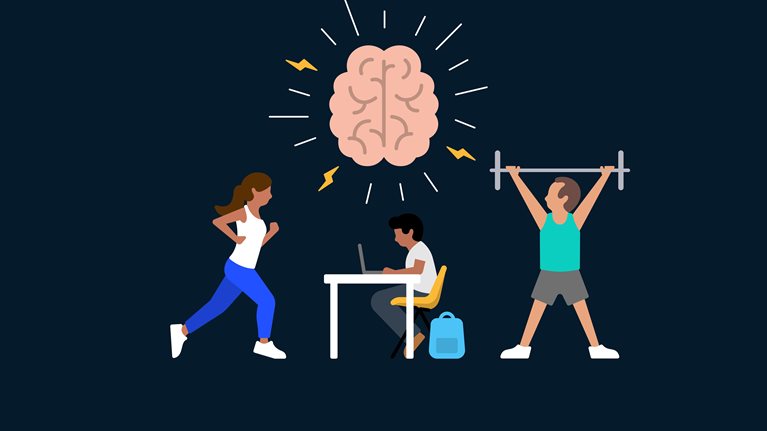
Wisdom is underpinned by the science of how the brain processes information. It’s about getting a good read on the situation and making good choices about that situation—managing both analytical and interpersonal issues. If you understand that the brain has limited conscious attention, you become much more deliberate about where you allocate that attention, how you make the most of it, and how you widen your perspective when necessary and lighten the cognitive load when you don’t need to fritter it away on unnecessary tasks.
Inspiration is reinforced by the science of how the brain processes reward. That’s the engine of human motivation. If you’re trying to bring out the best in your team, you want them to feel energized and engaged in what they’re doing. The human brain is deeply engaged by feeling personally competent, capable and in control, connected to a team, and useful in the world. If you keep competence and connection top of mind, you’ll have a much deeper, richer handle on how to bring out the best in your people.
Finally, resilience is based on how the brain processes threats, including anticipated threats. What’s interesting there is that stress is very much the brain’s prediction that a situation is going to be difficult and unmanageable. So whatever leaders can do to make situations feel more manageable—and perhaps more meaningful so that they’re less unpleasant as well—is a recipe for helping people build the kind of inner resilience we all need these days.
How can executives use AI to become more effective leaders?
Any discussion about leadership today needs to touch on or incorporate the realities of AI. It’s very exciting. Ideally, you want to have a very deliberate, intentional approach to thinking about how your artificial intelligence complements your human intelligence.
That starts with getting really clear about what is distinctive about being a human leading other humans. What is it that you’re good at that can’t yet be subcontracted to technology? It’s about critical thinking and judgment when there isn’t a clear right answer—and accepting accountability for those choices. Then there is building relationships and trust and developing people and helping them grow. There is reading the room, so you know the source of the tension and stress and understand how to adapt your approach.
By being clear that these are their unique value adds as human leaders, the strongest leaders I’m seeing are using AI in two ways. First, by using it to create more room for them to focus on their highest-value work. They’re smart about using AI for the background processing we do day-to-day: research, summarizing, organizing, generating options and first drafts, and more. They’re deliberate about that in their own work, not just on their team, to free up time for them to do what only they can do.
I also see them using AI to get better at human strengths, such as critical thinking and exercising moral and ethical judgment. They can sit with their favorite AI tool and say, “Help me see all the angles. What am I missing? How could this play out in a few years?” They can use AI to make themselves more distinctive.
How can leaders build wisdom and stay focused on priorities while being deluged with information?
Fifteen years ago, I wrote an article on information overload for the McKinsey Quarterly. It received a lot of attention because people were very worried about the fragmentation of their attention. Of course, maintaining focus is even more challenging today, as leaders have any number of new ways to interact and become distracted.
The leaders I know who handle this well understand that their conscious attention is limited; they need to be deliberate about where they place it and know that splintering it means that no task gets their full intelligence. In practice, that means they are very clear about what their unique value add is as a leader. They are extremely conscious of where they need to simplify and delegate, or perhaps even defer or drop things, so they can focus on what really matters.
Also important is batch processing of their messages. One CEO I was coaching was feeling quite frazzled, and it turned out that she was on Slack all the time because she wanted to be responsive to her colleagues in a largely remote-first company. That was fragmenting her attention in a way that made it hard for her to think about anything in depth, and she was very conscious of that. There’s real power in batching your interactions with whatever messaging platform you’re using so that you’re not scattering your attention throughout the day. That means turning off notifications. That means being deliberate about removing distractions, even in your physical environment. Anything that takes up some of your scarce conscious attention is going to make it harder for you to think at your very best.
Those are the habits that I’ve seen leaders increasingly adopt since I wrote that article. I see real movement, but as new platforms and technologies emerge, leaders still need to relearn many of these habits daily, weekly, or monthly.
Often the things leaders saw as being distinctive about their style began as blind spots they discovered early in their careers, and they worked on them until they became strengths.
How can leaders understand which types of rewards are the most inspiring or effective for their teams?
The brain’s reward system is a complex network of different parts of the brain and different neurochemicals. Again, it’s the engine of human motivation. It’s what makes us want and enjoy things. That matters because the research is clear: More motivated teams perform better.
You want people to feel engaged, excited, and interested in what they’re doing. If you look at what engages the reward system, money does, of course. But so do intrinsic rewards, or what we might think of as psychological rewards in the sense of how we feel about our place in the world. In my experience, the intrinsic rewards that you want to know about in the workplace are clustered around competence and connection. This means making people feel appreciated, helping them feel they’re learning and growing, and helping them feel that they are collaborating well, they trust their team, and their work is useful.
If you do that, the motivational effects in the brain are longer lasting than those of money. The challenge with any kind of financial perk is that it’s limited and you can’t give a bonus to everybody every single day. But with psychological rewards, there’s really no limit. I mean, you can’t praise everybody every moment of the day, but there’s a lot less constraint on your ability to say, “Hey, I saw that you did that, and that was really good.” You need to do that anyway. Why not invest in making it a richer experience that helps people get to know and trust each other? If you know these things are going to be central to your team’s level of engagement, then it gives you a sense of what really matters as a leader.
Do many leaders struggle to develop the ‘soft skills’ that support connection in their teams?
I find that once leaders understand that this is about engaging the brain’s reward system, it all seems a lot less soft because you’re helping human beings feel that their place in the world is worthwhile: They either feel they are doing a good job or at least feel they’re on the way to doing a good job. Maybe they’re out of their depth, they’re new, and they’re learning, so they have a sense that their competence is growing and there’s a chance they can feel good about what they’re doing. There’s also a sense of connection with the people around them. It’s about the mechanics of how people’s minds work. We are individuals, and we are social, and we need both those sides of ourselves to feel good.
As a leader, it’s important to know how to reduce the sense of uncertainty, even if there’s plenty that remains uncertain.
How can leaders build resilience in their organizations amid so much uncertainty today?
Something interesting that emerges from recent research on stress is that we’re not generally stressed by a demanding situation unless it also feels uncontrollable and unpleasant. That makes sense because you can feel really absorbed in a challenging task. If you feel that your skills are up to it, then it’s not very stressful. If it’s out of your control but you can walk away, then it’s also not that stressful. If you’re facing a demanding situation that’s challenging and feels uncontrollable, but it’s pleasant, that’s basically like having a start-up.
The combination of these three is key. Uncertainty amplifies the feeling of uncontrollability. When you look at studies tracking how stressed people are when they’re facing a negative situation, the increase in stress is very palpable when it’s coupled with uncertainty. That’s why it really matters to think about what is uncertain here. If you understand that this is going to add stress to the situation for you and your team, what can you amplify that is certain?
Amplifying certainties is something I work on a lot with leaders by using what I call the “Know-Be-Do framework.”
First, how can you help your team get clear on what they know for sure? That could be an individual who’s stressed, or it could be you, or it could be the whole team. It might be knowing facts and priorities or being clear that what really matters this week is getting this done. We know there’s a lot of uncertainty, but we’re going to set that aside. There’s also what you know about your feelings—knowing that something is stressful and tough.
The be part of the framework is about asking, “Who are we as a team and who do we continue to be?” It’s about values and talents.
The last part is about “What can we do? What can we decide in this situation?” Sometimes there’s not a lot to do, but you can always choose your attitude. You can always choose how you’re going to tackle a situation. You can usually decide on some no-regrets moves or on bottoming out a worst-case scenario. And if you do that, you’re reducing the uncertainty. Yes, you’re still dealing with a challenging situation, but you’re helping people think more clearly because they’re less stressed.
When the brain is launching a defensive stress response, there’s less activity in the central executive network, and that means it’s much harder to think clearly. As a leader, it’s important to know how to reduce the sense of uncertainty, even if there’s plenty that remains uncertain.
Was there anything new or surprising you encountered in writing this book?
Every chapter features a leader I know who is very good at doing what the chapter describes. When I was interviewing them, I asked, “What’s distinctive about your leadership approach?” I was taken aback by the clarity of the answers.
Everyone knew two or three things that were distinctive about their approach and was able to talk about them. That was interesting because I thought we would have a more general conversation, but pretty much all the great leaders I reached out to for interviews had a clear sense of who they were and how to play to their strengths.
That doesn’t mean they didn’t have weaknesses or blind spots. But what was interesting was that often the things leaders saw as being distinctive about their style began as blind spots they discovered early in their careers, and they worked on them until they became strengths. That was so fascinating. It also gave me a sense that there was a broad set of ways to be a great leader, which was encouraging.
How can leaders become better at responding to mistakes or failures?
When the brain mounts a defensive stress response, you typically see increased activity in the salience network. That means greater vigilance, along with lower activity in the central executive network and less deep thinking. The challenge with a failure or a mistake is that it’s almost perfectly tuned to push you into defensive mode because you feel bad about having messed up or feel bad about someone else having messed up. You’re worried. It doesn’t feel controllable. It feels unpleasant. These are all the hallmarks of a stressful situation.
The challenge is that when you or your colleagues are feeling stressed about something having gone wrong, you’re not thinking as clearly as you would in your better moments about what to do next. At the very moment you need to be your most intelligent, it’s very hard to be so. You might get things done, but you may not see an opportunity or a solution that you would see in better times.
So the advice on how to respond when something goes wrong is to figure out how to get your brain and everyone else’s brain out of defensive mode as fast as possible so you can get them back into what I call discovery mode, where you’re looking out for ideas and solutions and thinking clearly. You do that by helping people understand what is manageable about the situation, even if it feels unmanageable. What can we move from the unknown category to the known category? What are our options? How do we weigh those options, given what we’re trying to achieve?
The more you can ground the process in things that people can take control of and do, the better thinking you’re going to achieve. Of course, you need to frame it so that you are focusing on solutions, not blame. That doesn’t mean you don’t get to hold people accountable. But it is so often the case that something goes wrong because of a systemic issue, not an individual issue. If it’s an individual issue, you still need them to think clearly instead of focusing on blame. You want to think about how to focus on solutions and learning. The more you set that tone, the more likely you are to get to a better answer.

Visit Author Talks to see the full series.
Related Articles

Seeing CEO blind spots
Building brain capital