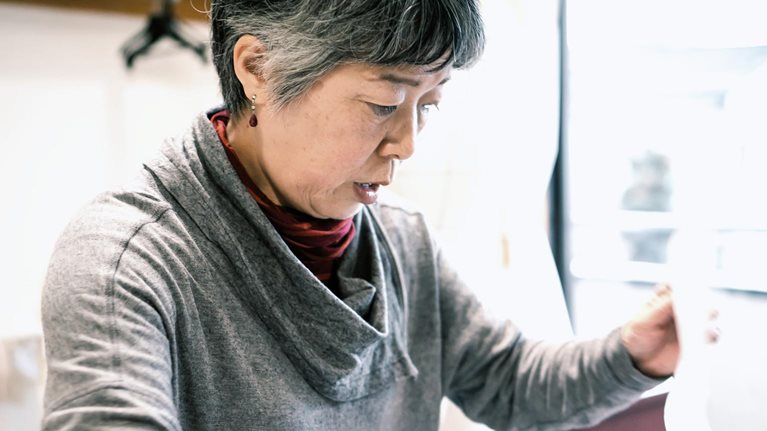
In this edition of Author Talks, McKinsey’s Christine Y. Chen chats with Karen Korellis Reuther, lecturer at Harvard Graduate School of Design and former global creative director of Nike, about Man-Made: How We Designed a World That Leaves Women Out, and How We Can Make It Right (HarperCollins Publishers, July 2026). Drawing on more than four decades of experience in design and a growing body of research, Reuther examines how products, spaces, and systems have long been shaped around the male body—often overlooking women’s needs in ways that affect comfort, performance, opportunity, and even safety. Through revealing examples, she explores the hidden costs of leaving women out and makes a compelling case for creating a world that works better for everyone. An edited version of the conversation follows.
Why did you write Man-Made?
I came to write this book in a couple of different ways. First, I had been a designer in practice for decades—over 40 years—and later in my career came across an eye-opening statistic. I’m a product designer and industrial designer, and I learned that only 18 percent female industrial designers are practicing in the United States. Only 11 percent are in leadership, although we’re graduating from universities with degrees in industrial design at the same levels as our male colleagues. It made me curious.
Second, as I dug further into the built world—the things that we interact with and use—there were even fewer practicing mechanical engineers who are women, roughly 12 percent. The fact that we’re living in a world designed by men for men came as a surprise at first, but as my curiosity grew, so did the evidence.
When did you first become aware of the gender difference in design? What were some early examples that stood out to you?
When I first began practicing design, I became familiar with a phrase that I’m not a fan of but write about in the book. “Shrink it and pink it” refers to taking a product that was designed for a man, scaling it down, and making it a stereotypical female color that will “serve women well.”
The very first example that I came across was razors. The idea of a razor being scaled down to fewer blades and then priced higher was one of my first memories of knowing that this occurred.
The shrink-it-and-pink-it concept is insulting. Some other examples of it involve sneakers. Most of the sneakers that we wear are built for the anatomy of a male foot, which is shaped like a rectangle. Compare that to the anatomy of a female foot, which is more of a triangle—wider at the forefoot and narrower at the heel. But most of the sneakers women buy have been designed and built for the anatomy of a male foot and simply shrunk to a female size. I know that’s why my feet hurt when I get through a day of wearing sneakers. The forefoot feels too tight, and the heel is slipping. Taking a sneaker designed for the male foot and coloring it a stereotypical female color is insulting.
Another example I learned about is “enclosed cognition.” For example, consider how “aware” you become the moment you arrive at an event and realize that you’re not dressed properly. Perhaps you are dressed too casually or too formally. [After that realization], you cannot engage as your whole self during the event because of the way you’re dressed. Imagine this scenario in certain professions. For example, consider female police officers who are forced to wear pants or shirts designed for a man, where the buttons don’t close properly. Also, consider female chefs. Their chef coats have been designed for men. Female chefs can still perform their jobs, but it’s quite insulting that they have to wear a male chef’s coat to work every day.
“Shrink it and pink it” refers to taking a product that was designed for a man, scaling it down, and making it a stereotypical female color that will “serve women well.”
What are examples of inequitable design that have safety implications?
Currently in the US, a car can receive a five-star safety rating even though it was not tested using biofidelic female crash test dummies (ones that represent the female body). Even the scaled-down male version, which is meant to “mimic” the female body, is not tested behind the wheel.
In this case, the idea of scaling something down that is “good enough” is truly affecting women’s safety and lives behind the wheel. So women sustain 73 percent more injuries as a result of car accidents, and 17 percent are more likely to die. This is an example of how the scaling down is killing women.
Recently, the US Department of Transportation has recognized the existence of a biofidelic female crash test dummy, and that’s good news. While we’re still far from that crash test dummy being mandated for use in safety tests for automobiles, the male equivalent of the state-of-the-art crash test dummy is being mandated to begin use at the end of this year or early next year.
What kinds of extra mental costs do women pay to adapt to designs made for men?
Oftentimes, the cost for women who have to accommodate to a world that’s been built for men by men is the “headspace gap.” There are a couple of examples of that. One example is our commute. As I commute in the city, it is clear that a lot of spaces and environments aren’t designed for women.
Consider subway stations or other places to walk through, such as public parks. The example I use in the book that speaks to this headspace gap relates to my own commute. I teach at Harvard. When I commute from Harvard during the winter semester, it gets dark in the Northeast at about 4:00 p.m., so I want to avoid certain places. I want to avoid Harvard Yard because it’s especially dark. I may want to avoid one subway stop, so I will have to reconsider my route. Often, that means a longer route, as it could take ten or even 20 minutes longer to arrive home.
This is a headspace gap and a time gap. Though we go to the same place, I spend 30 more minutes on my commute than my husband does. Another example relates to equipment. It is still a challenge for female firefighters to find gear that fits them appropriately. When I spoke with a fire commissioner, she told me that on their way to a fire, some women firefighters tape their gloves on with duct tape because the gloves are just too big. That’s another headspace gap because while on their way to a fire, instead of thinking about where they’re heading and how they need to approach the fire and keep themselves safe, women firefighters are taping on gloves that are too large. Those are two examples of the headspace gap, but there are so many more.
Scrutinizing a creative brief and being very intentional about not only who you’re designing for—but also who you might be leaving out—is something that all leaders can do.
What challenges have you faced in advocating for more gender-equitable design?
One big challenge was being a “first” [woman] and oftentimes an “only.” And when you are an only, it’s really difficult to have your voice heard at the same level as others. Very early on in my career, I learned that when I advocated for something but didn’t get the result I wanted. When my boss or a male colleague would advocate for the same thing to support me, that voice would often get heard differently. That’s still the case; our voices are heard differently.
When only 18 percent practicing industrial designers are women, we are still too often the only—and the first—in the room. I advocate highly for not being the only. If you walk into the room and you’re the only one, do take a minute and find someone else. Bring another woman to the table. Bring two more women to the table. Numbers do matter. We have to have a presence and a voice.
Before I left industry toward the end of my career, I was still the only at the table. Often, we start our careers as onlys, then we build and are among more women throughout our career. Yet as we rise to higher levels—I ultimately landed in the C-suite—we often become an only again, especially if you’re working in industry or the for-profit space.
Money talks. And I believe you can bank on women. What I like to say is we need to reimagine what profit looks like and to understand that designing for women is profitable. There are four billion women on the planet: It is a good business decision.
What advice would you give to C-suite executives who recognize the problem of gender bias in design?
Plan to bank on women. Also invest in women and in women leaders, especially if we’re talking about the C-suite. Look around the table. If you don’t have the right women represented at the table in design, engineering, or architecture, find those talented women and bring them to the table. Also understand that there is a power to the creative brief that you’re creating. So when you are starting to create something—a new product, a new space, a new experience—that creative brief is the blueprint for what you are ultimately going to make. Scrutinizing that creative brief and being very intentional about not only who you’re designing for—but also who you might be leaving out—is something that all leaders can do.
Currently in the US, a car can receive a five-star safety rating even though it was not tested using biofidelic female crash test dummies.
What surprised you as you were writing this book?
Again, I was a designer in practice for over 40 years. So I was focused on creating product. When I had the opportunity to delve deeply into some of the questions that I had been wondering about for decades, I found a couple of big surprises.
One surprise was the astounding number of examples that exist. I always obtain more examples from people who read the book. The other surprise made me sad. There were so many women before me. There were so many women designing in the early part of the 20th century and even before then who were unrecognized. I’ve hopefully uncovered a few of those stories that are part of the book that will let us see that there were women doing this work.
The example that stands out to me the most is of a woman named Peggy Ann Mack, who was designing for the Herman Miller furniture company. She was the right hand, the apprentice, and eventually the wife of the company’s creative director, Gilbert Rohde. When he died suddenly of a heart attack at age 50, she had been designing right alongside him. She was not given credit for design, because women weren’t allowed to have patents. If they were married, coverture laws prevented them from having ownership of their ideas.
After Rohde’s death, the then-leader at Herman Miller refused to work with a woman. He made a pretty well-known statement that kept her from designing for that industry. The good news is that today’s MillerKnoll is probably one of the companies that lead in the area of designing for all bodies.
I write about the Aeron chair and the steps that MillerKnoll took to design that decades and decades after Mack’s premature death.
If there were one design standard you could change today, what would it be?
We’re still designing in alignment with the average white male. If there were one design standard that I could change, it would be to end “average.” There is no average. We should understand that and accept and believe the fact that one size never fits all.