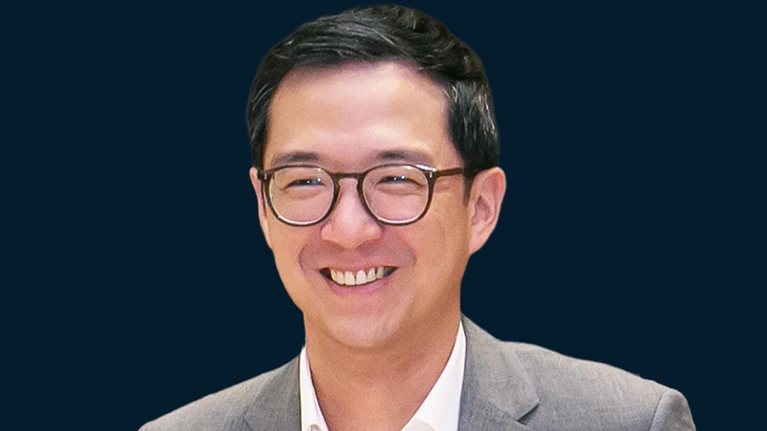
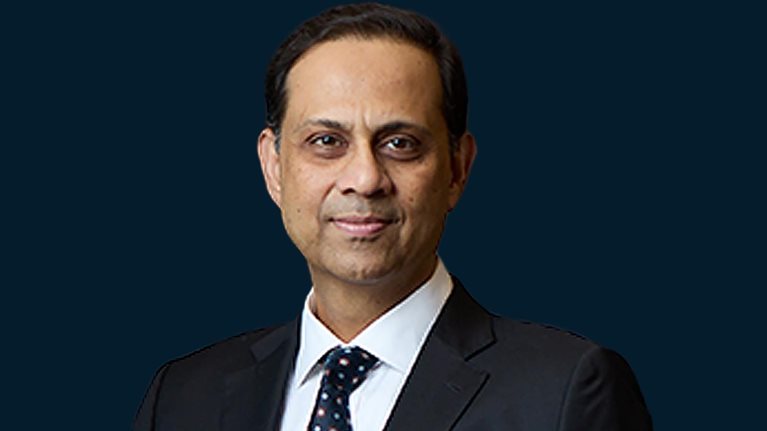
South Korean refining giant, GS Caltex, was founded in 1967 as a joint venture between Chevron and Honam Oil Refinery, the predecessor of GS Caltex. Saehong Hur, a fourth generation member of the GS Group’s founding family, became CEO of GS Caltex in 2019. Come 2026 and the company now provides about a quarter of Korea’s oil needs and exports over 70 percent of its own products.
In this Leading Asia interview, McKinsey’s Gautam Kumra, a senior partner and chair of McKinsey Asia (excluding China), talks to Saehong about his leadership style and creating what he calls a company “with the right systems, the right processes, the right people, and the right culture.”
He tells us about the company’s origins; how it was born out of a partnership between two families from the same village—the Koo family and the Hur family—and how this foundational legacy, based on trust, has formed the DNA of GS Caltex, contributing to its successful growth.
This interview is part of the Leading Asia series, which features in-depth conversations with some of the region’s most value-creating leaders on what it takes to realize bold ambitions and take them further.
Gautam Kumra: What has enabled GS Caltex to sustain a successful partnership for more than five decades, and how has that shaped the company’s DNA?
Saehong Hur: GS Caltex was founded back in 1967 as a joint venture with Chevron. As we celebrate our 58th anniversary, I see very few 50/50 joint ventures of this scale and performance; our shareholders remain quite satisfied. This foundation represents a deep legacy of trust. It actually stems from our family history—GS was managed under the same umbrella as LG by two families for almost 60 years.
We have always viewed this partnership like a marriage. There are good times and tough times, but you find a way to make it successful. That spirit of cooperation is part of our DNA; so, when we say “partnership” to our customers, we really mean it.
Gautam Kumra: Building on that spirit of partnership, how has the company’s journey evolved from its early days as a private refiner to navigating today’s shifting global markets?
Saehong Hur: Adaptability has been our key factor for success. We started as Korea’s first private refining company during a period of rapid demand. While the last few decades were defined by a “growth mentality”—especially with the surge in Asian markets—we are now entering a new cycle.
With a slower global economy and potential oversupply, we are shifting our mindset. It is no longer just a matter of competing on volume or growth.
The fundamental question we are answering now is: How can we maintain a growth path on a quality basis to ensure we remain sustainable for the future?
Gautam Kumra: What are some of the challenging trade-offs you have had to make and how have you approached these?
Saehong Hur: The key challenge is changing market needs. For the past few years, there has been a buzz around ESG [environmental, social, and governance], and huge amounts of money have gone into renewables. But we have to ask: Does it support long-term, sustainable economic growth? Does it align with fundamental economics, or is it just a trend? We need a solid business model.
To achieve this, we believe government policies and market mechanisms should evolve in balanced, complementary ways. While initial support is often necessary for new markets, long-term viability is ultimately supported by end users and customers. That’s why we make small bets, experiment, learn from failures, and keep a long-term view.
Gautam Kumra: How do you define—and drive—innovation?
Saehong Hur: In our industry, we use other people’s technologies to innovate within our company. We have to look at what is happening, not only in our industry, but also in others, so that we can move faster and use tools or technologies that will help our company grow.
As a part of our deep transformational journey, we created three pillars. The first is business transformation (BX), which at its core means that we must change the way we work and change our mindset. Second is digital and AI transformation, which we now call DAX, and the third pillar is green transformation (GX) to make sure our company keeps growing in a sustainable manner.
For each pillar we need different types of innovation. For example, for DAX, we run a digital academy to advance people’s skillsets so that we have new tools for when the market changes. In this way, we’d like to fully leverage our domain knowledge and expertise. For green transformation, we may work with outside vendors for advanced solutions, while aiming to internalize capabilities to ensure sustainability.
I see the cumulative effect of BX, DAX, and GX as the gradual build-up of what I call a “black-box advantage.” By this, I mean a set of deeply embedded and largely invisible strengths—our unique processes and systems, organizational capabilities, and ways of working—that are difficult for competitors to observe or replicate. As our Deep Transformation Journey continues, I believe this unseen competitiveness will only deepen, ultimately becoming our most durable and differentiated source of advantage over the long term.
Shapers and Founders
Gautam Kumra: What is your philosophy on how much risk to take and how to manage it?
Simply maintaining the status quo is a killer for sustainable growth—but people don’t like change. So, as a leader, I’m always asking myself how I can help our people embrace change, while taking a risk.
Saehong Hur: Because I’m in charge of a legacy company, our decisions have to be based on calculated risk. We have to gain competence and confidence before we can take bigger risks. The game in our industry is to move one or two steps ahead of our competitors. Compounded over the next ten years, that’s going to be ten or more steps. I’d like to create a competitive advantage in that sense.
For example, in the renewables business, we have created a marginal abatement cost curve. We start prioritizing projects, decide which one is easily achievable, and then begin moving into more challenging projects.
Gautam Kumra: What is your philosophy around recruiting, evaluating, and developing talent?
Saehong Hur: When I became CEO, many people in our company came from a stable market legacy and focused on operational excellence. But if that’s emphasized too much, it can create a culture of not taking risks.
I started with a vision of becoming a centennial company. We created a model for deep transformation—focusing not just on short-term profit, but also on changing the culture, aligning people to our strategic direction, and keeping them motivated.
We view our experienced workforce as a key asset, and their efficiency has helped us maintain a stable team. Now we’re focusing on knowledge transfer and developing future talent to support a balanced generational transition—preparing new talent to carry our success forward while honoring the foundation built by long-term employees.
The two challenges are keeping institutional knowledge and motivating younger employees to align with our vision and strategic direction. In the past, job descriptions were broad, with everyone helping each other; now we’re seeing a shift in Korea, with younger people asking for very specific job descriptions, and if you adapt too late, you start to feel conflict between generations.
Gautam Kumra: How do you think about senior hiring and cultural fit?
Saehong Hur: I’m evolving our senior-level hiring to reflect our changing culture. To enhance diversity and competitiveness, we’re incorporating external expertise and fresh perspectives. This diversity is essential if we want to become a regional leader—we need different mindsets, and we need to learn from each other.
It’s more art than science. I do the final interview for all new hires and use intuitive judgment. If someone is not a team player, there’s no way we can maximize value across our value chain—our executives lead strategic agendas for the corporation, and they have to be team players. When we hire talented people externally, I always check for cultural fit, especially for senior roles, and I protect and groom external hires so they can settle smoothly into our organization and integrate with our current workforce.
If we want to become a true industry leader in the region, we must embrace more talent from outside Korea; we have already hired a select number of engineers from other countries so we have the right culture and are ready for a different future.
Gautam Kumra: How would you describe your leadership style and what you spend time on?
Saehong Hur: Diverse work experiences in Japan, Singapore, and the United States shaped my situational leadership style and the flexibility to adapt to different markets and cultures. They helped me embrace diversity, while staying grounded in our company values. You have to respect fundamentals—they’re key to long-term success—and I try to balance adapting to change with keeping my core values.
Humility is a big part of Asian culture. You have to understand other people and see things from their perspectives—perhaps call it we-dership (leadership we build together). We need to lead from the top, but move together. Teamwork really matters; we create and maximize value through an integrated mindset.
As a CEO, I sometimes speak more because people wait for me, but my intention is to listen. Meeting people across industries helps me develop intuition about the future and keep learning.
My background is different because this is a family business. I’m a fourth-generation leader, focused on the next generation and the one after that. I want to build a company that can sustain and influence others in our group.
Gautam Kumra: You were selected as one of the 100 centennial alumni catalysts by Stanford Graduate School of Business in 2025. Congratulations! What does that mean to you? And also, how does it relate to your sustainable management?
Saehong Hur: It is truly an honor, but it is also a reminder of the responsibility that comes with it. I understand it as a kind of burden of proof. I was described as an “environmentally conscious oil tycoon,” but without changing our portfolio, there is no way we can manage this company in a sustainable way.
For me, sustainability means fundamentally rebalancing our portfolio toward lower-carbon businesses. We are reexamining our long-term portfolio and working with partners—from scientific institutions to other collaborators—to adopt new technologies in a disciplined way. In the end, I believe the only way to demonstrate this commitment is through outcomes, not words.