More companies around the world are recognizing the importance of protecting nature, but progress is uneven. On the one hand, companies are becoming more aware of their impact on nature beyond just their carbon footprints. In fact, an increasing number of Fortune Global 500 companies have made commitments to all nature dimensions beyond carbon every year since 2022.1
On the other hand, shifting macroeconomic and political factors have led some regions and sectors to slide backward. For example, our research finds that some regions, such as North America and Europe, saw declining numbers of commitments, while other regions, such as Asia and Latin America, have held steady or even improved.
To understand how corporate targets for nature are changing, McKinsey has analyzed sustainability reporting in Fortune Global 500 companies since 2022 (see sidebar, “Our methodology”). The stakes of these commitments are high. To date, seven out of nine planetary boundaries2 have been crossed, most recently ocean acidification: Since the start of the industrial era, the pH of the ocean’s surface has decreased by approximately 0.1 units, increasing acidity by 30 to 40 percent.3 This is just one example of the planetary changes affecting natural capital.
In this article, we explore findings from our latest analysis, including variations across regions and sectors. We also explore differences in the types of commitments made, including the nature dimensions addressed (carbon, water, chemicals and plastics, biodiversity, forest, and nutrients and nitrogen oxides) and the degree of commitment made (quantifiable target, general acknowledgment, or none).
Acknowledgments and target setting increased overall
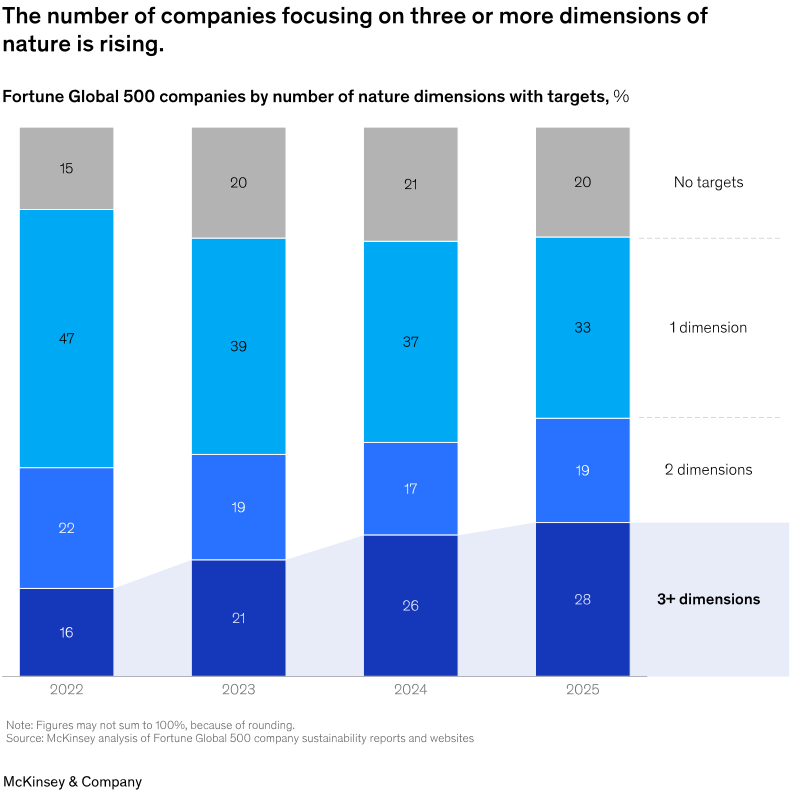
Fortune Global 500 companies are increasingly acknowledging their environmental impact and setting quantifiable targets. A greater proportion of Fortune Global 500 companies had targets across three or more nature dimensions in the 2025 analysis, up two percentage points from the previous year (Exhibit 1). This increase is notable given that turnover in the Fortune Global 500 list has been minimal, with only six new companies included. This means companies that previously had targets are expanding the breadth of their nature-based commitments.
The scope of nature strategies is likewise expanding. Five of the six nature dimensions we measured saw an increase in commitments (targets and acknowledgments combined) compared with last year’s analysis, indicating a growing awareness of environmental impacts in addition to carbon emissions (Exhibit 2). For all dimensions but carbon, corporate commitments as a whole, including both targets and acknowledgments, have been increasing faster than targets alone. This reflects the higher bar required for target setting—committing to a quantified target requires an additional layer of data tracking to measure progress. For the forest, water, and nutrients dimensions, targets alone have grown by less than five percentage points since 2022, while commitments have grown more than five times faster.
Targets for chemicals and plastics have grown the most since 2022 (about ten percentage points), while biodiversity is close behind with an increase of about eight percentage points. This increasing emphasis on chemicals and plastics may be motivated by consumer perceptions: McKinsey research shows that the environmental impact of packaging has been an increasingly important concern for consumers since 2023.4
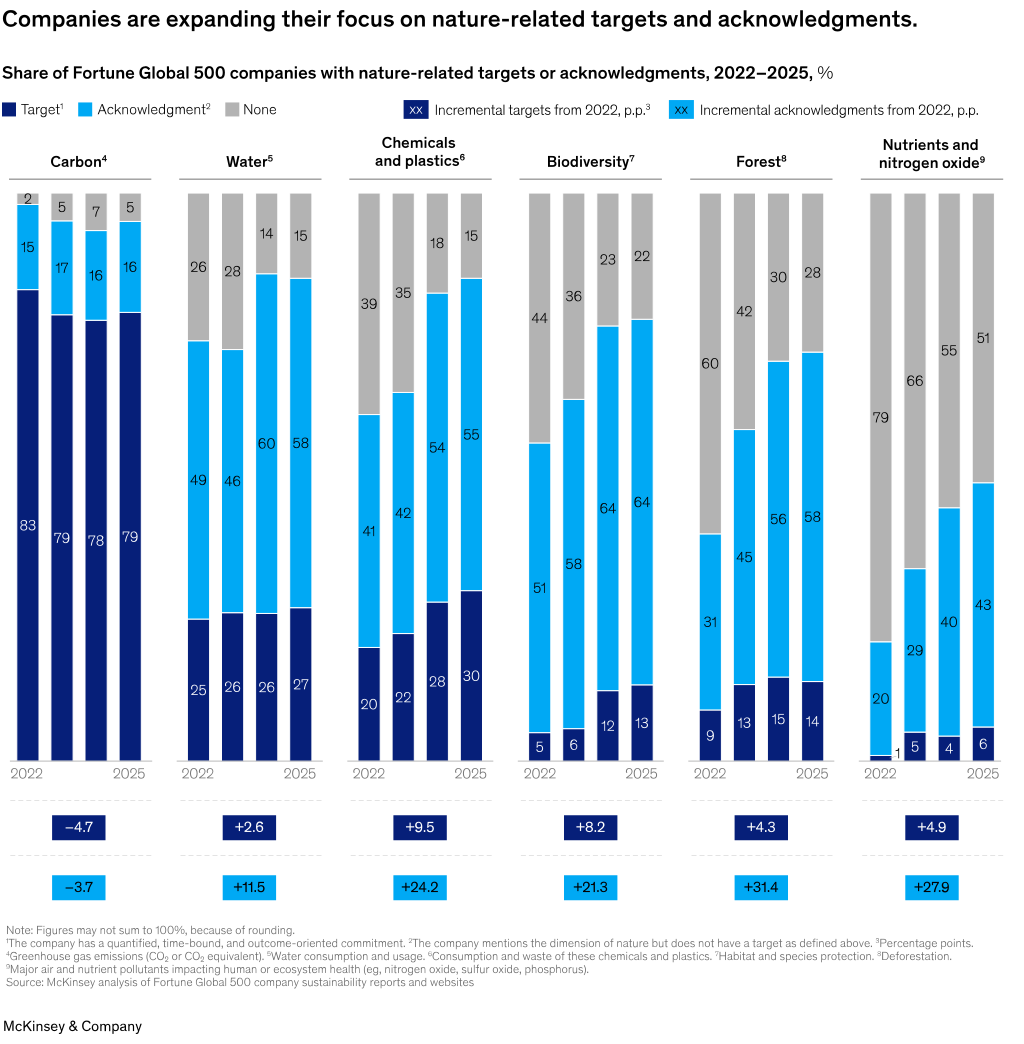
When considering acknowledgments and targets together, the most significant year-over-year increase comes from the nutrients and nitrogen oxides (NOx) category.5 Commitments in this dimension have expanded from about 21 percent in 2022 to about 48 percent. Agriculture companies typically have already established targets related to nutrients and NOx because of their proximity to these chemicals, so 2025’s increase is primarily driven by nonagricultural companies: An additional 21 companies outside the agriculture sector acknowledged or set a target for this dimension compared with the 2024 analysis.
Overall, the largest increase in acknowledgments or targets since 2022 was in forest-related factors, such as those related to increased paper recycling and forest preservation. This could be a result of forthcoming and potential regulations, such as the EU Deforestation Regulation (EUDR) and the proposed FOREST Act in the United States, which could require compliance. Global trade shifts and supply chain disruptions may also be encouraging forest-related efforts.
The percentage of companies with carbon targets in the Fortune Global 500 is still slightly down compared to 2022 (four percentage points) but has increased since our previous analysis. Among the top 100 companies, the vast majority of those that had a carbon target in 2023 maintained a target with the same time period and ambition in 2024. Among those that did adjust their targets, most were minor modifications. For example, some companies adjusted from a percent-based target (such as “5 percent CO2 reductions”) to a volume-based target (such as “20 gigatons of CO2 reductions”). Regionally, North America experienced a decrease in carbon targets of 2.6 percentage points compared to last year, while Asia experienced an increase of 3.6 percentage points.
Progress was uneven across regions, with Asia leading growth in commitments
The share of companies with three or more nature-related targets rose in Asia, held steady at a high proportion in Latin America, and fell in both Europe and North America (Exhibit 3).
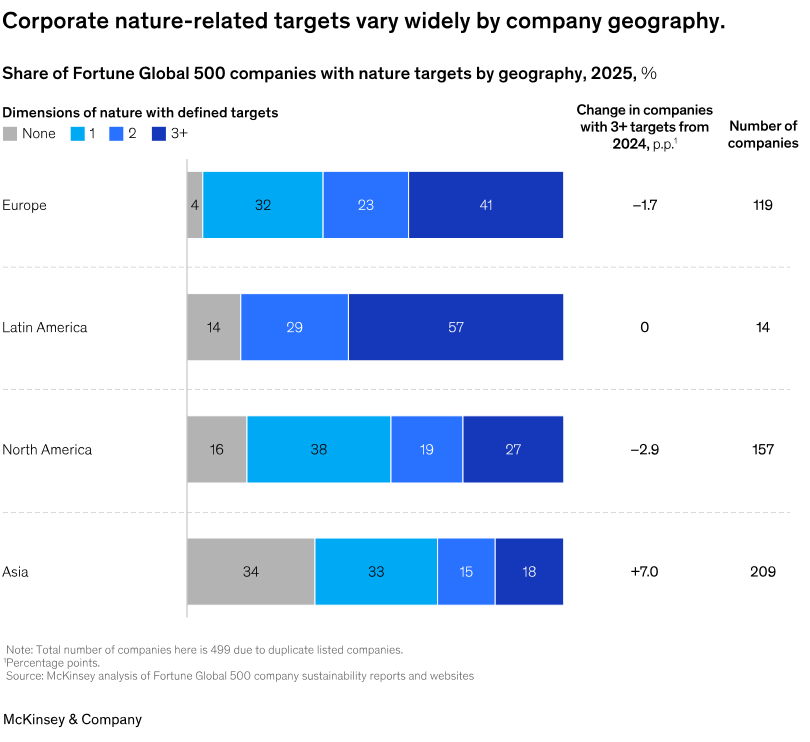
Asia’s strong growth of seven percentage points is equivalent to 14 additional companies, reflecting a wave of new reporting requirements and investor pressure. For example, Australia introduced mandatory climate-related disclosures for large companies beginning in 2025, Singapore has begun phasing in reporting aligned with the International Sustainability Standards Board for listed issuers, and Japan has become the world’s largest adopter of the recommendations developed by the Taskforce on Nature-related Financial Disclosures (TNFD), backed by government-led reforms to integrate sustainability into financial reporting. These regulations greatly affected overall results due to Asia’s large representation in the Global 500, translating regulatory and market signals into the largest absolute and relative increase in targets worldwide. At the same time, a yearslong trend in China has reversed: Sustainable funds in China experienced consecutive outflows from 2022 to 2023, but they saw modest inflows by year-end 2024.6
Latin America, meanwhile, held steady in 2025: 57 percent of companies had three or more targets, the highest share of any region (albeit with a lower absolute number of companies in the Global 500).
By contrast, North America and Europe both saw declines in the number of companies with more than one nature-based target. North America experienced the sharpest drop, with the share of advanced companies falling by 2.9 percentage points to 27 percent. This slowdown may reflect regulatory uncertainty in the United States. For example, in March 2024, the Securities and Exchange Commission adopted climate disclosure rules that face legal challenges and have yet to be implemented. While this specific example is climate focused, it may reflect a broader sense of uncertainty in the regulatory environment for nature and sustainability.
Europe saw a smaller decline of 1.7 percentage points, though it continues to lead in overall targets with 96 percent of Fortune Global 500 companies reporting at least one nature-related target. The dip in the most advanced region may suggest a pivot from breadth to execution as companies focus on ensuring compliance before taking on broader ambitions. For example, companies must now deliver on the EU Nature Restoration Law, which mandates the restoration of 20 percent of degraded ecosystems by 2030, and are preparing for the EUDR, which requires strict commodity traceability as of December 2025 for medium-size and large operators and traders. For both North America and Europe, the impact of ongoing political and macroeconomic factors remains to be seen, but it may create further headwinds to sustainability ambition.
Power saw the most growth, while agriculture and extractives saw the greatest decline
Among the sectors measured, manufacturing and power continue to lead in having three or more targets across nature dimensions (Exhibit 4). The manufacturing industry has the second-highest representation in Fortune Global 500 companies, with 181 organizations, and has seen a four percentage point increase in companies with three or more targets since 2024.
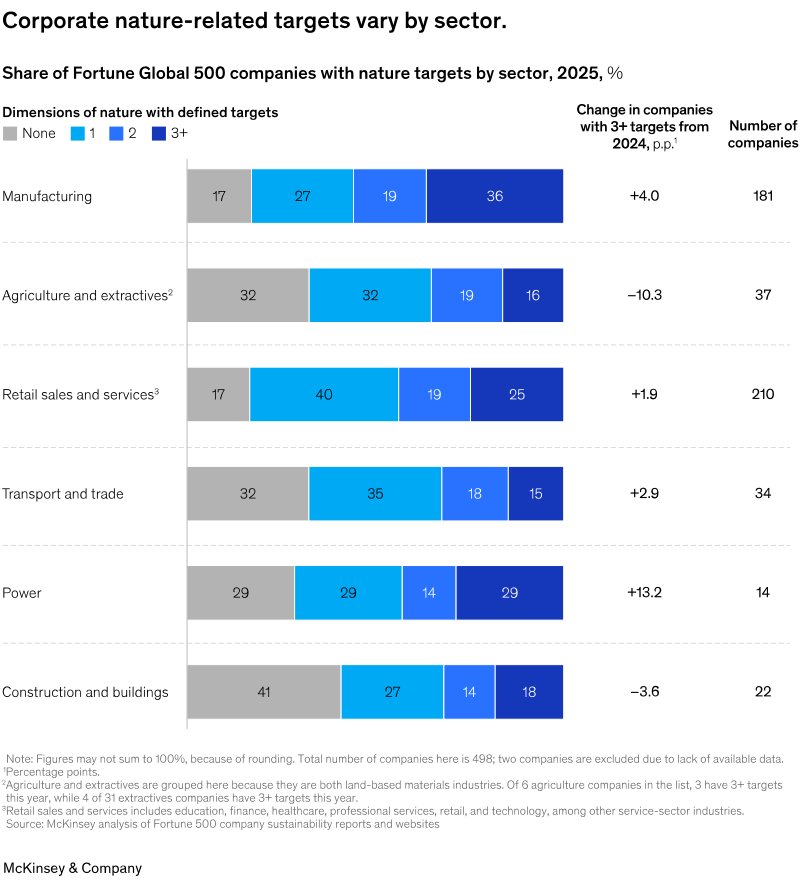
Meanwhile, although the agriculture and extractives sector maintains strong commitments to nutrients and NOx targets, it has seen a modest decline in the breadth of its targets, down by approximately 6 percent and 3 percent, respectively, in the number of companies targeting three or more natural capital dimensions. Some companies in the extractives sector acknowledge the rising demand for electricity, the growing population, and changing policy environments and consumer behavior as increasing challenges to meeting their carbon commitments and the commitments of the Paris Agreement.
Companies are increasingly converging around shared frameworks
Findings from the 2025 analysis reveal progress and challenges regarding key types of commitments:
- Nature-positive language. Use of “nature positive” language and acknowledgments of alignment with the Global Biodiversity Framework have nearly doubled since last year, with about 30 percent of Fortune Global 500s including an acknowledgment or target related to “nature positive” in their reports. This reflects a broader trend of awareness as companies incorporate nature and biodiversity commitments into their sustainability frameworks.
- Global frameworks. Many companies are also using the UN Sustainable Development Goals (SDGs) to measure their sustainability ambitions. For example, the UN Global Compact’s SDG Ambition Accelerator engages more than 2,000 companies across more than 90 countries,7 helping them integrate nature-related targets into their broader sustainability strategies. More than 120 of the organizations in the Fortune Global 500 reference TNFD or acknowledge adoption of the framework in their reports.
Across each of these dimensions, collaboration will be essential. Corporates can look to other leaders in the space to better understand where and how they can take action,8 or they can consider entering partnerships to scale their impact. Recent efforts show the potential of collaboration. For example, more than 90 companies pledged to participate in the World Economic Forum’s Trillion Trees Initiative. Meanwhile, the Tropical Forest Forever Facility aim to use blended finance to generate $100 billion in funding from private investors for tropical forest protection.
The 2025 status of corporate nature commitments shows that progress is continuing at a consistent pace—but regional- and sector-specific variations persist, making continued collective effort more important than ever. New standards are creating clearer expectations for measurement and reporting, and advances in data, monitoring, and AI are giving leaders a more reliable fact base for decision-making in a period of shifting geopolitical and economic dynamics. As corporate approaches mature, leaders have a growing opportunity to shape business models that deliver both long-term competitiveness and healthier ecosystems and communities. Companies must continue the shift from broad commitments to tangible action, clear accountability, and quantifiable impact to meet global standards and support long-term corporate, planetary, and social resilience.
To further these efforts, McKinsey is collaborating with the World Economic Forum to convene global CEOs to lead business initiatives for a nature-positive future, including our CEO Alliance on Nature session at the 2026 World Economic Forum Annual Meeting in Davos-Klosters, Switzerland. For additional information, our 2022 report Nature in the balance: What companies can do to restore natural capital9 outlines sector-level actions leaders can take to restore natural capital.