Historically, the prevailing wisdom has been that meeting or beating consensus estimates is critical to valuation. But in McKinsey’s 2026 Global Investor Survey, respondents indicate that they do not respond to misses themselves. Instead, intrinsic investors say that they tolerate occasional misses when the long-term value-creation story remains intact, and that what matters far more than any single quarter is consistency of execution against a credible strategic framework. These findings dovetail with our long-standing view that many companies overindex on consensus earnings (see sidebar “McKinsey research on consensus misses”).
This and other survey findings provide insights that can help shape today’s most effective investor communications efforts. Respondents report that they rely less on sell-side research than they did in the past and more on AI tools to analyze reports and disclosures. In large numbers, they express a desire for greater opportunities to probe management on quarterly calls, getting more financial detail and transparency and fewer prepared remarks. Finally, intrinsic investors identify segment-level disclosure as a significant area where they crave improvement so that they can build independent models.
This article shares the data from our current survey (see sidebar “Our methodology”), along with reflections on how these findings line up with previous McKinsey research and analyses. We conclude with four recommendations for companies to improve their interaction and communication with their most important investors.
Respondents punish surprise consensus outcomes more than they reward patterns of greater-than-expected performance
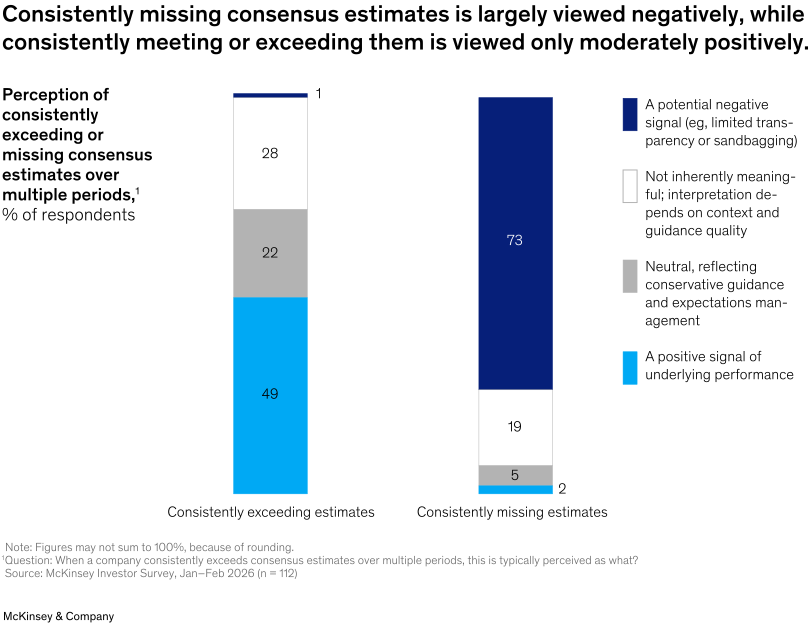
Consistently meeting or exceeding consensus earnings estimates matters to a majority of respondents: 59 percent rate it as important or very important. But when asked to choose what matters more over time, 62 percent pick “occasional misses but strong long-term value creation” over “consistently meeting consensus.” Notably, only 17 percent select the latter. The asymmetry in how respondents read patterns is revealing. When a company consistently exceeds estimates, only 49 percent treat it as a positive performance signal; 22 percent read it as conservative guidance, and 28 percent say it depends on context (Exhibit 1). But when a company consistently misses, 73 percent treat it as a negative signal of transparency or control. In short, this is a market that uses consensus as a lens into management credibility rather than as an end in itself.
Investor reliance on sell-side analyst reports has decreased, while their use of AI has increased
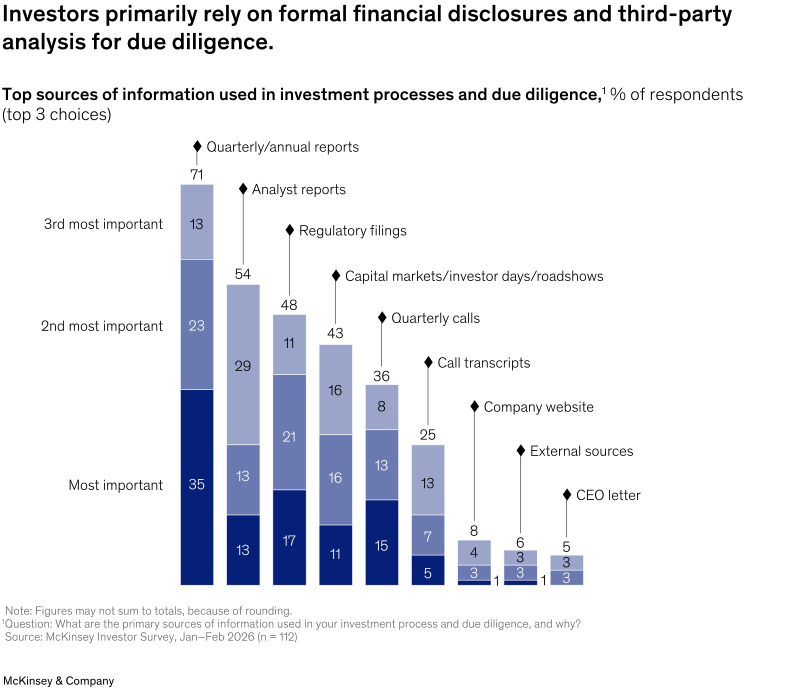
Investors’ primary information sources have not changed: 71 percent of respondents rank quarterly and annual reports among their top inputs, 54 percent cite analyst reports, and 48 percent cite regulatory filings (Exhibit 2).
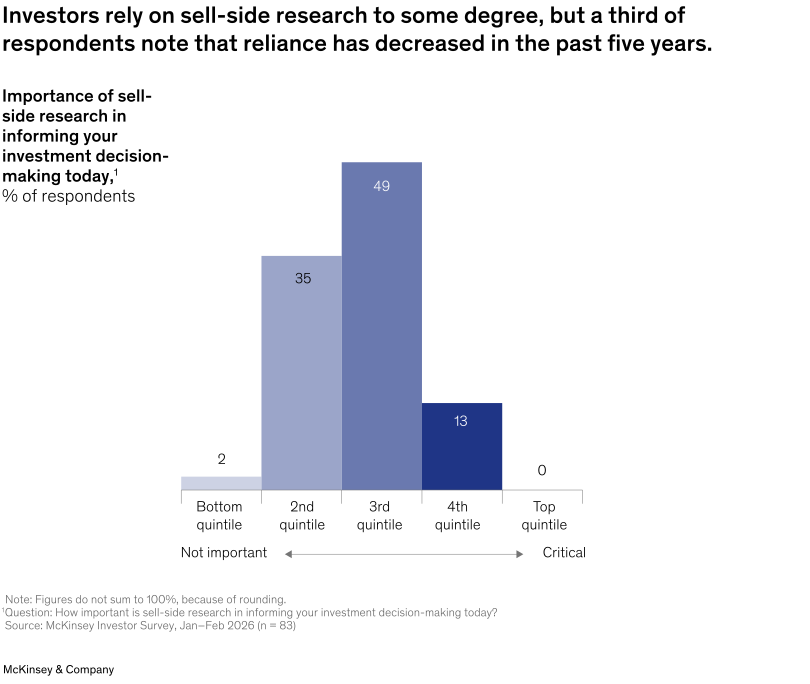
What has changed is the intermediary layer. Only 13 percent of respondents consider sell-side research very important; none consider it critical.
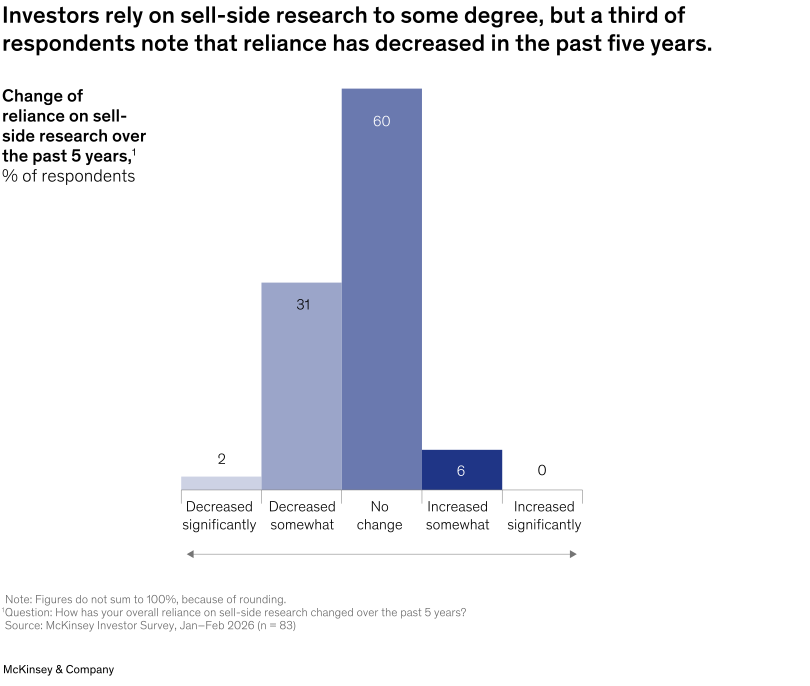
And over the past five years, 33 percent report that their reliance on sell-side research has decreased, and only 6 percent say it has increased.
At the same time, new tools are entering the workflow. Forty-seven percent of investors now use generative AI tools often or consistently in due diligence, and 81 percent use them at least occasionally. Only 4 percent have no plans to adopt them (Exhibit 4).
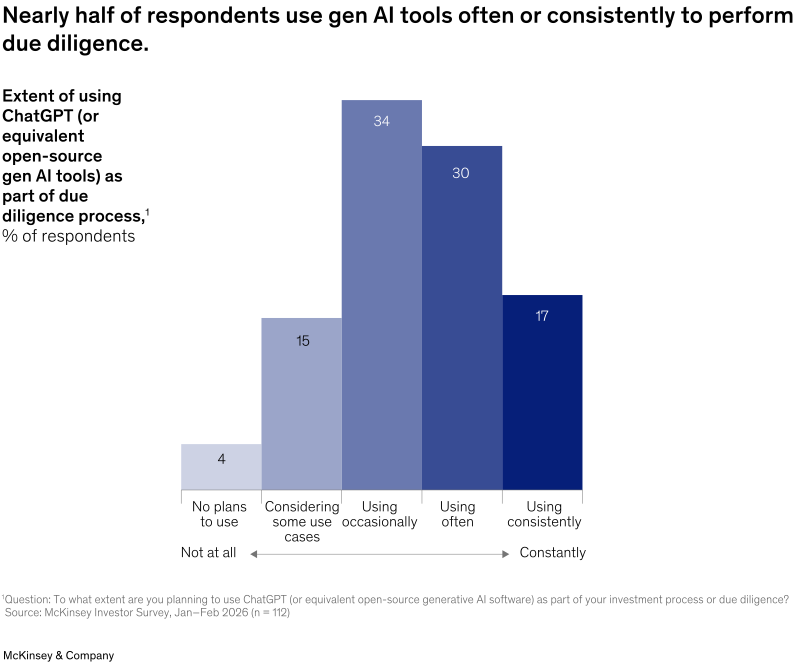
AI usage represents a structural shift in how disclosures are consumed. In the past, inconsistencies such as changes in definitions, adjustments that don’t reconcile, or shifts in segment reporting were only picked up if a particularly careful analyst noticed them. Today, algorithms can scan for these issues, cross-checking disclosures across periods and across peers. As a result, inconsistencies are surfaced systematically and can quickly raise questions about the company’s transparency and the reliability of its disclosures.
The quarterly call: Investors want interaction, not a script
Asked how to improve quarterly calls, investors converge on a single theme: They want more leeway to probe management. Nearly nine in ten investors want more time for Q&As; eight in ten want more executives present; and two-thirds want a longer lag between data distribution and the call so they can prepare targeted questions. Higher frequency ranks as the fourth-most-requested improvement (Exhibit 5).
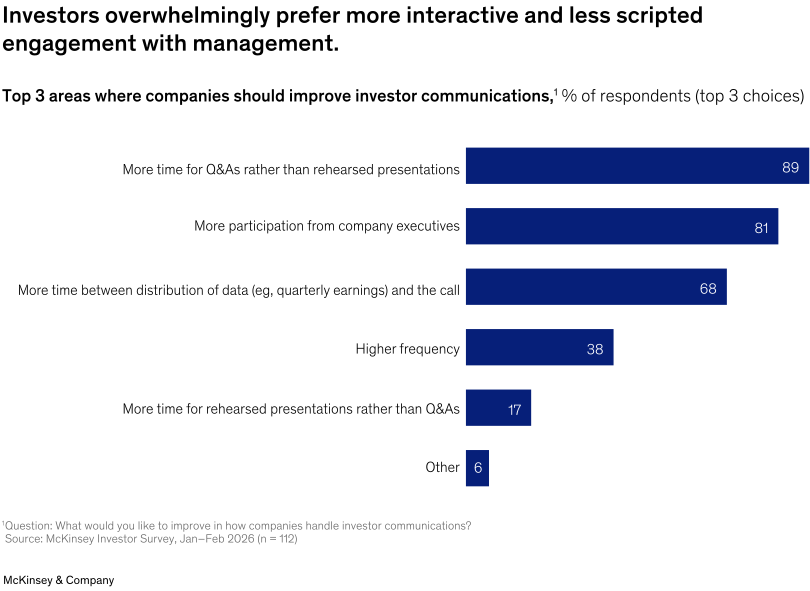
In contrast, more rehearsed presentations rank last. Investors have long told us that prepared patter is not what they’re looking for. Instead, they largely want opportunities to engage on the numbers with management. Best-in-class calls respect these preferences.
Even more important to respondents is the depth and specificity of materials shared. Eighty-six percent of respondents rank it as the most important differentiator—above format, speakers, or structure (Exhibit 6).
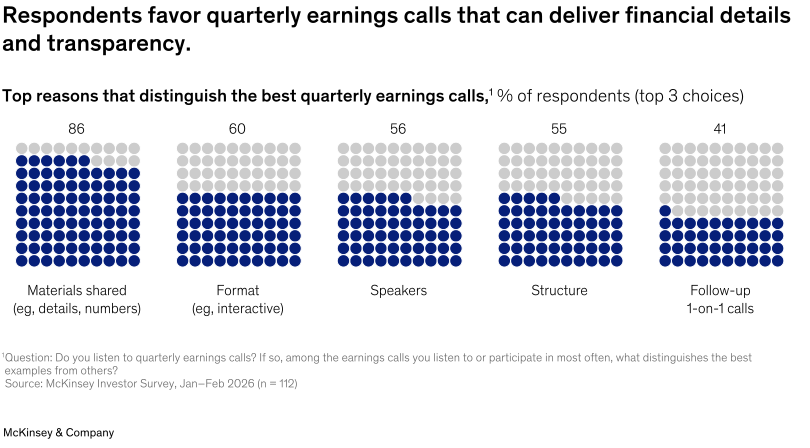
These responses match those of previous surveys; respondents consistently describe excellent calls as ones with transparency and candor, financial detail about segment breakdowns and relevant KPIs, and consistent structure quarter to quarter. They also point to capital markets days (CMDs) and other investor interactions as particularly valuable formats for this kind of dialogue, offering the time, depth, and executive access that quarterly earnings calls cannot match.
Respondents want more segment-level disclosure than they typically get
Investors want more segment-level disclosure from companies with multiple business lines than most companies provide. Seventy-three percent of respondents identify segment-level management analysis as one of their top three desired disclosure enhancements, while 53 percent select segment operating statements with clear reconciliation. Forward-looking segment detail is also in demand: 49 percent of respondents seek mid- to long-term growth targets by segment, and 43 percent want capital intensity guidance by segment. Just under a quarter are satisfied with standard International Financial Reporting Standards (IFRS) disclosure alone (Exhibit 7).
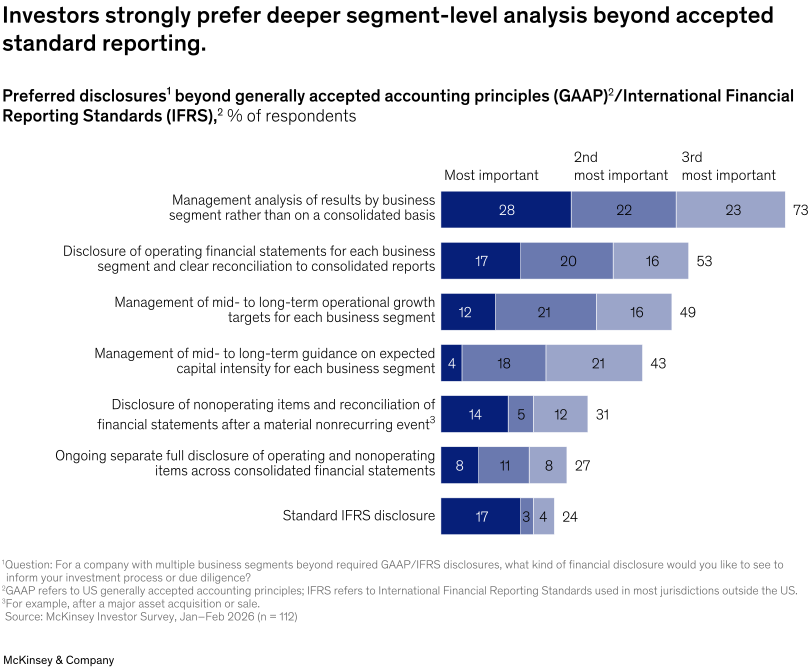
These preferences make sense: Investors underwrite by understanding the performance of individual business segments and need to know which parts of the portfolio are compounding, which are consuming capital, and whether management is allocating rationally among them. Companies that only report at the consolidated level force investors to guess—and investors often discount what they cannot verify.
Implications for companies
The latest survey results point to four areas companies can address directly in their investor communication efforts. The first—reframing how the company views and responds to consensus outcomes—is arguably the most complex, because it requires a change of mindset and behavior, in addition to a new approach to outreach.
- Don’t worry too much about a single consensus miss unless it is an early indicator of genuine long-term deterioration. And don’t try to avoid a miss at all costs through short-term earnings management tactics (such as accelerating asset sales, cutting R&D, or pulling forward revenue). These tactics may temporarily protect the consensus outcome but damage the forward-earnings base. Remember that a miss alone rarely moves the stock and, in fact, share prices rise after about 40 percent of misses. Intrinsic investors punish not the short-term shortfall but a weakened long-term outlook.
Instead, focus on three communication disciplines:
- First, make the long-term thesis clear. Articulate explicit medium-term targets (for example, three-to-five-year revenue growth corridors, margin trajectories, and ROIC thresholds) and report progress against them each quarter, so investors can independently assess whether the business is on track.
- Second, reduce surprises through proactive expectation management. If a headwind is building, flag it early with quantified impact ranges rather than waiting for it to show up in a miss. Survey responses indicate that investors distinguish between management teams that get ahead of bad news and those that let consensus drift until the gap becomes undeniable.
- Third, build a delivery track record by setting specific commitments that can be scored. For example, instead of vague comments such as, “We expect margin improvement,” provide data such as, “We are targeting 50 to 75 basis points of operating margin expansion in fiscal year 2027 through three specific initiatives.” Over time, a pattern of setting and meeting concrete commitments earns the credibility that lets investors look through a single quarter’s noise.
- Prepare reports and disclosures for the era of AI. Investors increasingly use AI-powered tools to parse filings, compare language across quarters, and benchmark disclosures against peers. Inconsistencies that once may have gone unnoticed can now surface instantly. The practical implication is not just to avoid errors but to design documents with machine readability in mind. Use consistent segment definitions, KPI labels, and reporting periods across every published document, including earnings releases, 10-Ks, investor presentations, and CMD transcripts. When metrics change, explicitly bridge the old definition to the new one. Companies can also use AI tools to audit their own disclosure suite for internal consistency before publication. For example, they can use an AI tool to compare a draft earnings release with the most recent investor day transcript and a peer set’s latest filings and fix the discrepancies before an analyst’s model does.
- Make better use of earnings calls. Shorten prepared remarks, allow more time for Q&A, put the executives who own the numbers in the room, and build in a lag between data release and the call so that investors have time to prepare their questions. Consider augmenting earnings calls with capital markets days to provide investors with more access to management and with deeper insights into strategic direction.
- Give investors more segment-level data. As the survey demonstrated, most investors want management analysis and operating statements by segment; only a quarter are satisfied with standard IFRS alone. The reason most companies don’t go further is well understood: allocation complexity, differences between internal management views and statutory reporting segments, and concern about exposing segment-level margins to competitors. But as McKinsey research on segment reporting has argued, the cost of minimal disclosure is that investors are forced to estimate segment returns on their own —and those estimates are often far from the reality of the business’s performance and valuation.
The fix does not require disclosing everything. At a minimum, aim to report enough for investors to estimate the return on capital by segment, such as the segment’s operating profit, depreciation and amortization, and a breakdown of assets including property, plant, and equipment; intangibles; and goodwill. Companies like Roche, Maersk, and Deere demonstrate that this level of transparency is achievable across industries: Roche reports operating assets at the segment level, Maersk discloses invested capital by segment, and Deere provides full income and balance sheet separation for its financing arm. Where competitive sensitivity is a genuine constraint, directional indicators such as revenue mix, growth rates, and margin trajectories by segment give investors enough to build independent models without publishing exact figures that a competitor could exploit.
This survey reinforces what McKinsey research has long shown: Consensus estimates matter most to intrinsic investors for what they imply about management credibility. What these investors care about more are opportunities to dive into company data and discuss it with management. New AI tools make it even more important for companies to provide high-quality information. Companies that aspire to best-in-class investor communications will focus on providing their most important investors with the level of insight and analysis that they desire.