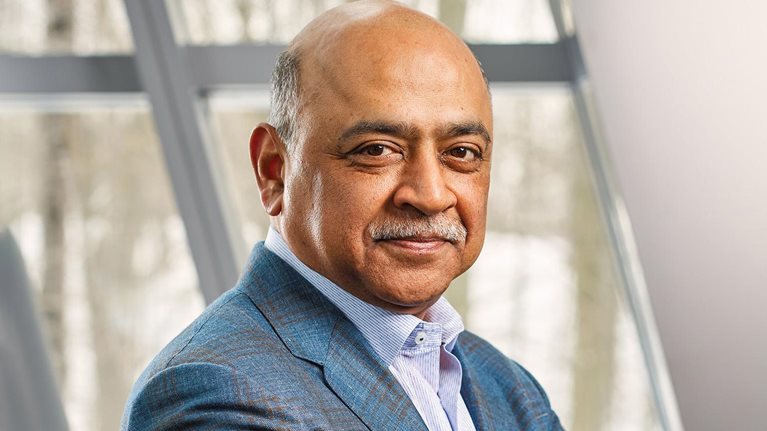
In this episode of the Inside the Strategy Room podcast, Chris Nassetta speaks to McKinsey Senior Partner and North America Chair Eric Kutcher on his leadership approach to steering Hilton through some extraordinary challenges toward success. Since arriving in 2007 at the then capital-intensive legacy company that had lost its way, Chris’s focus on a sustainable growth model and a brand-led, network-driven strategy has seen Hilton cultivate 25 brands and counting, today employing 500,000 globally, and serving 250 million travelers every year. Proud of Hilton’s recognition as a “best place to work,” he’s now excited by the emergent experience economy and the opportunities AI and data offer for Hilton to deliver on its aim of being the best place to stay.
The following transcript has been edited for clarity and length. For more discussions on the strategy issues that matter, follow the series on your preferred podcast platform.
Eric Kutcher: You took the wheel at Hilton in 2007, and in many ways what you’ve accomplished has been industry defining. Can you talk through the journey you’ve taken this organization on?
Chris Nassetta: Hilton’s been around now 106 years, and yes, in many ways invented the hotel business as we know it; a lot of what we take for granted in the hotel business today—loyalty programs, reservation systems, full-service hotels. In 2007, Blackstone took Hilton private and I came in shortly after that. At the time, we had lost a step and the culture of the company was drifting. We had just eight brands, we had a whole bunch of segments that were uncovered, and while we’d been around a long time we didn’t really have a full network. In terms of growth, we were mediocre in most parts of the world, which, for the company that invented the business to a degree, didn’t seem right. And the performance of those brands vis-à-vis driving rate occupancy was middle of the road. What Blackstone saw, and I saw with them, is if we really focus in these key areas, we can inject a lot of life into this.
We’ve had significant hurdles along the way. One year in, we hit the Great Recession. And we were an LBO [leveraged buyout]; we had a huge amount of debt. We went from the largest private equity investment ever made, to reading headlines about the largest private equity loss in history; Blackstone wrote 70 percent of it off. We had to manage our way through all of that, and then we had another crisis with COVID.
So, we’ve had a number of defining chapters, but we’ve tried to use those to create an intensity of focus on making the business better, stronger, faster—which I’m proud to say we’ve done. On culture, we’re the number one greatest place to work in the world, and number one in the United States and in some 12 other countries. We’ve gone from eight to 25 brands, with probably five or six more in gestation. Our brands perform at the very peak of the industry and outperform all the competition on average and by segment. We’ve gone from 20 million Honors members to 240 million Honors members. We are now number one in terms of growth in the world, opening nearly two hotels a day. And importantly, that’s been reflected in the best performance from a stock point of view in our public days. We went public in 2013, I think we’ve been in the 75th, 80th percentile in the S&P 500.
And if you look at where we are today versus our high-water mark on margins of the core business pre-COVID, our margins are a thousand basis points higher post-COVID. Our profitability’s the highest we’ve ever seen. All our metrics are the best we’ve ever seen, even though during that two- or three-year period, it was hard. By having a great strategy, great culture, a lot of focus, and a super resilient balance sheet—because we had been very smart about that—we ended up emerging even stronger.
Eric Kutcher: It’s a remarkable journey. Conrad Hilton invented the idea of the modern hotel chain in many ways. It’s a very capital-light model, can you talk about that?
Chris Nassetta: When Conrad Hilton founded the business, it was actually a pretty capital-heavy business and still was when I got here. We had the core consumer-branded business that we now have, and we had a huge real estate business because the origins of our space was you would build, own, and operate a lot of your core assets. So, you had all of the capital intensity of owning a lot of real estate. We also had a very big timeshare business, which was very profitable but consumed a lot of capital. We were probably spending a billion dollars a year in capex [capital expenditures].
And after we went public, we spun those two businesses: our real estate company, which is a separate, independent New York Stock Exchange company called Park Hotels and Resorts; and Hilton Grand Vacations, our timeshare company, which is also an independent NYSE public company. We have a very connected contractual relationship, but we got out of those businesses, other than the branding and operating side.
What that left behind was this extraordinary consumer-branded business, which is almost completely organic and free of any use of our balance sheet, so what that means is we’re able to grow. In our case, the algorithm is same store growth, so if making the assumption that in a normal environment that’s two-and-a-half or three-unit growth. In our case, we are leading the industry at six or seven, delivering 8 to 10 percent EBITDA growth that translates into low-teens free cash flow growth. Since we need no capital to grow, we end up using all of that to return it to shareholders—with a small dividend for those that need it, but almost all of it is returned in the form of share buyback. It’s a magical model. Of course, we’ve got to run it well and keep driving performance of the hotels, which then attracts the capital with new owners wanting to build hotels. As I said, we’re opening almost two hotels a day around the world right now, and we’re doing it all with third-party capital, producing more free cash.
Eric Kutcher: A lot of CEOs say, “I focus on the things I can control,” but in this moment there’s a lot happening that we can’t control. What are the key things you see when you travel around the world that are external to your specific business—the trends or forces that you’ve got to think your way through as a leadership team?
Chris Nassetta: Many people would say it’s a very unique moment in time, and I agree—the geopolitical tensions and AI/technological innovation that’s going on make it unique. These are the moments where I think leadership really matters. But I think you have to take all this stuff in context. One mistake leaders can make is chasing too many shiny objects and, as a result, forget the real business they’re in—the core of what they’re supposed to be delivering for their customers.
One mistake leaders can make is chasing too many shiny objects and, as a result, forget the real business they’re in—the core of what they’re supposed to be delivering for their customers.
So, when I look at this moment, I’m trying to say, “Be super balanced. These things are going to change but make sure everything we’re doing is real.” We can’t do much about the geopolitical, other than make sure we have built a resilient business. On the technological side, we have to make sure we focus on it through a lens of, “All right, how does that enable what we do? What do our customers want? How do they want us to deliver it? And how do we use whatever the new tools are, just as we have used the internet in very innovative ways over the last 20 or 25 years?” We need to do the same thing with AI.
Keep a steady hand on the wheel—don’t be jerking the wheel around. I’ve got 500,000 hearts and souls in the back of the truck and 250 million customers a year.
I also have lived my life with a philosophical view of keep a steady hand on the wheel—don’t be jerking the wheel around. I’ve got 500,000 hearts and souls in the back of the truck and 250 million customers a year. Have a strategic, focused approach. Make sure as a company you have an extraordinary culture, because that’s how you fill the tank up to be able to take the blows that will inevitably come your way. Make sure you have an extraordinary balance sheet so you are ready for whatever happens. We got through COVID financially because we had built-in resiliency. But most important, make sure that you have built agility and adaptability into your culture.
The minute I can’t reinvent myself or I’m unwilling to reinvent my team, I should retire.
What does it require as leaders? I’ve said to my board many times: “The minute I can’t reinvent myself or I’m unwilling to reinvent my team, I should retire.” Part of this is being intellectually curious, being driven to want to figure things out, and being competitive, wanting to win. And also understanding that what got you to where you are doesn’t mean doing the same thing is going to end up in the same place. You have to constantly be pushing yourself to reinvent as a CEO and a leader. Be willing to reinvent your team, repurpose your team or make changes on your team to make sure that you’re fit for the next leg of the journey. I spend extraordinary amounts of time with my head of HR and our board, strategizing about how we’re going to do that.
If we do that, we keep winning, whatever it is—AI revolution, whatever the next revolution is, if we are set up to be agile, and adapt ourselves, and bring the people in, and repurpose the people, we win.
AI is the greatest gift I’ve ever seen to enable us to deliver alpha in fulfillment.
Eric Kutcher: As you say, the technology changes every day. Five, ten years from now, what are the biggest things we will feel differently in the industry, as consumers?
Chris Nassetta: How we go to market is going to evolve in huge ways. When there was no internet, reservations would either come through our central reservation call center, or people calling the hotels directly. The internet changed all that, and the LLMs are going to change it again. For consumers, the new world will be having your personal agent for any travel you want, that knows you and is going to learn from you. And that provides an opportunity—if we are executing well and delivering on the experience, then the LLMs are going to need us, and find us. This will continue to drive even more direct business, which is the majority of our business today.
The big opportunity where this asymptotic curve of technological advancement serves us really well is mass customization. If we have the tools so that when you connect with our ecosystem we can atomize everything we do—every room in every hotel in the world, every amenity, everything that you might want to add on in any part of the experiential part of your stay—if we can atomize that and feed that in, that makes us show up better. All of a sudden, the agents that are looking are saying: “Yeah, these guys can really deliver to a customer exactly what we think that customer wants.”
And then think about the on-property experience. Same thing—it’s already built into our ecosystem, with the use of AI, taking all sorts of structured and unstructured data, we have ubiquitous messaging built into our app. We can scrape social media, all sorts of other unstructured data, to customize your experience while you’re on property, in real time.
To me, this is the holy grail, particularly in problem resolution. Most of the time when people have problems they don’t do anything about it, and they go away unhappy. Or they call after the fact, and in our industry, we give them points or a free night. In a world where we have all this data, there are lots of ways we can get information and fix your problem in the moment. So we know you have an HVAC problem in room 323, or you have no towels in 436. It is literally built into the core infrastructure of our property management systems, and work orders get spit out to tell people, “You need to go do X or Y.” We’ve built all that, and that is being tested. When you suddenly can take all this data and it can result in a very specific action against a problem or opportunity, it’s game changing. It’s not ten years away. That’s a world that exists in a limited way now.
It’s all about fulfillment. I look at AI as the greatest tool to enable us to continue our journey on being the best place to stay. We set out on a journey to be the best place to work in the world and achieved that. I say to our team, “We need to be viewed in the eyes of the customer as the best place to stay.” We’re a business of people serving people, so it’s always going to be about our people to a large degree. But it’s also going to be, “How do we enable those people?” AI is the greatest gift I’ve ever seen to enable us to deliver alpha in fulfillment. And that’s our business.
A lot of my time still, to this day, is just continuing to build the strategy, continuing to refine the culture.
Eric Kutcher: You described your journey of the last 18 years, taking this company that was very physically different to where it is today, through several challenging events along the way. As a leader, what are some of the lessons learned that you would want to pass along, that you wish you knew at the beginning?
Chris Nassetta: I think what I would have reinforced to myself 18 years ago is that the two most important things a leader does are build a great culture and build a great strategy. Jim Collins used to say, “Culture eats strategy for breakfast.” A lot of my time still, to this day, is just continuing to build the strategy, continuing to refine the culture, all those things that I think we’ve done so well. Adaptability and agility just become more and more important.
Choose your words really carefully because the longer you’re running an organization, the more weight that they have.
The most important thing as a CEO, and it relates to strategy and culture, is being able to keep a steady approach, to lift up and see the bigger picture. When you have these big organizations, 500,000 people in my case, as I said, if you start jerking the wheel all around, the reverberation down through the organization is unrecognizable when it hits the front line.
Your words are heavy. I knew that when I got here but not the way I know it now. Be authentic and be transparent, but choose your words really carefully because the longer you’re running an organization, the more weight that they have. You can never communicate enough or be transparent enough. Being a long-tenured leader, ultimately you’ve got to build a great culture and strategy and instill the right skills to deliver on that. But you’ve got to be able to bring people along. They’ve got to believe in where you’re trying to take them, but they also need to believe in you.
Eric Kutcher: What excites you most about the next leg of the journey?
Chris Nassetta: We’ve accomplished a lot. I’m proud of everything we’ve done. But the opportunity set I see from an industry point of view is extraordinary. If you look at where the world is going, you have a burgeoning middle class that’s going to continue growing, with more and more disposable income. People are super interested in allocating their disposable income toward experiences more than on things. It takes lots of different forms—restaurants, concerts, amusement parks—but unless you’re in your hometown, we’re at the epicenter of the experience economy. And I think we’re in the beginning of a real golden age of travel. Five, ten, 15, 20 years down the line, you’re going to see our industry be one of the biggest employers; we are already one in ten jobs in the world. And I think we’ll be in the top two or three growth industries over the next ten or 20 years. So, the backdrop is great.
For Hilton, as much as we’ve done—I’m certainly proud of it and our teams deserve all the credit—we have a long way to go. I think about parts of the world where we’re just getting started. As I say, we have 25, soon 30, brands. All of those are populated in the US and we have a big platform here with 6,000-plus hotels. But we still have a bunch of newer brands in different segments here in the US. In most of the rest of the world, there is no market where we have more than 12 of our soon-30 brands populated. There are markets like China, where we continue to have great growth. But in India, we have a very small presence relative to the population, as with Southeast Asia, Africa, the Caribbean, and Latin America. The Middle East is really investing in the travel and tourism sector to create diversification away from oil and jobs for their population, to generate tourism within the country and also bring in international tourists.
We’re two-and-a-half, three times bigger than when I got here 18 years ago. When you wake up in ten years, we’ll be two to three times bigger again and we’ll have an even more powerful network against our goal of being able to serve every customer for any need they have, anywhere in the world. If I think about AI—the customer fulfillment side and the alpha we can drive in our quest to be not just the best place to work in the world but the best place to stay—that really excites me.
Related Articles
‘Having a “human” bank is very important’: A conversation with Citi CEO Jane Fraser