If advertising has a superstar, it’s commerce media networks (CMNs). Over the past few years, CMNs have grown rapidly and will account for over one-fifth of US advertisers’ total budgets this year.1 Buyers value CMNs for their ability to link ad interactions to purchases.
Now the era of easy growth may be over. Retail leaders such as Amazon and Walmart have established CMN businesses that will continue to draw advertisers, but new networks have also proliferated, including those from travel, hospitality, and financial-services brands. As a result, less-scaled networks are facing growing competition and increasing pressure to perform, especially as AI reshapes media buying. Agentic commerce adds further complexity as bots begin completing end-to-end shopping journeys in place of humans. To stay competitive, CMNs will need to evolve into true full-stack partners as advertisers increasingly prioritize integrated end-to-end capabilities. These needs cannot be met at scale by fragmented or single-capability networks.
That’s a core finding from a new McKinsey survey of 150 United States–based advertising decision-makers across seven industries.2 Building on our earlier CMN research, we find that advertisers have raised their expectations: Media buyers no longer want CMNs to operate as a single performance channel; they want partners that deliver advertising placement opportunities across their customer journey (see sidebar “What is commerce media?”).
In this article, we explore the trends driving this shift and the rising bar set by advertisers. Then, we outline how leading CMNs are evolving into full-stack partners built around four differentiated capabilities: unique audience reach, end-to-end omnichannel integration, full-funnel measurement, and AI tooling.
We also explore how winners are already acting on these trends and positioning themselves to take share in a more competitive ecosystem, offering five practical moves for CMNs to get started.
The end of easy growth for commerce media
Retail media networks (RMNs), the largest subsector of CMNs, are expected to capture more than $100 billion in US advertiser spending by 2029.3 However, based on our analysis, advertiser spending on the broader CMN category is projected to slow—from a 20 percent CAGR over the past three years to a 14 percent CAGR over the next three. This is still outpacing spend on traditional advertising, which our analysis shows will have a –5 percent CAGR over the next three years, and on digital, which will attain a 9 percent CAGR during the same period.4
Our new survey reflects this shift. About 56 percent of US media buyers plan to increase CMN spending over the next year, up slightly from 55 percent a year ago, but with a lower share planning to increase spending by 20 percent or more (Exhibit 1).
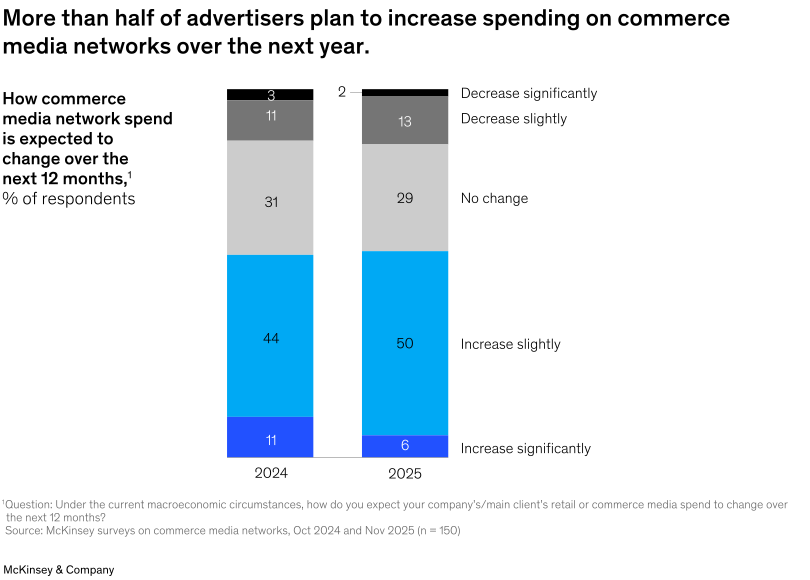
Most increases will come from reallocations: 22 percent plan to shift budget from digital video, connected TV (CTV), and over the top (OTT) to CMNs (up from 14 percent last year). Another 20 percent plan to shift from digital display, 18 percent from social, and 15 percent from search. Advertisers are also increasingly shifting their spending among CMNs, with 44 percent having done so in the past year. This indicates that CMNs outside of traditional retail—such as finance, travel, and last-mile delivery—are becoming more mature.
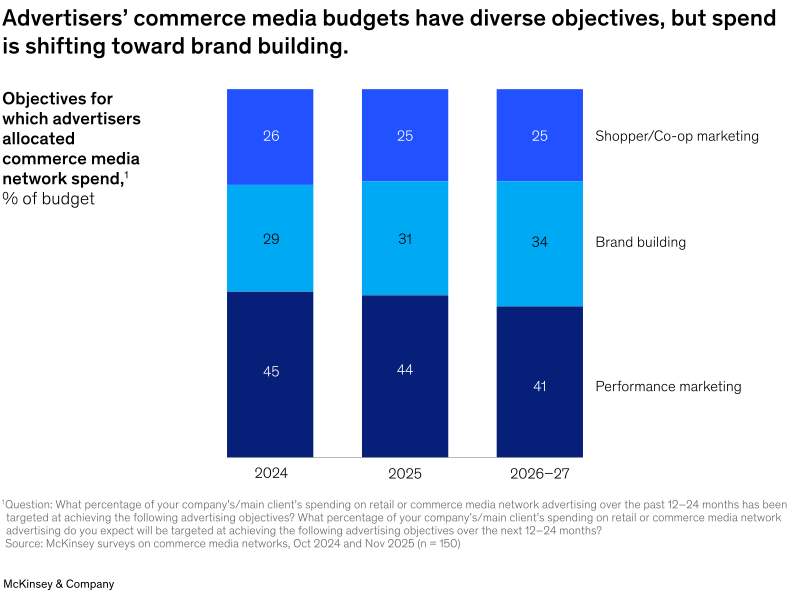
CMNs still capture the most wallet share in the performance marketing category. But as nonretailers proliferate in the space, advertisers are increasingly buying CMN inventory for brand building, signaling commerce media’s expanding role in awareness (Exhibit 2).
Multinetwork strategies become the default, not the exception
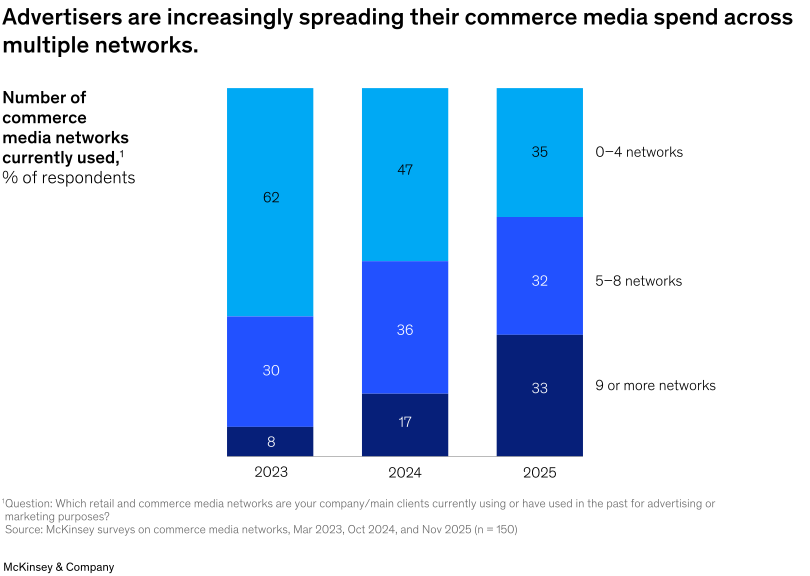
Buyers are also spreading spend across more CMNs. Advertisers now work with a median of approximately six networks, up from four a year earlier. In 2025, two-thirds used five or more CMNs—and a third used nine or more—reflecting a shift toward portfolio-based buying (Exhibit 3).
Buying strategies shift toward intermediaries and self-serve
As inventory fragments, advertisers are leaning on intermediaries to simplify execution and reduce operational burden. In 2025, our survey indicated that a quarter of commerce media spend flowed through agencies, 20 percent through buying platforms such as Criteo and Flywheel, and 12 percent through orchestration platforms such as Skai and Pacvue (Exhibit 4).
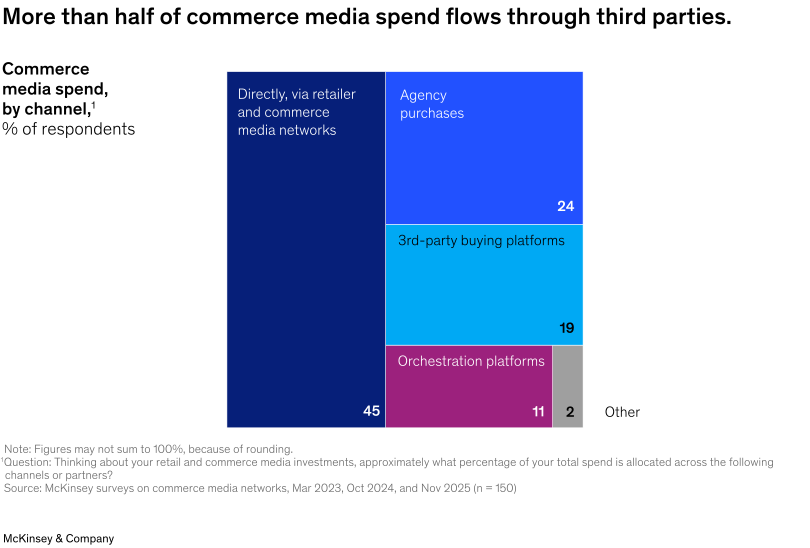
Across media networks, advertisers want greater direct access and flexibility, leading to self-serve platforms that now account for nearly half of all buys.
From channel to integrated media offer: How CMNs can go full stack
As commerce media matures, advertisers are increasingly evaluating CMNs as full-funnel partners—questioning how they deliver on measurement, optimization, and activation.
Thus, the advantage is shifting to CMNs that act less like channels and more like full-stack partners. Leaders are pairing full-funnel inventory with integrated tools and service models that help advertisers scale within the ecosystem. Those that remain inventory-first CMNs will struggle as advertisers increasingly expect a full-stack partnership—not just another place to buy ads.
Audience access: The rising bar for incremental reach
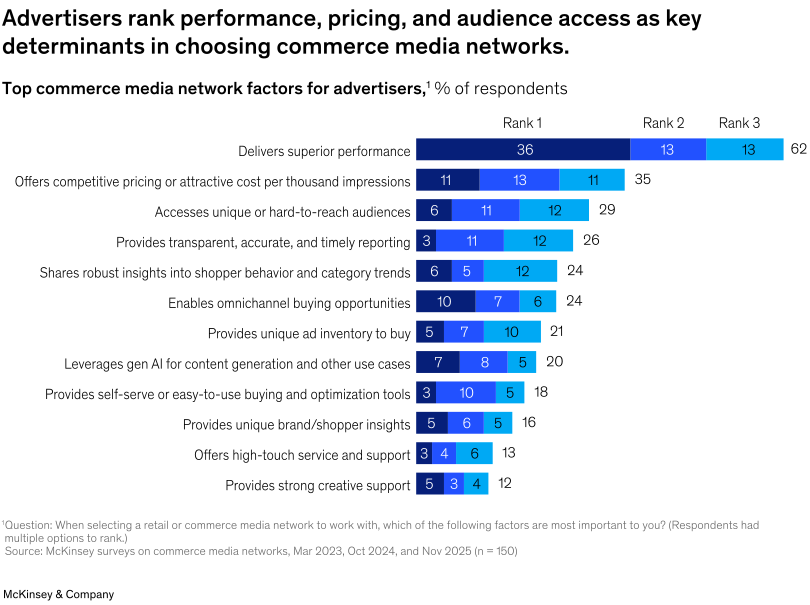
Access to unique or hard-to-reach audiences is a top factor in advertisers’ CMN selection, coming in third after return on ad spend (ROAS) and pricing (Exhibit 5). But as advertisers add more CMNs, audience overlap rises, making it harder to differentiate networks. CMNs that can prove true audience incrementality have an opportunity to gain share.
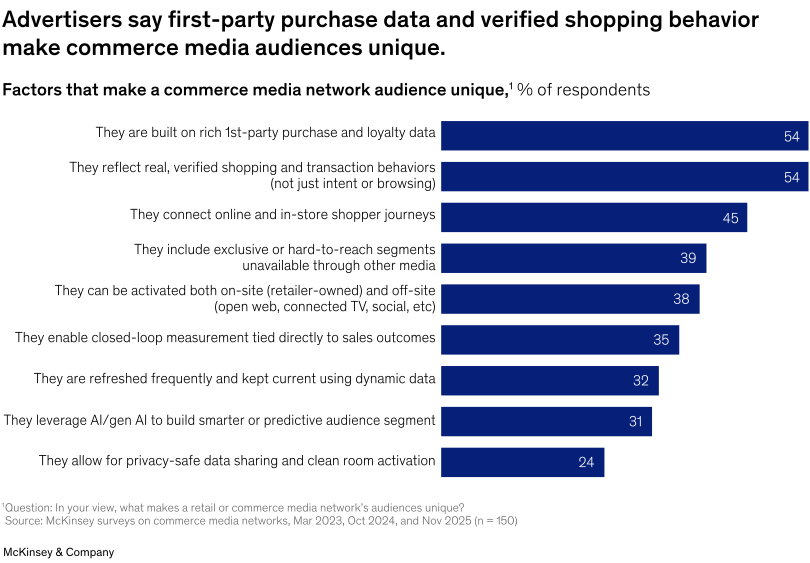
To advertisers, unique audiences are those built on first-party purchase and loyalty data and verified shopping behavior, with the ability to connect online and in-store journeys—factors cited by 45 percent or more of respondents (Exhibit 6).
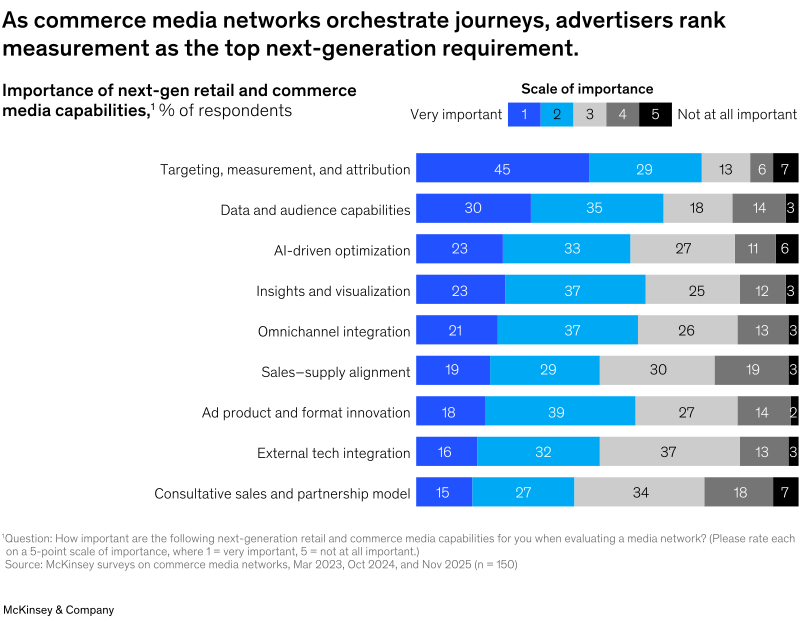
Moreover, nearly a third of buyers rate advanced data and audience tools as “very important” next-generation capabilities for CMNs.
From channels to journeys: Omnichannel and in-store integration
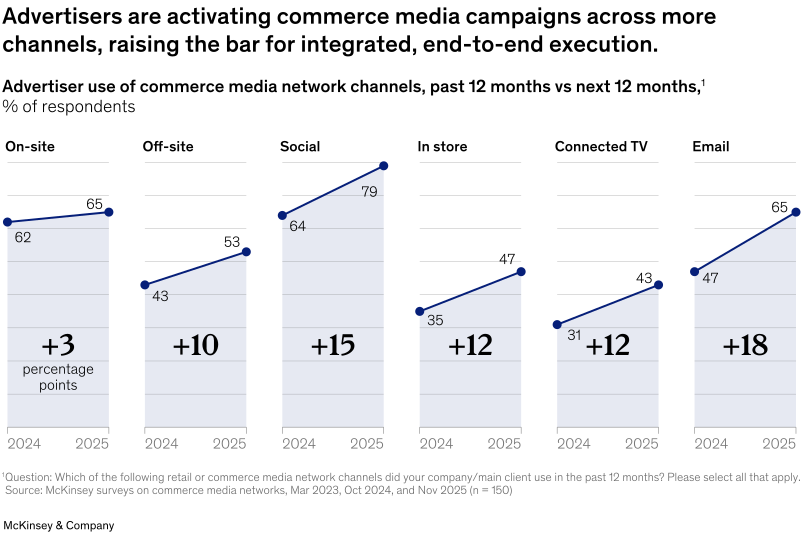
The growing emphasis on omnichannel audiences reflects how advertisers are deploying CMNs, with 47 percent of advertisers now using in-store advertising as part of their strategy, up from 35 percent last year. Omnichannel activation is now a core requirement as CMNs evolve into full-stack partners.
Buyers are planning across the funnel, extending CMN campaigns beyond performance into brand and upper-funnel channels such as CTV, off-site, and in-store display (Exhibit 7). Yet omnichannel execution remains difficult, especially linking offline and online campaigns and measuring how brand placements influence purchases. Nearly eight in ten advertisers find it at least moderately difficult to integrate in-store results into CMN reporting. Half of advertisers say improved measurement would unlock incremental investment, while 30 percent cite better attribution.
The measurement mandate: Advertisers demand transparency
Targeting, measurement, and attribution have emerged as the most critical next-generation capabilities for CMNs, with 45 percent of buyers rating these performance-based factors as very important when choosing networks (Exhibit 8).
Yet advertisers remain unconvinced, citing measurement as CMNs’ top challenge, followed by inconsistent metrics across networks (Exhibit 9). Only 3 percent say CMNs measure audience incrementality very accurately, leaving buyers with more data but less clarity on what drives impact.
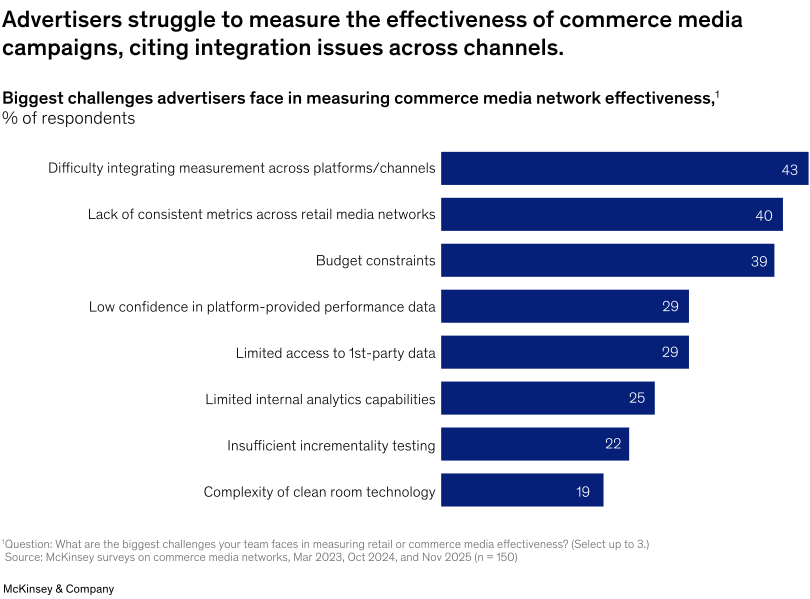
Taken together, these dynamics suggest measurement credibility remains a core battleground. CMNs that close the gap on this factor can become indispensable partners as the ecosystem grows more complex.
AI as a core offering: Advertisers expect it
AI is no longer experimental. About a third of advertisers plan to use AI daily across activities from scoping to creative to measurement, and over half plan to use AI at least weekly over the next 12 months (Exhibit 10). In addition, AI-driven optimization ranks third among advertisers as the most important next-generation capabilities for CMNs.
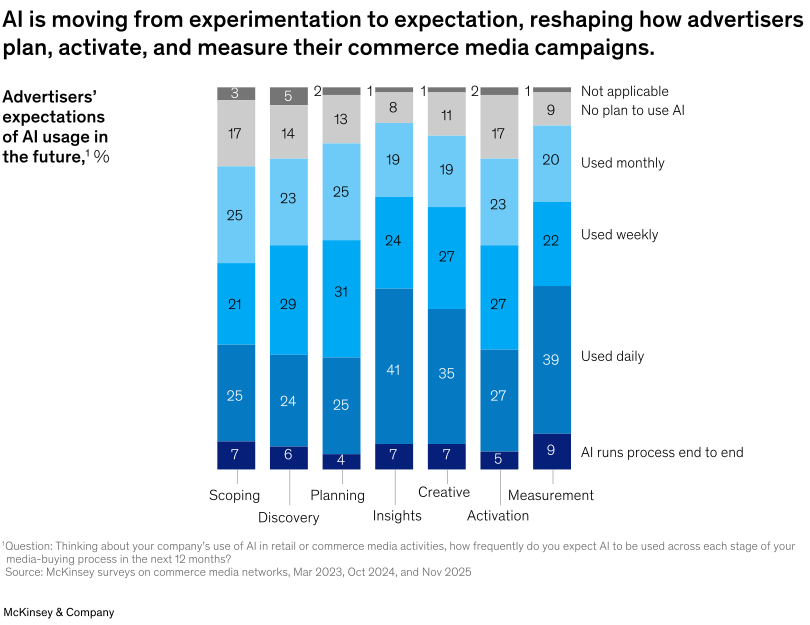
Barriers to further AI adoption among advertisers include low trust in outputs, regulatory and compliance concerns, and uncertain ROI, creating an opening for CMNs. Already, several CMNs are making strides in integrating trusted AI into their processes:
- Media planning and optimization. Walmart and Amazon have embedded AI into their media planning and campaign optimization, with tools that automate real-time bidding, enable predictive audience targeting, improve budget allocation, and deliver performance forecasting. These tools improve ROAS by continuously learning from first-party and contextual data.5
- Creative and personalization. Instacart is deploying AI for creative automation and personalization, including AI-generated landing pages and dynamic adjustments that tailor messages at scale.6
- Incrementality measurement. Kroger has rolled out advanced-AI-enabled incrementality measurement frameworks using first-party data and propensity scoring to estimate incremental lift, helping brands optimize campaigns with greater confidence.7
Five moves CMN winners can make now
For most networks, the challenge is not knowing what to do, but how to execute—requiring new skills and roles, deeper data and technology integration, and tighter coordination across commercial, product, and analytics teams. Leading CMNs are responding by redesigning how they plan, build, sell, and measure media, rather than layering point solutions onto legacy models.
As advertiser needs evolve and the CMN market matures and fragments, leaders are pulling ahead by tightly aligning strategy with execution. Winning CMNs can take coordinated steps to focus investment across five operational priorities:
- Be explicit about where to win and organize to support it. Leading CMNs make explicit choices about the advertisers, use cases, and budgets they serve. They benchmark against buyer alternatives and concentrate investment on a few differentiated strengths rather than attempting to compete across all dimensions.
- Prove value and earn trust through industrialized measurement. Winners integrate incrementality and performance measurement into a single system, with clear testing approaches, consistent metrics, and simple, repeatable reporting. Trust, not data volume, drives durable spend.
- Make omnichannel real across the shopper journey. Top CMNs design around a unified shopper journey, defining audiences once and activating them across on-site, off-site, upper-funnel, and in-store channels, with results reported in a single, holistic view.
- Simplify buying and operations to enable scale. As portfolios expand, leaders simplify buying and operations through self-serve tools, standardized workflows, and platform and agency integrations—lowering operational burden as spend grows.
- Embed AI where it improves outcomes—and operationalize it. Leading networks deploy AI selectively to improve speed, relevance, and performance—from bidding to creative optimization—supported by strong data foundations, clear guardrails, talent, and the change management required to scale what works.
Commerce media is entering a more competitive era. As new networks proliferate, inventory is commoditizing, and audiences are blurring. With more choices, advertisers are raising the bar, with the expectation that CMNs operate as full-stack partners that deliver integrated, outcome-based value across the funnel.
CMNs that want to pull ahead will need to move quickly by providing access to truly unique audiences, omnichannel activation, transparent measurement, and embedded AI. The five moves outlined above offer a practical starting point. Networks that commit now will be the ones advertisers reward with larger, stickier budgets.