
Before joining McKinsey, Dawn Musil (Cleveland, 2022-25) ran a company that connected beekeepers with farmers to make pollination more sustainable. At our Firm, she focused on agriculture and sustainable food.
Today she is chief of staff at Edge City, which runs month-long pop-up villages where researchers, founders, investors, artists, and families live and work side by side. When we spoke to Dawn recently, she was in Goa, India, preparing for Edge City India, a village in Mandrem that opened on October 11. We talked about pop-up villages, solarpunk, cancer-sniffing dogs, and why she thinks every alum should stay radically curious.
Your new career sounds fascinating. What is Edge City, and what is a pop-up village?
People call it a network state. For me it's simpler: it's a month-long village for people who want to build the future together. We bring together researchers, builders, artists, and families who share a few values, like caring about health, nature, and where our food comes from. Then we find a beautiful place to live and work side by side for a month.
Some people move to San Francisco because they want to be around tech people. This is a bit like that, but you start with the people. Someone might say, “I want to live somewhere near the ocean with people who care about regenerative food.” We help them find each other, and then we find the place.
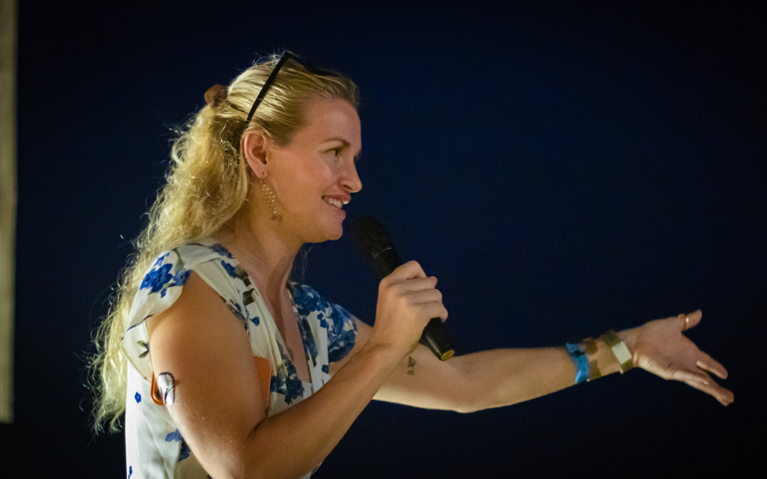
We don't do long-term settlements. We like the pop-up version because a month is short enough that people show up ready to work and meet each other. Good ideas, new companies, and investments tend to come out of that.
How did you end up at Edge City, and what are your goals there?
I felt agricultural change needed to happen at a much more systemic level. We're so far from our food. I did some soul searching and found this world of pop-up villages. I ended up running the food program for one of them, as part of a larger conference, and then joined full-time as chief of staff.
The name Edge City comes from the idea of being at the edge: new technology, different generations, and different ecological zones, which are called ecotones. Interesting things happen where those meet.
Our programs run for a month and are family-friendly. Researchers, builders, entrepreneurs, investors, and artists share the space, so it's not only tech people. We have storytellers and creatives too. My own path here came from my work in agriculture and food. Before McKinsey, I was a bee broker. I connected beekeepers and farmers to make pollination more sustainable.

Last year, you were on an island off the coast of Singapore. Tell us about that.
That's where I first came across this world. It was a startup community called Network School, set up on an island near Singapore called Forest City. It was built before the pandemic, and then COVID hit and it became a ghost town.
A couple of years later, Balaji Srinivasan, who wrote the book “The Network State,” saw it as a place to try these ideas in real life. He rented a big resort and people came for the first Network School. Our motto was “learn, burn, and earn.” You learn about AI, tech, and new ideas. You burn calories by staying fit. And you earn by doing your job or starting something new.
I taught yoga and some business classes there, and I did my own consulting for organizations like The Nature Conservancy.
You use some intriguing terms, like “solarpunk” and “techno-optimist.” What do they mean?
I'm not sure I can define solarpunk, but it's a sustainable, slightly rebellious look and feel. Think solar panels, lots of trees, and nature first. It connects to regenerative technology.
People feel very polarized right now. AI can make people afraid it will take their jobs. Techno-optimism is the belief that technology can help build a future with more for everyone, not only a few people. I try to hold both: be honest about the worries, and stay hopeful.
What kinds of experiments have you run?
One program coming up is with a company called Dognosis, which trains dogs to sniff out early-stage cancers. Dognosis says the dogs wear brain-computer interface (BCI) sensors while they work, and the team is studying what that data shows.
What does an average day look like for you? Is there such a thing?
Sometimes. But the past few weeks in Goa have been the most fun. Today, for example, I met with our production team. We walked around a beautiful resort overlooking the ocean. Then we checked out another venue, a Roman-style colosseum with Portuguese architecture. I also met with India's Minister of Tourism and chatted with potential investors.
Who is invited to the pop-up villages?
Everyone. The main thing is that you're curious and want to help build a better future. Health is a big part of the day, with yoga, exercise, and healthy food. We have kids, parents, and grandparents, and the community comes first. Honestly, it's like summer camp for families.
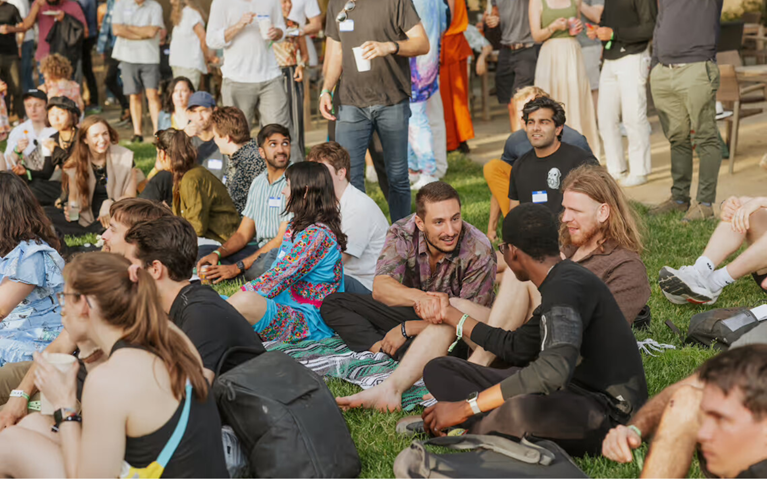
We are cultivating the best environment for people to thrive: surrounded by nature, and by people who help them become their best selves. That means innovators get the room to build, builders find co-founders and collaborators, and founders find users and investors. Because when people flourish, their ideas can flourish – and we want the ideas that create a better tomorrow to flourish.
Edge City Goa was just an idea three months ago. Now it's a real village with about 400 people signed up and a full daily program.
What drew you to this work?
After COVID, I realized real-life experiences were going to matter much more. I want to live in a walkable place with other kids and families, in a way that feels close to people.
Whatever you're building, personally or professionally, remember that people want to be together. That's worth planning around.
What do you want alumni to take away from this conversation?
McKinsey opens a lot of doors, so be radically curious about whatever you want to do next.
I'm doing something unusual that I can't describe very well. When I tell people I worked at McKinsey, they relax. The alumni network also helped me meet people, and that's how one of our investors came on board. So take some risks and be a little ridiculous in what you do next. What do you have to lose?
“Be radically curious.” That might be the title of this Q&A.
There we go. I love it. It's clearly the only thing that ties my career together!

