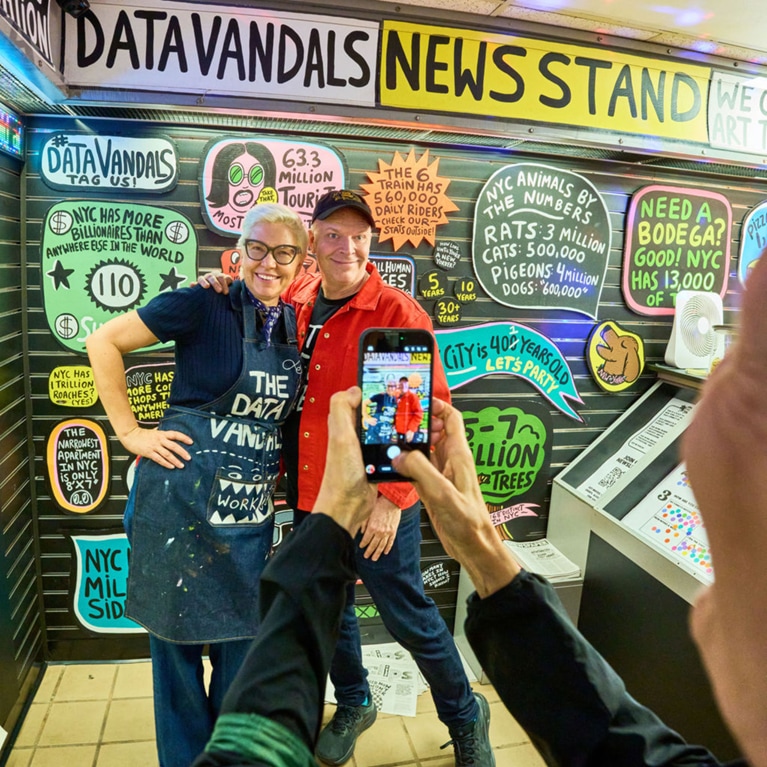
Jason Forrest (2016-2024, New York) is not the first McKinsey alum whose work has made its way into lectures at institutions around the world. He is, however, the first whose featured work was a picture of a cow.

The aptly named “cow chart” exemplifies what Jason most loved to do as a colleague, and now as an alum: taking data and turning it into relatable (even humorous) to create conversations and thought starters.
While at our Firm, Jason was responsible for creating some other iconic data visualizations. He crafted a Firm History Map—a giant visualization of McKinsey's 100 years, now hanging in offices across the world—and he built the pandemic-era emotions archive, which helped map out the human experience of how COVID-19 challenged and changed our lives and livelihoods.
Since leaving the Firm as an Associate Partner, Jason has continued to creatively embrace data. He sat down with us to share his journey creating his Jason Forrest Agency for client-facing work, leading Data Vandals (a data art group), his development of an art-and-data-forward graduate program, and the lessons he’s learned along the way.
Let’s start with Data Vandals. The name alone has me curious.
The idea behind Data Vandals was to take data out of the digital world and put it into the real world because when data becomes physical, it really starts conversations.
That desire for physical data actually began with some work I did at the Firm as part of the Future of New York Summit. We made these giant data sculptures with video projections. It was magical.
I’m trying to imagine “physical data.” Is the work always sculptural?
It depends. You need to choose the right medium to inspire conversations around specific data. That’s what we do! We figure out how to use data to provoke conversations.
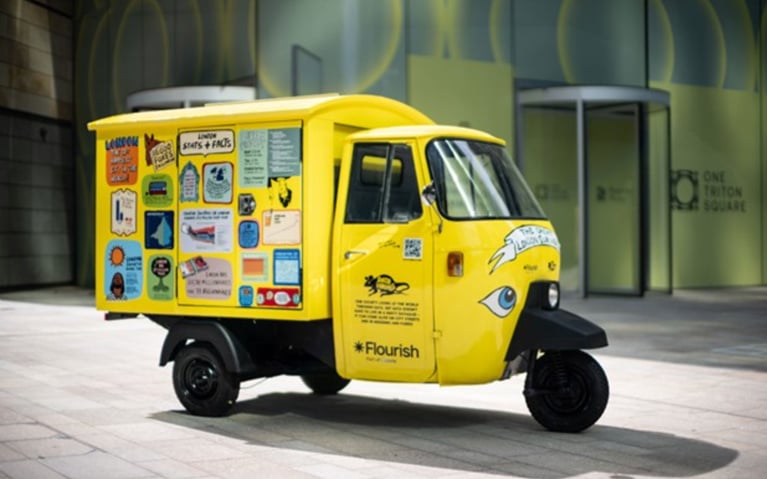
For example, last summer in London we went to six different locations driving this cute little Italian car covered in graphics. We used this car as a way to get people to talk about their lives in the city.
One of our current projects is a giant installation in Union Station in Los Angeles. The city is one of four major cities in biodiversity hotspots in the world and this installation shares data-centered stories about the indigenous animals it houses. We look at five animals and examine the role each plays in this ecosystem.
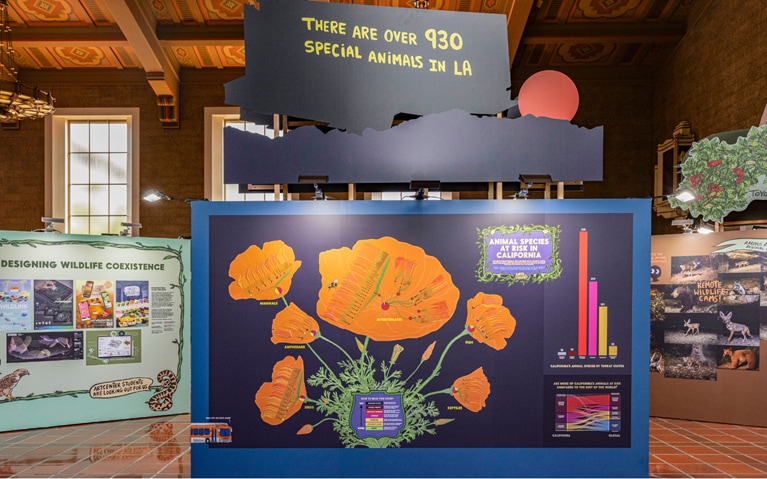
We also show a chart of animals that are endangered in California and compare their local survival to their survival in other super biomes around the world. When displayed this way, it’s clear that these animals are doing worse in LA than they are in other parts of the world. That prompts more conversations, which can lead to potential solutions.