
McKinsey alumni are well known for taking on consequential leadership roles after leaving the Firm. But data from an alumni-led organization suggest they may also have an edge in one of the hardest roles of all: founding a startup.
Marvin Ventures—named as an homage to Marvin Bower—is a network of Firm alumni who invest in, advise, and support startups founded by fellow alumni. Over the past several years, the group has been quietly studying an intriguing question: do alumni make successful founders?
The answer, it turns out, is yes—and they are top performers.
______________________________________________
Alumni founders beat the odds

Oscar Marquina (Washington D.C., 2016-20), a founder and current partner of Marvin Ventures, says the team examined alumni who left the Firm since 2010, building a detailed database of more than 950 startups worldwide founded by alumni to answer a simple but fundamental question: how do alumni-founded startups actually perform?
What emerged surprised even seasoned investors.
About one in twelve McKinsey alumni–founded startups has reached unicorn status (a valuation of $1 billion or more). Collectively, says Marvin Ventures, alumni founders have created more than $280 billion in enterprise value and over 100,000 jobs. The organization’s analysis suggests a founder failure rate of roughly 15 percent after they have reached Seed Stage, compared with an estimated 80–90 percent in the broader startup market. A hypothetical investment across all the U.S startups would have yielded approximately a 12x multiple on invested capital and a 100 percent internal rate of return.
Oscar notes that the team partnered with PitchBook to build the database and validated their findings against analyses used by top-tier venture firms.
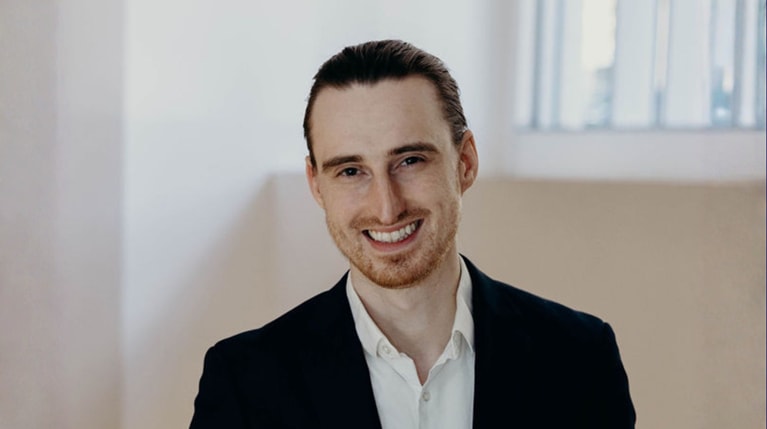
Ulrik Soderstrom (Boston, 2017–19), also a founder and current partner of Marvin Ventures, put this into context by noting that the failure rate of a McKinsey founder is roughly half that of a founder from Y Combinator, a leading global startup program.
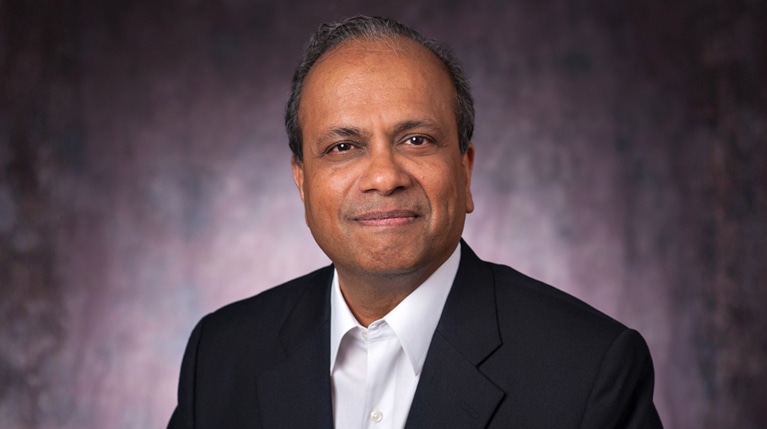
Shyam Chidamber (Washington, D.C., 1994–97), the third founder and current partner at Marvin Ventures, recalls hearing similar signals from outside the community. A deeply technical investor once told him that several venture firms had independently noticed the unusually high success rate among McKinsey alumni founders.
“That was a moment of recognition,” Shyam says. “We realized this wasn’t just anecdotal—it was a pattern.”
Marvin Ventures’ ambition, he adds, is to make that advantage visible, repeatable, and broadly accessible—one founder, one connection, and one company at a time.
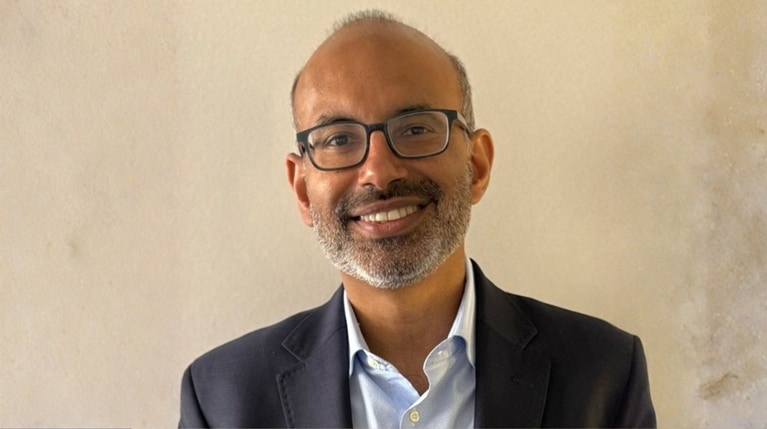
Raghav Sharma (New York, 04-13), a Marvin Ventures founder, investor, and advisor, sees the mission expanding. “There’s the recent Fortune article that reinforces how McKinsey is a CEO factory,” he says. “And increasingly, part of the mission of Marvin Ventures is to help McKinsey also be known as a founder factory.”
Why McKinsey alumni founders outperform
Leaders and members of Marvin Ventures point to several reinforcing mechanisms that help explain why alumni founders consistently outperform baseline odds.
Trust as an execution accelerator
Ulrik describes an “incredible glue” among alumni founders. “They know what the other has been through,” he says. In the startup world, that trust speeds hiring, advising, fundraising introductions, and partnership conversations.
Shyam describes the environment within the organization as “a fractal of Silicon Valley, scaled virtually.”
Training that maps directly to product-market fit
The Firm’s problem-solving discipline shows up early—precisely where many startups fail. Ulrik notes that alumni are trained “to find the answer and not attach to an initial hypothesis,” which he links directly to discovering product-market fit: “Focus on the customer problem you’re solving and keep iterating until you find the value.”

Ann Ogami (Denver, 2016–21), an investor and advisor within Marvin Ventures, agrees. “The Firm trains you to become entrepreneurial, because it’s not an easy road,” she says. “You become comfortable with being uncomfortable, so building your own startup becomes a little bit more of a natural transition.”
Ulrik also points to another advantage: many founders struggle to scale beyond early traction, but he sees McKinsey alumni as having a profile that can “run a 10,000-person organization and scale the business.”
Raghav Sharma agrees. As a three-time founder with two exits, he says, “I saw all these alumni going along the startup journey and I felt like I could impart dos and don’ts (mainly don’ts!) to help make their journey smoother.”
He adds, “I’ve always hated it when people say consultants can’t be good entrepreneurs. I think that we come with a lot of great advantages. One is the structure and rigor that McKinsey alumni can add to an entrepreneurial gut feeling and instinct. The ability to communicate and bring forward the value proposition of what you’re doing and why it matters is something that’s really strong. And then, of course, there’s the ability to frame hypotheses, run them down, problem-solve around them, and lead disparate teams.”
Domain expertise in a technology-driven world
Many alumni founders pair deep industry experience with new technologies. That combination lends credibility—particularly in traditional industries, where customers value domain fluency as much as technical novelty.
“In an AI-focused world,” Shyam says, “smart money increasingly values domain expertise and the ability to communicate what the value proposition is to investors, customers, and employees.
Ulrik adds, “It’s faster to build technical solutions than ever with generative AI. In today’s Silicon Valley, it’s crowded and the CEO with an unfair advantage wins. Those unfair advantages are industry expertise, connections, and persistence.”
Persistence and pace
Finally, there is work ethic. Ulrik observes that alumni founders “do not give up in building their company,” regardless of the challenges they encounter.
In an environment where many startups fail from exhaustion rather than bad ideas, that durability matters.
The Marvin Ventures model in action
The Marvin Ventures team points to concrete examples of how an alumni network becomes an operating advantage.
Shyam describes supporting a departing consultant who joined forces with a computer science professor and a serial entrepreneur. Marvin Ventures helped connect early capital and incubator resources for the company, which was later acquired by Apple.
He adds that another Marvin Ventures-backed company raised a Series A round at a $190 million valuation, with plans for a Series B the following year, and hired a McKinsey alum as Chief Growth Officer.
“There’s information, there are networks, there’s help, there’s mentorship,” Shyam explains. “There’s no pay-to-play, but there is an expectation that successful founders later give time back.”
Marvin Ventures has three pillars:
- The Venture Fund, which invests into pre series A startups founded by alumni
- The Founder Network, with 250+ alumni founders
- The Orbit community, with 150+ investors, and industry leaders helping support startups
Through these pillars, Marvin Ventures not only invests capital, but greets founders from day 0. Many alumni are introduced to them as they are transitioning from the Firm to join a startup or found their own.
Marvin Ventures hosts quarterly showcases with dozens of alumni founders actively raising, private fireside chats with unicorn alumni and Firm partners, and large-scale events in Firm offices. Their first major summit in the New York Office drew 150 attendees, including McKinsey alumni, current partners, and ecosystem supporters, with participation from investors from Softbank, KKR, Lightspeed, a16z, NVIDIA, and JPMorgan’s startup banking group. The event showcased founders across the spectrum—from unicorn founders to pre-Series A teams—illustrating the breadth of alumni impact in technology entrepreneurship.
Most recently, they’ve launched an Entrepreneurs in Residence program, hosting Firm alumni who have successfully exited their startups to offer mentorship to those starting out. This year they are planning multiple summits and events across the U.S. and Europe.
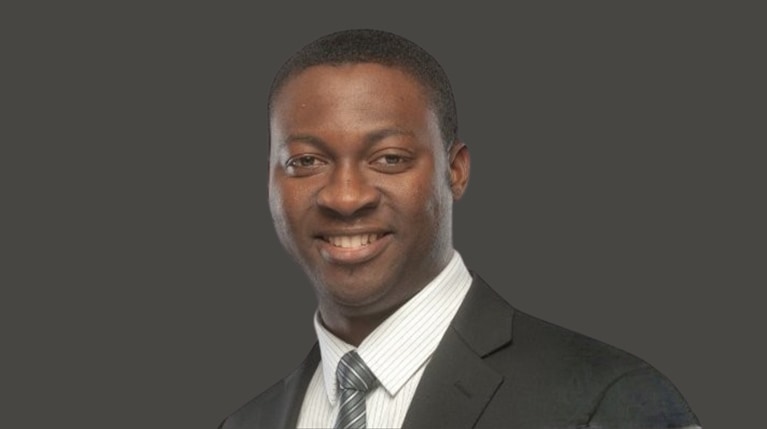
Gbenga Ige (Washington, DC, 2015–19), a member of Marvin Ventures, adds, “I think that this is the start of something exciting. I don’t think this is a final product—it’s the start of a journey.”
Community in practice: visibility, signaling, and connection
Marvin Ventures engages with the broader alumni community in multiple ways. One important channel is McKinsey Network, which Marvin Ventures has embraced as a platform to broadcast events, post insights, and showcase founders to the global alumni base.
Join McKinsey Network and make your presence real—complete your profile, follow relevant groups, and post a specific ask or offer.


