Information vs. wisdom: Why meditation is essential for leaders in the age of AI
Manish Chopra meditating at a monastery in Thimpu, Bhutan in 2023.

In a world increasingly dominated by algorithms, the scarcest resource is not data—it’s discernment.

Years ago, I hit an inflection point in my own leadership. Running on “anxious momentum,” I realized I was reacting to life rather than living into it. A ten-day Vipassana meditation retreat helped me cultivate a mind that is more ethical, aware, and equanimous—qualities that are foundational to inner wisdom.
As I sat in silence, watching my thoughts rise and fall with each passing breath, I saw that meditation wasn’t about escaping reality but rather about witnessing it more clearly.
That personal practice has also become a professional lifeline. It steadies me amid turbulence and helps me stay grounded through uncertainty in life and work. I notice that when I am calm, my teams are calmer. When I am agitated, so are they. Leadership is emotional contagion. The energy of the leader shapes the energy of the team.
Today, as AI changes how we work and make decisions, meditation feels more important than ever. It strengthens the human skills that help us deal with many problems—including technology.
What AI can’t give you—and meditation can
AI can process infinite information, but wisdom requires reflection, not computation. AI can generate insights, but not purposeful guidance. It can predict trends, but not exercise judgment. Meditation fills that gap. It builds the inner clarity and composure that technology cannot replicate—and that modern leadership demands.

But this inner capacity doesn’t emerge automatically. It must be cultivated intentionally through consistent inner work such as meditation and other introspective practices like journaling and reflective walks in nature. From my experience, meditation strengthens three essential foundations of wisdom: ethics, awareness, and equanimity. Each giving rise to a dimension of personal growth from the inside out.
Reclaiming attention as a leadership skill
We live in an era of infinite input and finite focus. Meditation helps me reclaim my attention—the most precious resource of all. Small mindful habits, such as pausing between calls, taking a few breaths before difficult conversations, or putting my phone away well before bedtime, anchor me in the present moment. When I am truly present, I see more clearly what matters most.
Meditation strengthens cognitive flexibility
To keep pace with the rapid change brought about by AI, leaders must continually learn and adapt. Meditation enhances attention, working memory, and mental agility—the very capacities needed to understand new tools and navigate shifting environments. It also engenders creativity and open-mindedness at a time when automation risks dulling original thought.
Equanimity as a competitive advantage
Meditation trains the mind to observe before reacting—to create space between stimulus and response. That calm reflection helps me handle pressure and uncertainty with balance. When I can remain evenhanded in the face of challenges, I make better decisions. Equanimity is not passivity or ambivalence; it is poised action grounded in perspective.
Leadership energy sets the tone
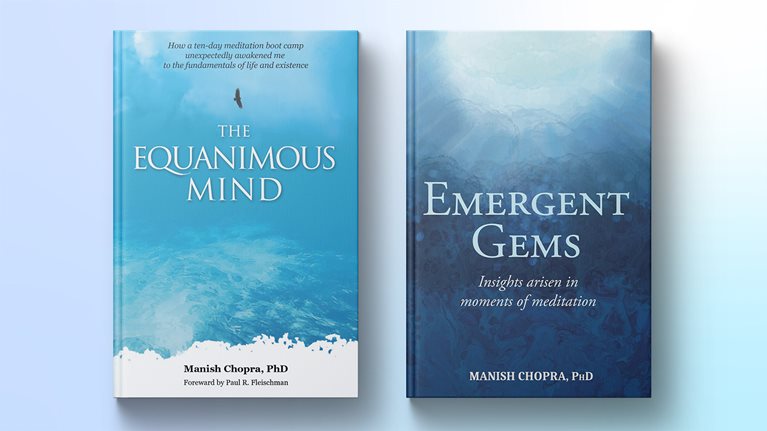
Leading people is as much an emotional as operational ability. The energy I bring and embody as a leader ripples through my teams and organization. Meditation helps me regulate my state so I can model steadiness and presence, especially when others feel uncertain. When I’m agitated that ripples, and when I am able to be grounded, those around me are too.
Inner work sharpens ethical judgment
AI can surface data about bias or fairness, but it can’t feel empathy or discern right from wrong. Meditation reconnects me with my inner compass—the sense of purpose that keeps choices grounded in integrity, not expedience. When information is flooding in from every direction, this ethical discernment becomes indispensable.
The irreplaceable human element

AI can make us smarter in a hurry—but only gradual inner discernment can make us wiser. It can turn reams of information into insights, automate workflows, and challenge how we think. But it is unlikely to replace the essence of human leadership: wisdom, empathy, and trust. Those qualities don’t emerge from code. They come from consciousness and must be cultivated through inner work.
In building smarter machines, the leaders who thrive will be those who also cultivate wiser minds. The most powerful leadership operating system isn’t artificial. It’s inherently internal.