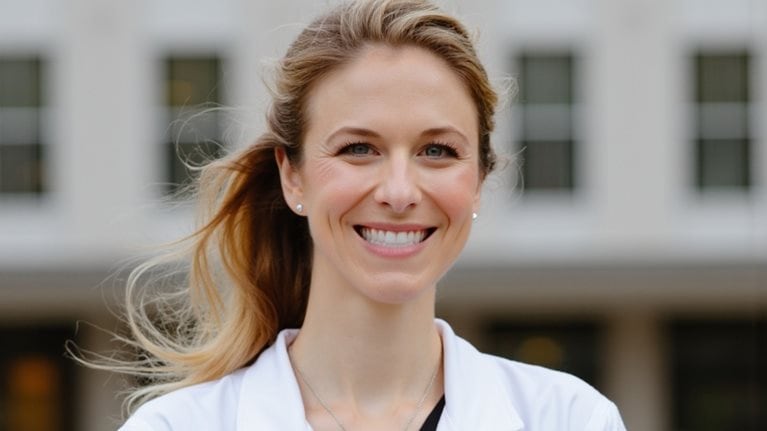
Doctors at McKinsey: How McKinsey helps physicians lead in both medicine and consulting
McKinsey consultants who are practicing doctors, from left: Stephan Castellanos, Ruth Wei, Greg Zahner, and Mark Zaki
Neurosurgeon Dr. Mark Zaki felt called to medicine after his grandfather’s lung transplant.
“He got two extra years of life. I wanted to have that same impact on others,” he says.
But as he went through residency, his vision for helping people expanded beyond patient care. “I saw how much healthcare depends on systems—on how hospitals are run, teams are organized, and resources are managed,” he explains. “That’s what led me to McKinsey.”
He is among more than 400 clinicians at McKinsey who blend medical training with consulting to drive meaningful change in healthcare. Together, they help healthcare organizations improve care delivery, efficiency, and patient outcomes—building systems that heal at scale.
From operating room to boardroom
Neurosurgery residency is seven years, and during the fourth and fifth years, most doctors take on professional development opportunities, such as clinical research. Mark, who has an MD and MBA, took a nontraditional path and joined McKinsey for the two-year term, now in his second year.
At the firm, he has advised hospitals on improving operational efficiency while maintaining clinical and surgical work on some weekends and overnight calls.
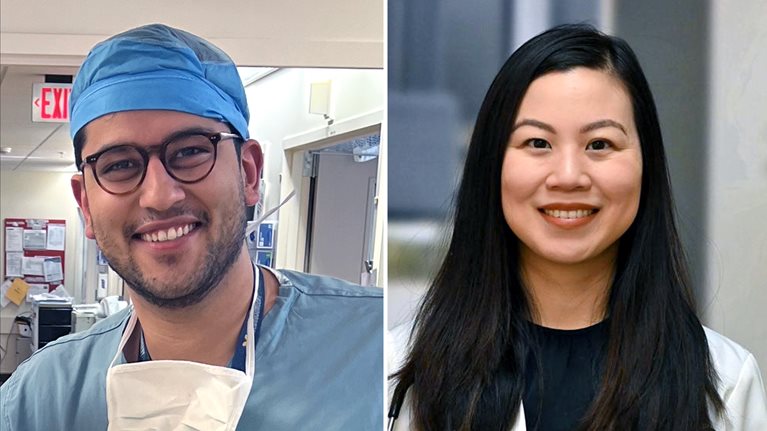
His insights have helped the McKinsey team work with hospital clients in various ways. One client reduced the amount of time its patients spend in the hospital by strengthening care outside the hospital, such as establishing a new outpatient wound-care clinic. He also drew on his surgery experience to lead the team in mitigating bottlenecks in OR turnaround time.
While he’s not sure what his path will be when he returns to residency, he knows he has been changed by his time at the firm. “With clinical work, you get the directness of your impact. With McKinsey, you get the scale,” he says. “Right now, I have feet in both waters, and I’d love to stay in both as long as I can.”
Building systems that heal
Dr. Greg Zahner took a leave from medical school from 2017 to 2019 to work at McKinsey—a path he found through a chance recommendation during a medical school interview. “It changed everything,” he says.
After completing his internal medicine residency, he returned to McKinsey in 2024. Today, he splits his time between consulting and working as a hospitalist (an internal medicine physician who focuses on the care of hospitalized patients) specializing in oncology, with about 40 to 50 shifts at the hospital per year.
Reducing length of stay has been a focus for Greg as well. His work has included increasing efficiency through co-locating care teams—so a physician has most of their patients on a single unit, along with a consistent support team such as physical therapists, nurses, and case managers—as well as improving communication through standardized multidisciplinary rounds that bring the entire care team together daily.
“There wasn’t much high-quality published research on this,” he says, “but I could describe what I’d seen firsthand at my own hospitals to bolster McKinsey’s recommendations. That personal credibility helped persuade them to dig into the data, plan, and ultimately implement systemwide initiatives.”
A new generation of hybrid clinicians
Joining McKinsey began as an experiment for Dr. Stephan Castellanos when he became a summer intern during his MD/MBA program. “I didn’t expect to make it my primary career,” he says. “But seeing people at the firm living in both worlds, working on changing healthcare while practicing—I wanted to do that.”
During his internal medicine residency, Stephan led the residents’ council representing more than 1,000 trainees in his health system. “We secured a 7 percent midyear raise because of inflation,” he recalls. “I don’t think I would’ve had the confidence or tools to do that without my McKinsey experience.”
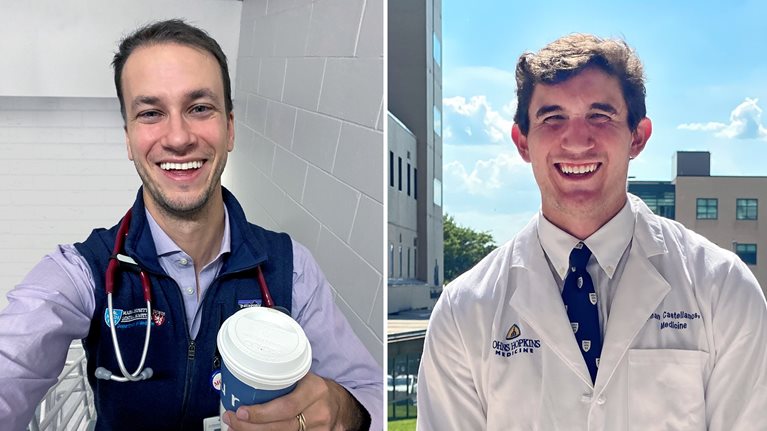
Stephan then became a full-time hospitalist for six months before returning to McKinsey full-time. He now spends roughly four weeks per year working in the hospital, plus additional weekend shifts. He continues to work with residents and is also an assistant professor of medicine.
One of his recent projects focused on helping a hospital grow its clinical programs. “We built models showing how improving diabetes management or cancer screening could both improve outcomes and sustain the hospital financially,” he says. “Being able to speak the same language as other physicians allowed us to effectively partner with one another.”
From private practice to systems change
For Dr. Ruth Wei, a family medicine physician, the path to McKinsey began in the exam room.
“I was in private practice as the only provider at a new clinic,” she recalls. “Every day, I saw how fragmentation in the healthcare system—paper records, disconnected data—made it harder to deliver the care patients needed and left them at risk of falling through the cracks.”
Without an MBA or formal business training, she saw McKinsey as “an experiential classroom”—a place to learn how healthcare systems operate while continuing to care for patients.
“I had very little business education in medical school,” she says. “I wanted to understand who the different players in healthcare are and how decisions get made—while still contributing as a clinician.”
Now in her third year at the firm, Ruth has helped payers expanding into provider care design new primary care models, helping to close care gaps and engage patients after hospitalization. In another engagement, she drew on her experience in primary care to guide a client in designing patient outreach programs. She reminded her client that “patients—especially older ones—are far more likely to call their doctor than a company hotline,” prompting a redesign of their engagement model.
Ruth continues to practice medicine as a hospitalist. “Practicing is a big part of my professional identity,” she says. “It keeps me grounded in why we do this work. Consulting helps me see the system-level impact, but medicine reminds me that every decision ultimately affects a real person.”
The power of perspective
Stephan says the firm’s emphasis on “constant and candid” feedback has not only shaped his approach to consulting but also made him a better doctor. “I’m intentional about seeking feedback in medicine—where that culture isn’t as strong.”
The transition from the clinic to consulting helped boost Ruth’s confidence. “In medicine, hierarchy is clear. At McKinsey, we lead from any level and often advise people who’ve done their job for 20 years,” she says. “But I had great mentors and learned to see myself as a coach with valuable experience to offer.”
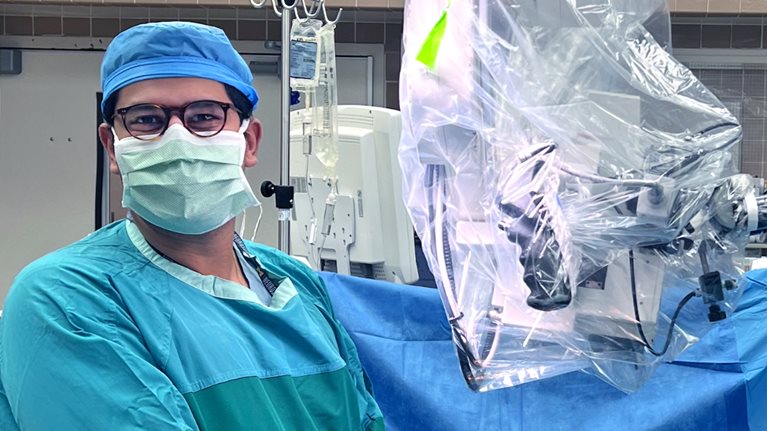
For Mark, McKinsey offers a rare space where clinicians can develop as system leaders. “We don’t have enough physician leaders making decisions about how care is delivered,” he says. “McKinsey trains physicians to be impactful leaders with both clinical and business context. That’s exactly what healthcare needs.”
Greg had always planned to pivot to hospital administration. He thought he’d gain administrative experience at a hospital to learn how to improve care, but after discussing his early time in the firm with a mentor at the hospital, he knew he’d learn the most here.
Greg adds, “The training at McKinsey—the clients, tools, analytics, and benchmarking data that we have access to are incredible,” he says. “My mentor said, ‘You won’t find that anywhere else.’”