Doctors at McKinsey: Caring for patients while transforming health systems
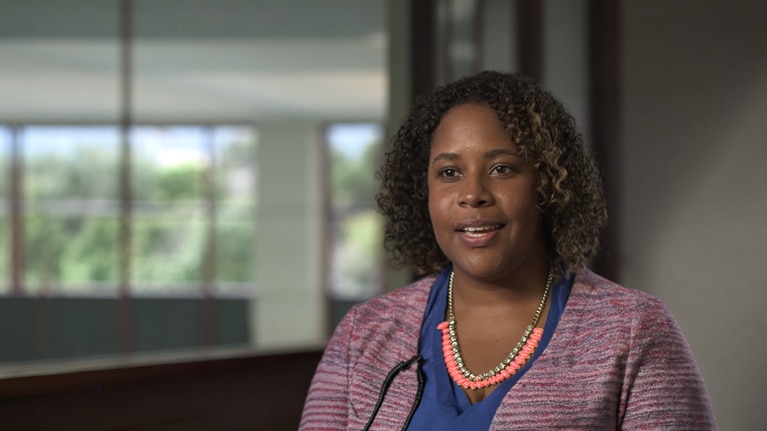
As faculty at Harvard Medical School, Dr. Caroline Morgan Berchuck led sessions for aspiring doctors on healthcare 101. Often drawing on insights from McKinsey’s research to highlight how people can slip through the cracks, she has helped doctors understand their role in creating a more equitable and effective health system. It’s hard-earned knowledge from years spent as a physician specializing in patients from vulnerable populations with complex needs and working with organizations focused on making the system work for them.
An associate partner at McKinsey and co-director of women’s health at the McKinsey Health Institute, she continues to practice medicine—caring for patients in the hospital—and serves as a medical school faculty member. She is part of a growing community of clinician-leaders at the firm who remain active in clinical care and bring real-world practice experience to their work with clients.
Here she discusses her unique career path, how her clinical work ties in with consulting, and the progress she’s helped create in healthcare in her three years at the firm.
A path to medicine that began at McKinsey

After college, I worked for two years at the Touch Foundation (now Touch Health), a global health nonprofit that was led by McKinsey and was then run out of the firm’s New York office. It was a great way to learn about consulting while being dedicated to a cause.
I worked on various projects in Tanzania, including visiting rural clinics, talking to clinic operators, and speaking with women about their families’ healthcare needs. At one center, there were around a hundred moms and their kids who had walked for days and spent all their resources to be there. They often waited days more for vaccines and care. Through operational improvements, scaling the healthcare workforce, and streamlining payment structures, we were able to significantly improve access to healthcare across the country.
It was a formative experience for me. It inspired me to go to medical school but also to make sure I worked on improving how healthcare is delivered.
I became a complex care doctor, specializing in primary and hospital-level care for patients with serious medical, behavioral, and social needs. I did this at Brigham and Women’s Hospital, as well as through a home-based care model. I combined this with my work at Commonwealth Care Alliance, where I focused on care delivery innovation for people with complex needs, and at Cityblock Health, where I worked to scale those innovations across many states. At each organization, I personally cared for some of the patients that came to us.
A great example of innovative home-based care that looks at a patient’s full picture was a man who came into the hospital every month for several months for heart failure. Each time it was a long admission and very, very challenging. Eventually, we went to his home for a home visit, in which we were better able to assess his health. What we saw was healthy food everywhere, but even though he had reported not drinking alcohol, we discovered that he imbibed every full moon as part of his belief system. We started going to his house the day after every full moon to deliver care in his living room, and he has since stayed out of the hospital.
Making an impact for vulnerable populations through McKinsey
After earning my master’s in public health in 2022, I was looking to expand the impact of my work when a colleague I worked with at Touch Foundation reached out about joining McKinsey. With the launch of McKinsey Health Institute (MHI), it seemed like a great time at the firm to pursue advancing human health globally. As an associate partner, I get to take my experience caring for people underserved by our healthcare system and inform system-level changes across industries within healthcare.
Much of my client work focuses on “Duals,” people who have both Medicare and Medicaid; these are often people with low incomes and disabilities or seniors. There are about 12 to 13 million “Duals” in the United States, and they are the most heterogenous and complex patient population.
I’m currently working with a major provider on improving how this population can access and receive care, which can mean living long enough to see one’s grandkids, or someone with bipolar disorder who’s also pregnant being able to get the medications and support they need to be a thriving parent for their child.
When I joined the firm, there wasn’t much in the way of a business case for women’s health. Through MHI, we pooled the time, resources, and talent to build it to the benefit of women, communities, economies—and our clients.
In January of last year, MHI published a paper with the World Economic Forum on the investment case for closing the women’s health gap, which currently equates to 75 million years of life lost due to poor health or early death. Closing it could boost the global economy by at least $1 trillion annually by 2040. The report caused a major increase in interest from clients in women’s health, and some exciting work is underway.

In December of 2024, I was invited to the White House as part of a group of experts on women’s health to talk about the business case—the first such meeting held there. We also facilitated a venture capital summit recently and discussed this. We heard feedback from people that our work has helped change how people are investing in healthcare.
Raising awareness like this is so important, because even though I’ve always cared about this issue, I also had a blind spot for it. Not long after working with an academic medical center on strategy improvements, I got more involved in women’s health work at the firm. I looked back on that study and realized we never parsed their data by sex. Do women and men have different outcomes in their health system? It was a missed opportunity, and I kicked myself.
We went back to them and said, “Do you mind if we take another look?” They were very interested to see what would come of it—and it turned out women weren’t faring as well there, which amounted to a standard of care that didn’t align with their mission and missed revenue opportunities. It really transformed their approach and their care.
The importance of keeping a foot in both worlds
Seeing patients fills me with joy, and it helps to really stay close to the challenges and problems that our patients and providers face every single day.
It also helps build trust with our clients. When I’m working with a health system client, they know I can offer insight rooted in lived clinical experience. To me, that’s so important because the more privilege we have in life, the further we are from the most overlooked and underserved patients. Practicing medicine ensures their needs always inform my work.