Beyond the buzz: Making AI work for real business value
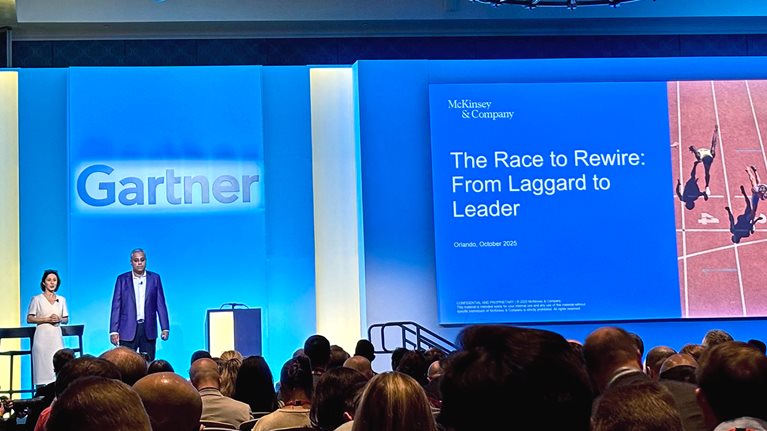
At the recent Gartner IT Symposium in Orlando, McKinsey’s Dante Gabrielli was ready to wow participants. An associate partner and director of product management at QuantumBlack, AI by McKinsey, he was on hand to demonstrate the firm’s AI Agents at Scale, which operates as an autonomous digital workforce. He teed up the agents to tackle a stubborn business problem, such as decoding dense, outdated legacy code, and within seconds, their thought processes played out like a rapid-fire Slack chat—solving in minutes what would take humans months.
“Initially, I get reactions of disbelief, often hearing, ‘There’s no way this works,’” says Dante. “But it quickly moves to excitement when people realize we’re not just showing them tech, but reimagining their business in ways never thought possible.”
Turning potential into performance

According to McKinsey research, only about 1 percent of organizations describe themselves as “mature” in AI deployment, while global technology spending continues to rise faster than productivity gains. That gap—between investment and realized impact—is known as the “productivity paradox,” says McKinsey Senior Partner Hrishika Vuppala.
“At its core, the paradox reflects a common challenge: companies are buying technology faster than they are learning how to use it effectively,” she says.
The result is eroded value—often 30 to 40 percent of potential impact lost to misaligned incentives, fragmented systems, or insufficient operating-model redesign.
AI success doesn’t start with the algorithm. It starts with re-architecting the enterprise—the data, platforms, people, and processes that enable AI to deliver real productivity. In new insights from the “Triple the return” framework, McKinsey outlines how top-performing companies generate up to three times more value from their technology investments. The difference lies not in spending more, but in executing better:
- Reimagine the business through tech. Leading organizations treat technology as a core driver of business model innovation, not a support function. We focus on helping leadership teams define AI-driven use cases that align with growth and efficiency goals.
- Rewire technology for speed and scale. That means modern data architectures, composable systems, and “AI-ready” platforms that make experimentation fast and scaling seamless.
- Rehumanize the organization. Companies must upskill their people to work with AI, empowering every employee—not just engineers—to understand how intelligent systems enhance their roles.
Hrishika, who works closely with CIOs through McKinsey’s Technology Practice, notes that these shifts are as much cultural as technical. “This isn’t about ten-day AI lectures,” she says. “It’s about making AI part of the way we work.” The goal is to create operators who understand how AI fits into their workflows and how to collaborate with it productively.
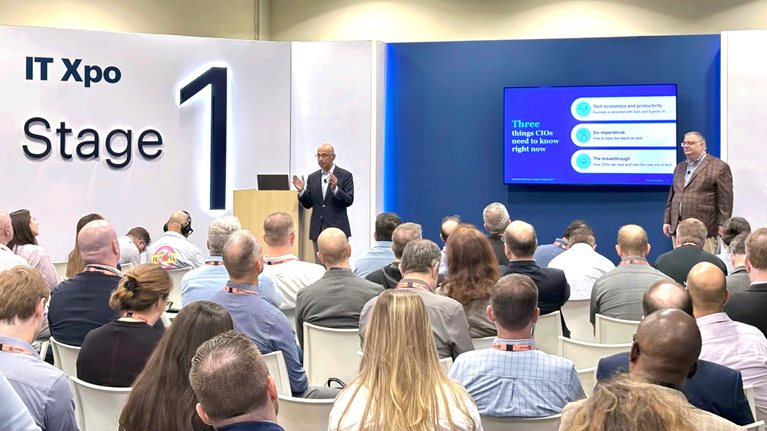
For many clients, the hardest part of AI transformation is moving from proofs of concept to value at scale. Oana Cheta, a partner leading McKinsey’s agentic AI work for the Service Operations Practice, describes this shift as moving “from projects to living systems of intelligence.”
In her talk at Gartner and with clients, she stresses a few core principles that differentiate leaders from laggards:
Don’t “AI the wrong thing.” Apply AI where autonomy, reasoning, and adaptability truly add value—enhancing decision-making, outcomes, and experiences—while keeping traditional automation where it still works best. Clarify the scope: focus on the journey, not just the workflow—that’s where real value is created. Bring AI that solves meaningful problems for end users, not just automates steps.
Design for modular orchestration, not fragmentation. Avoid isolated micro-agents or single-purpose pilots that can’t evolve or interconnect. Instead, build modular components and orchestration layers that allow systems—CRM, service logs, diagnostics—to communicate and scale as one coherent ecosystem where knowledge compounds over time.
Engineer for adoption, not just intelligence. The best technology fails without human trust and behavioral change. Build human-in-the-loop pathways, clear escalation and feedback loops, and targeted capability building so people learn how to work with AI, not around it. As Oana notes, “Transformation only sticks when your staff know when to trust the system, when to override it, and how to improve it.”
This approach redefines what it means to be a technology leader. Rather than implementing tools in isolation, organizations create composable AI operating models—flexible architectures that blend strategy, governance, and real-time intelligence. As Oana puts it, “We help companies move from pure AI transformation—which is vague—to an AI operating model for an enterprise that’s composable.”
Bridging strategy and execution
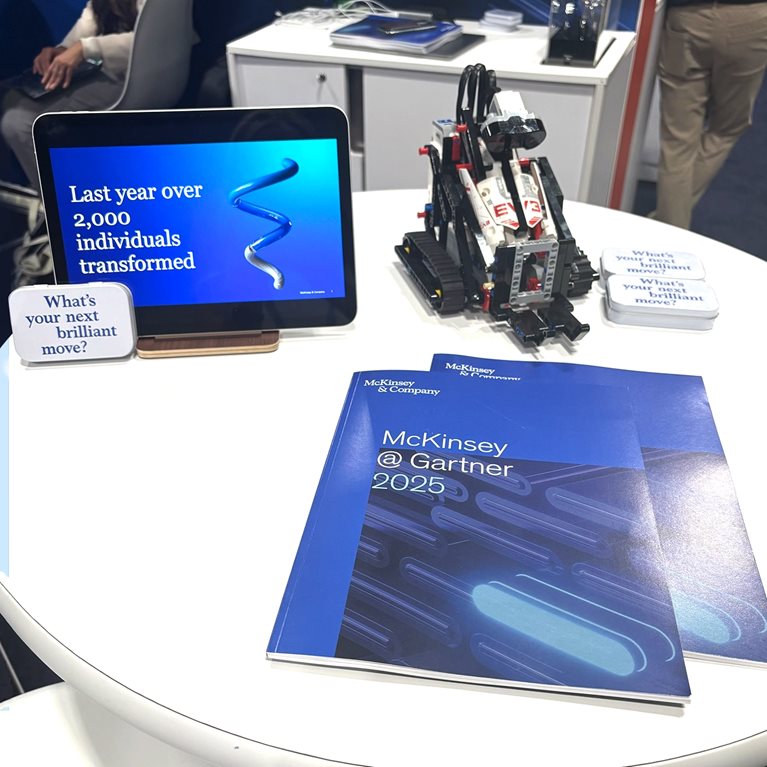
Bridging the traditional gap between strategy and execution is critical. This is why McKinsey both advises on tech and builds it, combining deep sector insight with hands-on engineering, implementation, and change-management experience. That integrated approach, coupled with a method that works with all vendors, means giving businesses solutions tailored to their context rather than off-the-shelf software deals—in regulated sectors like banking and healthcare, as well as fast-moving domains like telecom or retail.
Ultimately, AI transformation isn’t about technology or productivity alone; it’s about redefining how work is done and increasing innovation to expand value. The opportunity isn’t just to take a bigger slice of the pie, but to reshape and grow the pie itself—driving new performance horizons and sustainable revenue growth.
As Hrishika emphasizes: “The winners will be those who don’t treat tech as a cost center but as a performance multiplier.” McKinsey’s work helps organizations move “from pilots to productivity, and from potential to results.”
Join McKinsey at Gartner IT Symposium/Xpo Program Barcelona November 10-13, where we will be hosting two sessions.