The heartland, which consists of 20 states across the center of the United States, generates more than one-third of US GDP (Exhibit 1).1 Yet it continues to attract disproportionately low levels of private and long-term economic investment—only about 10 percent of US venture capital investment and 29 percent of fixed capital loans.2 This disconnect is one of America’s largest underrealized economic opportunities.
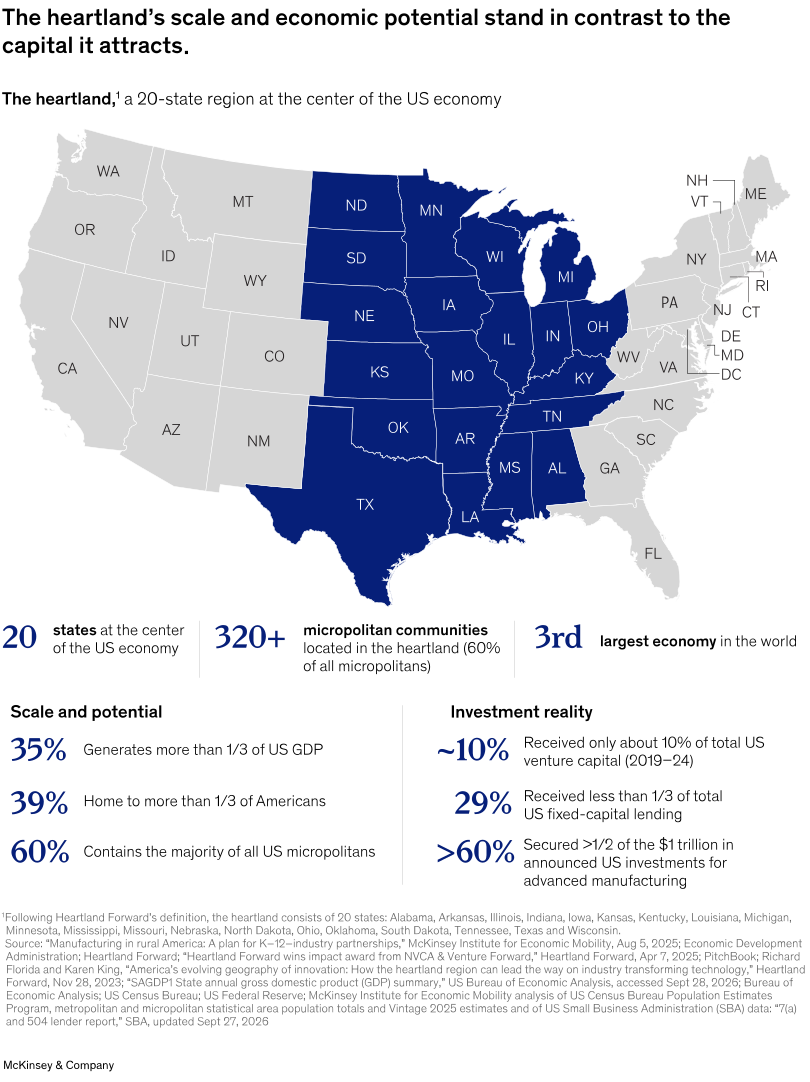
Image description:
A map of the United States shows the 20 heartland states, following Heartland Forward’s definition: Alabama, Arkansas, Illinois, Indiana, Iowa, Kansas, Kentucky, Louisiana, Michigan, Minnesota, Mississippi, Missouri, Nebraska, North Dakota, Ohio, Oklahoma, South Dakota, Tennessee, Texas, and Wisconsin. Underneath the map, text highlights facts about the heartland. The heartland includes 20 states at the center of the US economy, there are 320+ micropolitan communities located in the heartland (60% of all micropolitans), and it is the third largest economy in the world. Related to scale and potential, the heartland generates more than one-third of US GDP (35%), is home to home to more than one-third of Americans (39%), and contains the majority of all US micropolitans (60%). Related to investment reality, it received only about 10% of total US venture capital from 2019¬ to 2024, received less than one-third of total US fixed-capital lending (29%), and secured more than half of the $1 trillion in announced US investments for advanced manufacturing (more than 60%).
Source: “Manufacturing in rural America: A plan for K–12–industry partnerships,” McKinsey Institute for Economic Mobility, Aug 5, 2025; Economic Development Administration; Heartland Forward; “Heartland Forward wins impact award from NVCA & Venture Forward,” Heartland Forward, Apr 7, 2025; PitchBook; Richard Florida and Karen King, “America’s evolving geography of innovation: How the heartland region can lead the way on industry transforming technology,” Heartland Forward, Nov 28, 2023; “SAGDP1 State annual gross domestic product (GDP) summary,” US Bureau of Economic Analysis, accessed Sept 28, 2026 Bureau of Economic Analysis; US Census Bureau; US Federal Reserve; McKinsey Institute for Economic Mobility analysis of US Census Bureau Population Estimates Program, metropolitan and micropolitan statistical area population totals, and Vintage 2025 estimates and of US Small Business Administration (SBA) data: “7(a) and 504 lender report,” SBA, updated Sept 27, 2026
End image description.
Micropolitan communities sit at the center of this opportunity. They are home to critical manufacturing, agriculture, healthcare, logistics and energy industries across the heartland, but many continue to face structural barriers that limit their ability to translate economic potential into enduring investment and growth.
As talent, industrial capacity and resilient supply chains become more sought after, the ability of these communities to attract and absorb investments will be increasingly important to the region’s long-term competitiveness. For instance, 63 percent of $1 trillion in announced advanced manufacturing projects is expected to go to facilities within 15 miles of rural communities.3 More work remains to ensure communities can make the most of this influx of capital.
A community’s investment readiness determines its ability to attract, absorb and capitalize on inflows of capital. This capacity cannot be understood through any single indicator. Communities with similar industries, workforce characteristics and geographic advantages often experience dramatically divergent outcomes. The reason? They differ in the strength of their economic foundations, the systems that support workers and families and their ability to coordinate across institutions and execute over time.
This report introduces a practical framework stakeholders can use to understand and gauge investment readiness through three interconnected dimensions: economic context, community assets and systems and economic development coordination. Rather than prescribing a single path to growth, the framework helps communities identify their unique strengths, diagnose barriers, prioritize action and build the capabilities needed to convert local assets into enduring economic growth (see sidebar “Heartland Forward and McKinsey Institute for Economic Mobility partnership”).
Improving investment readiness is ultimately a shared responsibility. Public, private and social sector stakeholders each contribute to different areas—from workforce, housing and infrastructure to capital, governance and institutional coordination. By aligning efforts around a common understanding of investment readiness, communities can strengthen their competitiveness, accelerate implementation and position themselves for long-term prosperity.
Why small communities matter
Local economies rarely stop at city limits. People commute across county lines to work, shop, see a doctor and enroll their children in school, so measuring a city on its own understates the economy it actually anchors. Accordingly, our research drew on the US Office of Management and Budget’s delineation of core-based statistical areas (CBSAs), using population and commuting data from the US Census Bureau (Exhibit 2).
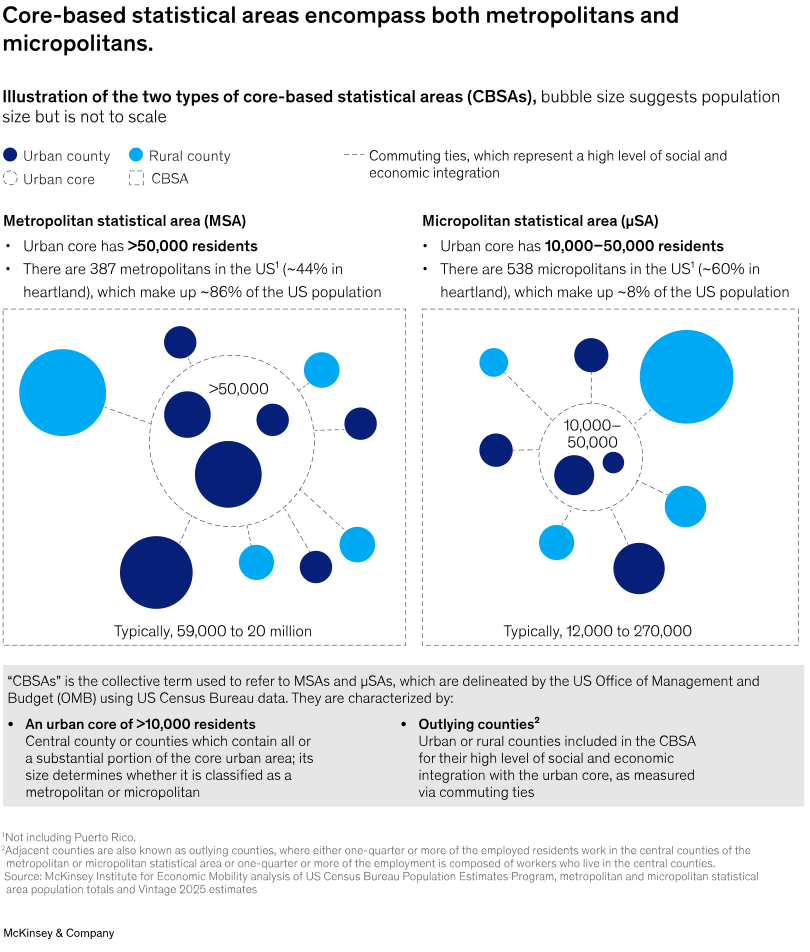
Image description:
An illustration shows the two types of core-based statistical areas (CBSAs), in which bubble size suggests population size but is not to scale. The illustration for a metropolitan statistical area is on the left. Its urban core has >50,000 residents. There are 387 metropolitans in the United States (about 44% in heartland), which make up ~86% of the US population.
An outlined bubble at the center of the illustration represents the urban core and contains three variable-sized bubbles representing an urban county, with text showing that the core has more than 50,000 residents. There are variable sized bubbles floating around the urban core, connected to the core with dotted lines, representing urban counties and rural countries. Typically, the total size of a micropolitan area is 59,000 to 20 million residents. The illustration is surrounding by a dotted line box, representing a CBSA.
The illustration for a micropolitan statistical area is on the right. There are 538 micropolitans in the United States (about 60% in heartland), which make up ~8% of the US population. An outlined bubble at the center of the illustration represents the urban core and contains two bubbles representing an urban county, with text showing that the core has 10,000 to 50,000 residents. There are variable sized bubbles floating around the urban core, connected to the core with dotted lines, representing urban counties and rural countries. Typically, the total size of a micropolitan area is 12,000 to 270,000. The illustration is surrounding by a dotted line box, representing a CBSA.
CBSAs is the collective term used to refer to metropolitan areas and micropolitan areas, which are delineated by the US Office of Management and Budget using US Census Bureau data. They are characterized by the following:
- An urban core of more than 10,000 residents: Central county or counties which contain all or a substantial portion of the core urban area; its size determines whether it is classified as a metropolitan or micropolitan
- Outlying counties: Urban or rural counties included in the CBSA for their high level of social and economic integration with the urban core, as measured via commuting tie
Footnote 1: Not including Puerto Rico.
Footnote 2: Adjacent counties are also known as outlying counties, where either one-quarter or more of the employed residents work in the central counties of the metropolitan or micropolitan statistical area or one-quarter or more of the employment is composed of workers who live in the central counties.
Source: McKinsey Institute for Economic Mobility analysis of US Census Bureau Population Estimates Program, metropolitan and micropolitan statistical area population totals, and Vintage 2025 estimates
End image description.
A CBSA is a county containing a densely settled urban core, together with any neighboring counties whose residents commute regularly to the urban area. Every CBSA in the country is classified as either a metropolitan or micropolitan area.
These categories differ primarily in the size of their urban center. Metropolitan statistical areas have an urban core of at least 50,000 residents, while micropolitan statistical areas have a core of 10,000 to 49,999, so they differ in scale rather than in kind. Both also have a hub and the region that depends on it, making them regional economies rather than individual cities.
The United States has 538 micropolitan areas, with roughly 62 percent located in the heartland.4 Within the heartland, Cookeville, Tennessee, is the largest micropolitan area, with a population exceeding 150,000, while Chicago is the largest metropolitan area, with 9.4 million residents.5 Nationally, the largest micropolitan areas approach a total population of about 270,000, while the largest metropolitan areas exceed 20 million.6
The impact of a community’s classification can be seen in federal programs and funding formulas (see sidebar “Defining urban and rural counties”). The same 50,000 threshold that separates the two categories also determines which communities must have a metropolitan planning organization (MPO). Many micropolitan communities fall below this threshold. As a result, they do not have an MPO with dedicated federal metropolitan planning responsibilities and instead rely on state and nonmetropolitan planning processes to help prioritize and program regional transportation investments. Federal community development dollars split along the same line: For example, the US Department of Housing and Urban Development allocates 70 percent of Community Development Block Grant funding directly to metropolitan entitlement communities by formula.7 That leaves micropolitan areas to compete for a share of the remaining 30 percent through state-administered programs.
Sizing the opportunity
As urban centers, micropolitan areas are home to more than 8 percent of the US population. They act as gateways to the country’s heartland, which accounts for about 35 percent of the nation’s gross regional product (GRP) and is equivalent to the third-largest economy in the world.8 On their own, heartland micropolitan areas make up 55 percent of economic value from all micropolitan areas, equal to 3 percent of US GRP, or $810 billion. An analysis of the top and bottom quartiles of heartland micropolitan areas reveals that bolstering the performance of the bottom quartile could potentially generate revenues equivalent to three times the GRP of Iowa (Exhibit 3).
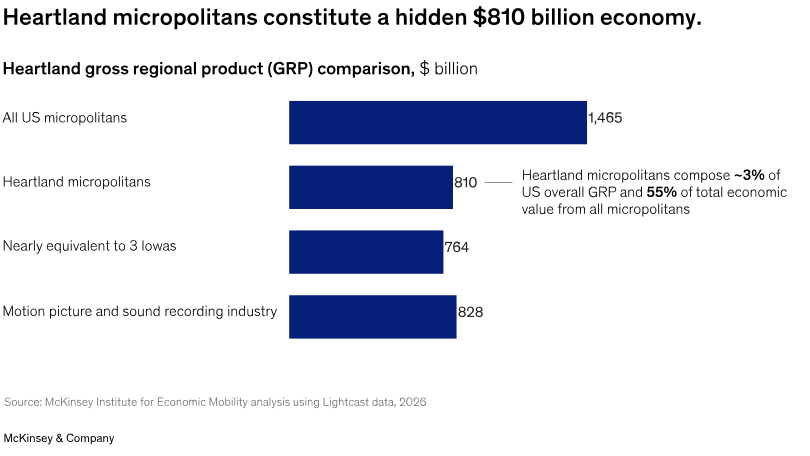
Image description:
A horizontal bar chart shows a heartland gross regional product (GRP) comparison in billions of dollars. The GRP of all US micropolitans is $1,465 billion, the GRP of heartland micropolitans is $810 billion, the GRP nearly equivalent to 3 Iowas is $764 billion, and the GRP of the motion picture and sound recording industry is $828 billion
Heartland micropolitans compose about 3% of US overall GDP and 55% of total economic value from all micropolitans.
End image description.
Moreover, if the heartland’s share of US GDP matched its 39 percent share of the country’s population, the region would generate approximately $2 trillion in additional economic output.9 Given the magnitude of the untapped opportunity, micropolitan areas are not peripheral to America’s future vibrancy and economic strength; they are one of its greatest levers for future growth. Smaller cities support critical manufacturing, agriculture, healthcare, logistics and energy industries and serve as economic engines and hubs for government and community services for surrounding regions.
Addressing barriers to growth
Today, heartland communities receive only about 10 percent of total US venture capital investment and 29 percent of fixed capital lending, while rural areas attract only 7 percent of philanthropic funding.10 Yet some micropolitan areas have demonstrated their underlying economic strength by attracting significant investment in sectors such as advanced manufacturing. McKinsey analysis revealed that about 63 percent of the $1 trillion in announced advanced manufacturing investments is destined for rural areas.11 Together, these trends suggest the challenge is not a lack of economic opportunity but is rather ensuring more communities are prepared to compete successfully for the capital vital to their long-term growth.
Micropolitan areas also have a distinctive economic structure that can create advantages and risks. Compared with large metropolitan areas, micropolitan areas have greater concentrations of manufacturing, agriculture, logistics, healthcare, education and government. This primarily production-oriented economic base creates competitive advantages—but also higher exposure to employer concentration, commodity cycles and workforce shortages.
Micropolitan areas also play unique roles in their respective region. Because they typically combine a handful of export-oriented industries with a critical mass of local-serving activities, micropolitan areas often function as economic engines and hubs of government and community services for surrounding rural areas. These roles shape not only their regional importance but also their investment readiness. Because micropolitan areas operate with fewer institutions and less redundancy than large metropolitan areas, limited childcare, healthcare, workforce training or transportation can slow growth. When a community has fewer alternatives, a gap in any one of these areas can directly affect its ability to grow.
These characteristics mean that economic development approaches designed for large metropolitan areas may not translate directly to smaller communities.
No one-size-fits-all playbook
As a category, micropolitan areas themselves are also highly diverse. Differences in population size, growth sector mix and educational attainment influence both the opportunities communities can pursue and the obstacles they must overcome. Larger micropolitan areas—or those with population sizes above the median—generally experience more robust population and employment growth. Their deeper labor pools, more mature supply chains and infrastructure and greater economies of scale enable these communities to better support core industrial sectors such as manufacturing, agriculture, mining and oil and gas. As evidence, larger micropolitan areas have 23 percent of jobs in core industrial sectors, compared with 9 percent in smaller micropolitan areas.12 Larger micropolitan areas also tend to have higher educational attainment: 28 percent of adults in these communities have a bachelor’s degree or higher, compared with 18 percent in smaller micropolitan areas.13
As a result, micropolitan communities require different investment strategies tailored to their economic foundations rather than a single playbook for growth (see sidebar “The replicability of micropolitan success stories”). Some are ready for organic or opportunistic investments, which are often reactive and project-specific; others need targeted engagement to enable and accelerate sectoral growth. Still others are able to support transformational, economy-shifting investment. Understanding their starting points is critical to charting a path to economic health.
The investment readiness framework: Assessing communities on economy, community and coordination
Across hundreds of conversations with stakeholders and community analyses, we identified the strongest predictors of a smaller city’s ability to attract and translate capital into economic growth. Investment readiness can be understood through three interconnected dimensions (Exhibit 4):
- economic context, which identifies where a community can compete and grow
- community assets and systems, which shape whether workers and families can participate in that growth
- economic development coordination, which determines whether local institutions can align priorities and deliver
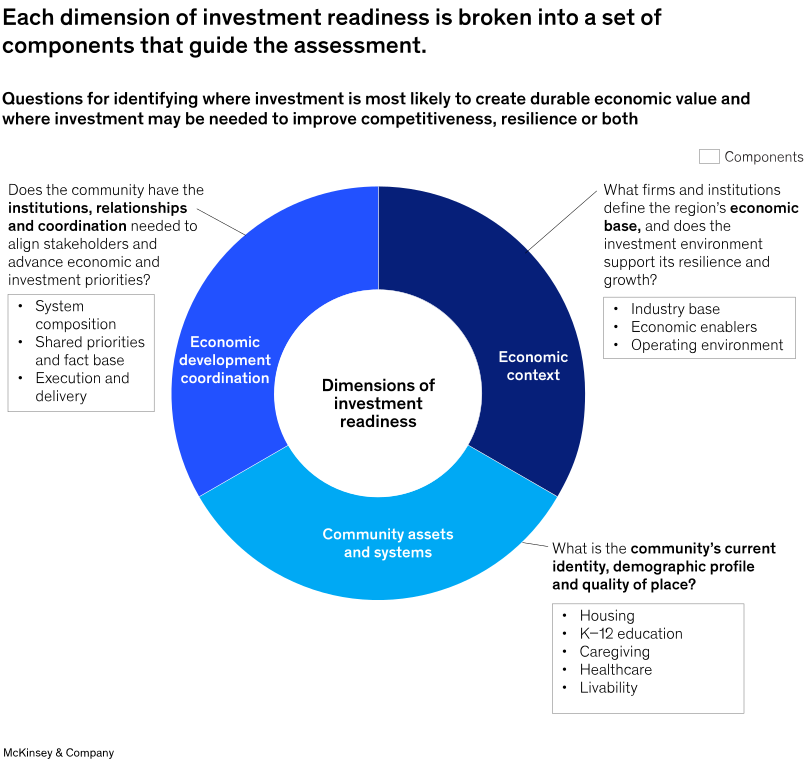
Image description:
A circle diagram shows the three investment readiness dimensions broken into a set of components that guide the assessment, along with questions for identifying where investment is most likely to create durable economic value and where investment may be needed to improve competitiveness, resilience, or both. Under economic development coordination, the question to ask is, does the community have the institutions, relationships, and coordination needed to align stakeholders and advance economic and investment priorities? Components include system composition, shared priorities and fact base, and execution and delivery. Under economic context, the question to ask is, what firms and institutions define the region’s economic base, and does the investment environment support its resilience and growth? Components include industry base, economic enablers, and operating environment. Last, under community assets and systems, the question to ask is, what is the community’s current identity, demographic profile, and quality of place? Components include, housing, K¬–12 education, caregiving, healthcare, and livability.
End image description.
Together, these dimensions provide a framework for communities to assess their strengths and challenges and focus their action on the conditions most likely to unlock long-term investment and growth (see sidebar “A spectrum of maturity: Three investment readiness profiles”).
A spectrum of maturity: Three investment readiness profiles
Communities with comparable industries, workforce characteristics and geographic advantages often experience markedly different investment outcomes. The distinction frequently lies not in the assets they possess but in their ability to organize those assets into investable opportunities. We refer to this capability as investment readiness. Smaller cities may fall into one of three investment-readiness profiles along a spectrum of overall maturity:
Organic or opportunistic. For places with real assets and some momentum, their near-term task is to capitalize on existing strengths. Their systems and institutions support existing businesses and incremental growth, but their investment activity is largely reactive and project-specific.
Targeted engagement and retention. Smaller cities may have a right to win in a handful of sectors in which core elements are in place to proactively attract and retain priority sectors. To be successful, they still need a defined strategic approach, closer coordination among stakeholders and a focus on enabling conditions such as workforce, infrastructure, sites or access to capital.
Economy-shifting investments. In these communities, the challenge is not only to accelerate an existing growth path but also to build additional ones. Their structural and institutional capacity supports transformational, large-scale investment, with aligned systems, scalable infrastructure and coordinated execution.
Each component of the investment readiness framework’s three dimensions can be tagged to a different profile, reflecting how a community’s current conditions and capacity shape the investment it is best positioned to support (exhibit).
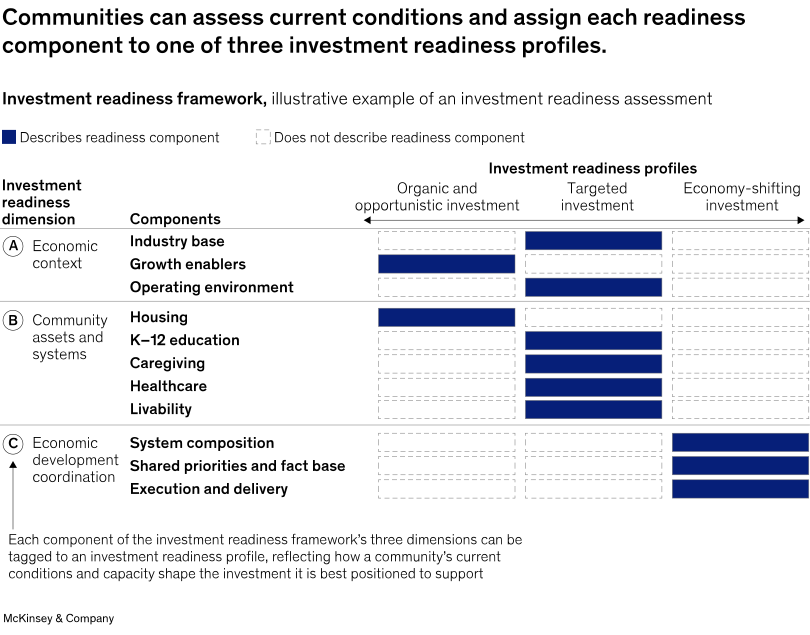
Image description:
A table shows and illustrative example of an investment readiness assessment. Each component of the investment readiness framework’s three dimensions can be tagged to an investment readiness profile, reflecting how a community’s current conditions and capacity shape the investment it is best positioned to support.
The three investment readiness profiles include organic and opportunistic investment, targeted Investment, and economy-shifting investment. The three investment readiness dimensions include economic context, community assets and systems, and economic development coordination.
Under economic context, components include industry base, economic enablers, and operating environment. The targeted investment profile describes the industry base and operating environment components, while the organic and opportunistic investment profile describes the economic enablers component.
Under community assets and systems, components include housing, K–12 education, caregiving, healthcare, and livability. The organic and opportunistic investment describes the housing component, while targeted investment describes the other components.
Last, under economic development coordination, components include system composition, shared priorities and fact base, and execution and delivery. The economy-shifting investment profile describes all three components.
End image description.
Economic context: The foundation for investment readiness
Investment begins with a credible economic proposition—that is, a clear view of where a community can compete and how it can expand that advantage.
Assessing this proposition requires looking beyond the opportunities that exist today to the conditions that can support growth and attract investment. Economic context can be assessed across three components: the industry base, growth enablers and the operating environment.
Industry base
The industry base addresses two related questions: How does today’s economic value offer credible opportunities for growth, and how resilient is that industry base to disruption? For smaller cities, both questions are shaped by a relatively high degree of economic specialization, particularly in production-oriented sectors. Manufacturing, agriculture and resource extraction account for 15 percent of jobs in micropolitan areas, compared with 7 percent in large metropolitan areas, while nonproduction traded sectors make up 13 percent and 21 percent, respectively.
This specialization can be a source of competitive advantage. Strong industry clusters, anchor employers and distinctive capabilities can deepen workforce and supplier networks and create a platform for continued investment and expansion. However, the concentration that enables industry leadership can amplify exposure to automation, commodity cycles, trade shifts and other disruptions. A thinner nonproduction-traded base offers fewer sectors to cushion those risks.
The test for a community’s economic proposition is examining whether specialization creates a competitive advantage worth investing in and identifying what capabilities are needed to maintain that advantage while managing the risks that come with concentration.
Growth enablers
Growth enablers encompass the operational conditions that determine whether communities can achieve growth in their priority sectors, including workforce capacity and talent pipeline, the quality and adequacy of infrastructure and sites, degree of entrepreneurial activity and volume of business formation. Population health is also an important growth enabler, shaping the capacity of residents to participate consistently in the workforce and contribute to the local economy. Even a community with an established industry base cannot attract consistent investment without the workforce to staff it, the sites to locate it or the infrastructure to support it. In smaller cities, the labor pool is a structural constraint: Bachelor’s degree attainment in these communities ranges from 18 percent at the 25th percentile to 28 percent at the 75th percentile, compared with 38 percent in large metropolitan areas. Insufficient infrastructure, particularly in broadband and transportation, compounds the challenge in less-connected communities.14
Operating environment
The operating environment reflects whether investment is likely to flow to a community. It includes access to capital for business formation and growth as well as the degree to which local economic priorities align with state policies, incentive programs and tax structures. Private capital markets are less developed in smaller cities compared with large metropolitan areas, with the former receiving disproportionately less venture capital and private equity funding relative to their share of economic activity. As a result, state incentive programs, federal place-based investments and philanthropic capital play a larger role in spurring growth in smaller cities. Alignment with state economic priorities is often the primary pathway to obtaining the needed capital.
Community assets and systems: The conditions that sustain a workforce
Investment decisions ultimately come down to people. Community assets and systems can become a source of competitive advantage when housing, schools, care, health services and quality of place make it easier for workers and families to build stable lives. Smaller communities can capture distinctive benefits across these systems: Their scale can enable greater affordability, closer relationships among institutions and employers and quality-of-life benefits that help attract and retain workers. However, fewer providers and alternatives can make gaps in housing, education, caregiving or healthcare more consequential. Investment readiness therefore depends on building on the strengths communities already have while augmenting the systems they need to support future growth.
The framework considers five components: housing, K–12 education, caregiving, healthcare and livability. Together, these components influence the size, stability and attractiveness of the workforce. If economic context sets the direction for growth, community assets and systems help determine whether that growth is durable.
Housing
The core metrics of housing include affordability, availability and sufficiency of stock, and housing safety and functionality. In micropolitan communities, homeownership is often more attainable than in larger metropolitan markets. The typical home in a micropolitan area costs 3.6 times the local income, compared with 4.3 times in a metropolitan area. In half of micropolitan areas, a median-income household earns enough to afford the typical home, compared with fewer than 27 percent of metropolitan areas.15
But affordability alone does not guarantee that communities have the housing needed to support growth. Across rural communities, 41 percent of renters are cost burdened (defined as spending more than 30 percent of their income on housing).16 Older housing stock, fewer housing types and a thinner development pipeline can make it difficult to accommodate new demand. When a major employer arrives or an existing employer expands, these constraints can limit hiring and increase worker turnover. Communities that preserve their affordability advantage while expanding the availability and quality of housing can be better positioned to attract workers and capture the full value of new business investment.
K–12 education
This category covers access to learning opportunities and academic support for students; the supply of qualified teachers, staff and facilities; and the quality of academic outcomes, including graduation rates, proficiency and postsecondary readiness. K–12 shapes the talent pipeline and is increasingly a factor in location decisions as employers assess whether a community can not only meet current hiring needs but also produce the next generation of workers.
Smaller cities can be well positioned to develop the middle-skill talent that is critical to their economies. Adults in smaller cities are more likely to hold an associate’s degree than their counterparts in metropolitan areas at 10.2 percent versus 8.6 percent, respectively.17 These credentials support segments of the manufacturing, healthcare and skilled-trade workforces, industries that are central to many micropolitan economies. Smaller education systems may also create opportunities for closer coordination among schools, employers and community institutions, helping these communities align education and training with local workforce needs.
Still, overall educational attainment remains lower: 22 percent of adults in micropolitan areas hold a bachelor’s degree or higher, compared with 35 percent in large metropolitan areas.18 Strengthening K–12 outcomes and pathways into postsecondary education and workforce credentialing can help communities build on their existing talent base while expanding the pipeline of workers needed for future growth.
Caregiving
Caregiving encompasses the affordability, supply and quality of childcare and eldercare. These services determine whether workers can participate reliably in the labor force, and gaps in access—particularly for infant and toddler care and during nonstandard hours—are among the most consistently overlooked barriers to workforce participation.
Childcare supply may be limited in smaller cities, but costs are broadly comparable to those in metropolitan areas: Childcare costs for a family with two children equate to 29.3 percent of median household income in micropolitan areas and 28.9 percent in metropolitan areas.19 Smaller communities may also have an opportunity to address gaps through closer coordination among employers, childcare providers and community institutions, allowing solutions to be designed around local workforce needs.
At the same time, 60 percent of micropolitan areas qualify as licensed childcare deserts—areas with at least 30 children age five or younger and either no licensed childcare providers or a ratio of more than three children under age five for every licensed slot.20 Across childcare deserts, maternal labor force participation rates are roughly three percentage points lower than those of communities where adequate childcare supply exists.21
Strengthening childcare supply can therefore expand the pool of workers available to local employers and build closer relationships among employers, providers and community institutions that smaller cities can offer.
Healthcare
Healthcare can be evaluated based on access to affordable clinical care for residents across income levels and geographies, the sufficiency of local provider capacity and the quality and patient-centeredness of care delivered. Health conditions directly affect labor force participation because communities with poor health outcomes face higher absenteeism and a lack of stability in the workforce.22
Smaller cities often play an important role as regional healthcare hubs, providing services not only to their own residents but also to surrounding communities. Still, healthcare access remains a significant challenge in many less-populated areas of the United States.23 Just 10 percent of physicians practice in rural communities despite these areas accounting for roughly 20 percent of the national population.24 The continued closure of rural hospitals, with 193 shutting down from 2005 to 2024, compounds the provider shortage and limits health system capacity to support a growing workforce.25
New business investment creates an opportunity for communities to strengthen rural healthcare systems. The $50 billion Rural Health Transformation Program provides funding to states over five years to improve rural healthcare access, quality and outcomes.26 This funding provides an opportunity for leaders of smaller cities to work with states, health systems and other local partners to strengthen workforce pipelines, expand access to care and position healthcare systems to better support long-term community and economic growth.
Livability
Livability covers the accessibility of daily destinations; the breadth of places and amenities available to residents, including parks, retail, dining and recreation; and the quality and safety of public spaces and community environments. These factors shape worker attraction and retention.
Smaller cities can offer meaningful quality-of-life advantages, including access to natural assets, shorter commute times and a lower cost of living. For example, median gross rent, including rent and utility costs, is 21 percent lower in micropolitan areas at $894, compared with $1,137 in metropolitan areas.27 These factors can make smaller cities attractive places for workers and families to build their lives. However, smaller communities tend to have fewer cultural amenities, dining and retail options and community gathering spaces, attributes that are particularly important for higher-skill roles; candidates for these roles often factor them into location decisions. Building on existing affordability and quality-of-life advantages while strengthening the amenities residents value can help smaller cities compete for and retain talent (see sidebar “Case study: Investing in developing residential, commercial and public spaces”).
Taken together, these conditions highlight the advantages and the vulnerabilities of smaller systems. Smaller cities can offer affordability, strong institutional relationships, middle-skill talent and distinctive quality-of-life advantages. Their scale can also mean that gaps in a single system have an outsize effect. The goal of investment readiness is not to replicate the systems of a large metropolitan area but to build on the strengths that make each community distinctive while addressing the gaps that could limit future growth.
Economic development coordination: Translating readiness into results
Even communities with strong economic opportunities and supportive conditions for workers and families can underperform when institutions fail to consistently coalesce around shared priorities. Investment readiness therefore also depends on a community’s ability to align organizations, make decisions and execute over time. Economic development coordination assesses these capabilities across three elements: system composition, a shared direction and fact base, and execution and delivery.
System composition
System composition focuses on whether the right actors are involved, whether the system has the breadth of capabilities needed to support investment and whether those actors have sufficient capacity to contribute. In smaller cities, a single organization rarely has the scale or capabilities to support a complex investment on its own, making the strength of the broader network especially important. Small teams can move quickly and build close relationships, while anchor employers, educational institutions, workforce organizations, local government and regional intermediaries can bring complementary expertise, resources and relationships.
An effective system combines complementary capabilities across workforce, infrastructure, financing and project development. Conversely, a thin or incomplete system can leave critical capabilities missing or overstretched, placing too much responsibility on a handful of organizations or individuals. These shortfalls limit the range and complexity of investment opportunities a community can accommodate, even when its underlying economic proposition is attractive.
Shared direction and fact base
This element assesses the degree to which local actors are aligned on economic priorities and a narrative linking those priorities to intended outcomes, grounded in a shared set of data, market information and evidence. Consensus without a shared fact base is not sufficient; communities need a common understanding of where they can compete, which opportunities are credible and where limited resources will have the greatest impact.
This focus is particularly important in smaller cities. When organizations operate from different priorities or assumptions, decisions become fragmented, communities struggle to present a consistent voice to investors and partners, and the workforce, infrastructure and economic development investments can pull in different directions. A shared, evidence-driven direction clarifies choices to concentrate resources behind the strongest opportunities and articulates a common economic narrative. It also provides the discipline to adapt those choices as conditions change without losing sight of the community’s broader direction.
Execution and delivery
Execution and delivery encompasses whether a community can translate its priorities into coordinated action and measurable results through ownership, timely decision-making and consistent follow-through. Success requires more than a strong strategy: Clear accountability, effective governance and sufficient management capacity are vital to align resources, navigate barriers and maintain momentum through implementation. When these capabilities are in place, communities can reliably fulfill their commitments and take on more complex investments (see sidebar “Tourism-led development at a strategic gateway”).
A consistent inability to deliver can make partners more hesitant to commit resources and ultimately narrow the pipeline of future investment. By contrast, consistent delivery over time builds a track record and signals to investors and partners that a community can translate commitments into tangible results. This credibility can help to deepen partnerships, support continued investment and position the community to pursue new opportunities. The inverse is equally consequential: When ownership is unclear, decisions stall or commitments go unfulfilled, projects lose momentum and investor confidence erodes.
The investment readiness landscape: Stakeholders and their roles
Investment readiness depends on a robust landscape in which private, public and social sector actors play complementary roles. Investors and employers bring capital, market insight and operating expertise; state and local governments shape the conditions for investment and help lower barriers; and philanthropic and community organizations can fill gaps, convene partners and contribute place-based knowledge. The strength of this landscape depends not only on involving the right actors but also on ensuring they work well together. When stakeholders align around shared priorities, they can turn local opportunities into projects that can be financed and delivered over time.
Private sector: Directing capital and supporting workforce conditions
The private sector can help make smaller cities investment-ready in two ways: acting as investors that provide the necessary capital and serving as local employers that help build the foundation for long-term growth.
Investors
The immediate opportunity is to view smaller markets as an untapped asset class rather than an afterthought. Investors that proactively seek out opportunities, engage with local stakeholders early in the process and evaluate community health during site selection can uncover high-quality investments with far less competition. Analyzing the three investment readiness conditions may help investors identify smaller cities with strong economic fundamentals. Similarly, financial institutions can better serve these areas by designing lending products and underwriting standards tailored to the realities of smaller communities rather than applying rigid urban models that put them at an automatic disadvantage.
Local employers
Major employers in smaller cities can do more than just operate within the local economy—they can actively shape its future. When companies invest in affordable workforce housing, help finance local childcare or partner with community colleges to build talent pipelines, they are directly solving the very challenges that make recruiting and retaining workers so difficult. Further, when employers participate in local economic development—whether by joining advisory boards, co-investing in shared infrastructure or making long-term commitments to workforce programs—they strengthen the community’s overall foundation. This leadership addresses their own recruitment and retention challenges while making the region significantly more attractive for additional investment.
Public sector: Enabling participation and implementation
The public sector encompasses state governments that shape the broader competitive landscape and local agencies that drive action on the ground. Together, their role is to align incentives, build local capabilities and unite the community.
State government
State governments heavily influence how capital flows into smaller communities. Through targeted incentives, site development and certification and business attraction strategies, they help communities compete for private investment. To assist local communities in understanding where they are positioned to compete and what barriers may stand in the way, state governments can provide access to common data and benchmarks on sector strengths, workforce capacity and infrastructure needs. With a clearer view of local readiness, states can better align financial support and technical assistance to help communities address underlying barriers to investment. Additionally, state-led technical assistance helps smaller, resource-constrained towns pursue viable projects and be more competitive with larger, better-funded cities for federal grants.
Local government
Local governments and economic development organizations are responsible for translating priorities into an environment where investment can move forward. Their most urgent task is to assess the local economy, identify the barriers that could hold investment back and address them before they undermine potential opportunities. Local governments can then rally stakeholders around a shared vision for development. Creating processes that are fast, predictable and easy to navigate for businesses is just as important. This goal can be as easy as establishing clear permitting timelines, project navigators, fast-track processes for priority investments and consistent points of contact—all relatively low-cost ways to reduce friction and make it easier to do business. Paired with a consistent, data-backed strategy, these practices demonstrate a community’s ability to follow through and give employers and investors confidence that projects can move from interest to implementation.
Social sector: Using catalytic capital and grassroots connections to bridge systemic shortfalls
Philanthropic and community organizations can bring flexible capital, trusted relationships and place-based knowledge to investment efforts.
Philanthropic organizations
The most effective philanthropic investments in smaller cities often focus on the areas that are holding back broader economic growth rather than treating individual issues in isolation. Frequently, a community may have a credible economic foundation but a shortage of critical assets—such as housing supply or childcare infrastructure—required for employers to increase their workforce. Conversely, other communities may have these assets but lack the coordination or capacity to translate economic opportunities into investment-ready projects. When public and private capital cannot be secured, philanthropy can provide more flexible, risk-tolerant funding.
Social sector organizations
Social sector organizations, including workforce intermediaries, community development corporations and anchor institutions such as community colleges and regional health systems, can play a central role in bringing local stakeholders together. Their deep community relationships, institutional trust and place-based knowledge can complement traditional economic development organizations, positioning them as trusted conveners and advocates that help ensure local needs and perspectives shape decision-making. Giving these organizations a seat at the table incorporates those relationships and perspectives directly into decision-making. Stakeholders could consider making multiyear rather than project-specific investments in social sector organizations to support the coordination infrastructure essential to growth.
Applying the investment readiness framework
The three dimensions and their respective components offer a valuable way to gauge a community’s strengths, assets and level of coordination across stakeholders. Stakeholders in smaller cities can start to gather data to determine how they stack up against peers and identify points of differentiation.
Gaining an empirical, data-driven view of investment readiness can help smaller cities make a more compelling case to state governments for funding and to companies considering new locations for expansion. Dr. Andrew Hudson, director of workforce development strategy, City of Chattanooga, noted, “Access to reliable, community-level data facilitates the alignment of our partners around clear priorities and smart investments that continue Chattanooga’s growth as a regional leader.”
This information can also create a shared understanding among local stakeholders on opportunities and prioritization. Ryan Egly, president and CEO of the Lawrence County Chamber, remarked, “Having reliable, up-to-date data behind our planning has changed how confidently we can pursue new investment and position our community for growth.”
Realizing the strategic potential of smaller cities
America’s next era of economic growth will depend on the success of its smaller cities. These communities are not simply smaller versions of metropolitan areas; they are discrete regional economies whose competitiveness will shape the future of the heartland and the nation’s economic resilience.
Momentum is shifting, as seen in a growing recognition of smaller cities as vital engines of broader economic prosperity. Federal initiatives, such as the Build Back Better Regional Challenge, alongside targeted state competitiveness strategies and a growing range of regional and community-based efforts, have sought to distribute growth beyond traditional, concentrated innovation hubs. Across these efforts, a growing focus is on helping smaller cities strengthen their competitiveness, build capacity and translate local economic assets into durable, inclusive growth (see sidebar “An investment readiness checklist”).
This renewed emphasis arrives at a critical economic juncture. As competition for specialized talent, domestic industrial capacity and resilient supply chains intensifies, the calculus for capital allocation is changing. Smaller cities can no longer be viewed as peripheral or niche markets. When equipped with the right conditions and backed by coordinated stakeholder action, they can emerge as highly strategic investment opportunities—essential pillars for the next era of national economic growth.
Related Articles