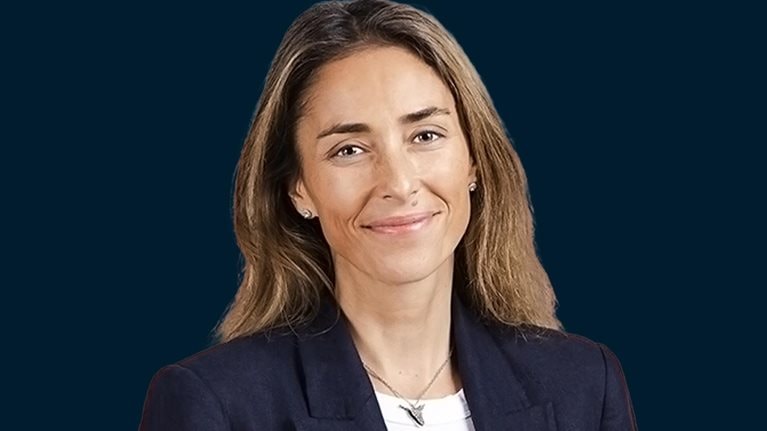
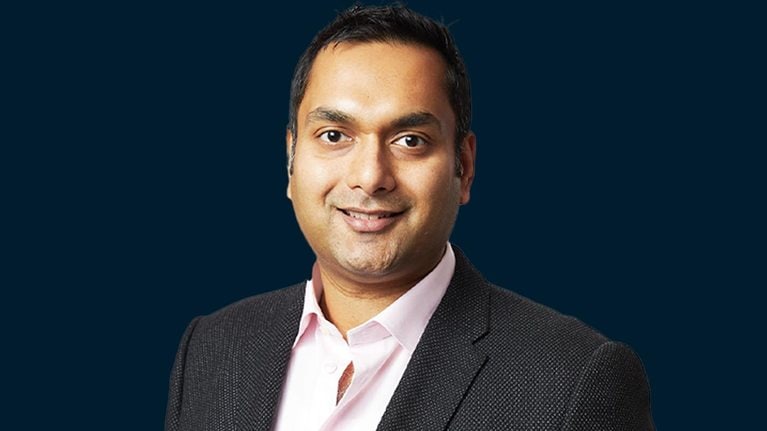
In this episode of McKinsey on Building Products, former McKinsey partner Rikki Singh sits down with Sanjiva Weerawarana, CEO and chief product officer at WSO2, a provider of open-source technology. Weerawarana started WSO2 in 2005 in Sri Lanka at a time when leadership for most technology companies was based in California. Since its start, WSO2 has grown to 800 employees across 11 countries. In this conversation, Singh and Weerawarana discuss WSO2’s approach to building successful products in international markets and the mindsets and skills required for constant innovation.
Breaking the mold
Rikki Singh: Sanjiva, tell us a bit about your background.
Sanjiva Weerawarana: I am a computer scientist by training. I have a PhD in computer science and worked at IBM Research for eight years, and then I quit to start WSO2. I started an open-source foundation in Sri Lanka, and I started WSO2 to continue that work and build a global product company. Now I run the product side of the company.
Rikki Singh: What inspired you to build WSO2?
Sanjiva Weerawarana: When I came back to Sri Lanka in 2001, I was already an open-source contributor. If I’m not creating, I’m not in control of any future direction. We built a foundation to start open-source contribution, and WSO2 was created because when a lot of technology transformations were happening, there were platform changes across web services and web-based distributed computing infrastructure. Now, WSO2 has products in four areas of enterprise infrastructure. We build the core technology needed to do the digital operations within a company, namely API management, integration, and identity access management. We also have a product area called internal developer platforms, through which we give customers a process mechanism to help them start writing code and take it into production.
Staying two steps ahead of customer needs and technology advancements
Rikki Singh: How do you align the longer-term vision for the products with immediate customer needs and expectations from stakeholders?
Sanjiva Weerawarana: When you create a product company, you have to think beyond what people are asking for right now. That’s the fundamental difference between services and product: Product means you’re creating something people don’t yet know they need, and you’re trying to create it ahead of the market. We meet the needs people experience regularly, and we are building a product that has a trajectory to meet needs long term.
Rikki Singh: How do you define or measure success?
Sanjiva Weerawarana: By short-term successes and long-term successes. Short-term success, for example, would be to get a certain amount of revenue growth, and many factors go into running a financially viable business. Long-term success is more difficult to measure. Technology is rapidly changing. Many steps had to be taken to build the technology we have now, but we are still at the starting point of the growth curve. So long-term success is about creating a vision for what you’re trying to build, why you’re trying to build it, and how you’re trying to build it, then determining how to get to the end product, step by step.
Following the principles of constant innovation
Rikki Singh: What are the principles WSO2 follows to make it a successful product organization?
Sanjiva Weerawarana: One principle we follow is counterintuitive: “The customer is not always right.” We don’t do what the customer wants from the product; we hear what the customer wants. We try to understand why they want something and solve the problems inspiring this need. This principle is important because we have more than 700 direct customers and more than 25,000 open-source users. If we do what everybody wants, we’d be going in a thousand directions.
The other principle is that we don’t lie to ourselves. The worst thing you can do as a product company is be overconfident and miss the mark by not being in the right position. We constantly challenge ourselves. In our work culture, we describe it as being “dispassionately passionate” or having “strong opinions weakly held.” In other words, we have views on the right way to do something, but in the presence of new evidence or new technology, we should be willing to let them go and move on.
The third principle is that we are not in the business of trying to get all the money a customer has or selling them things they don’t need. We want to build a long-term relationship. We want to build a company that can become a generational company. To do that, you need to earn trust from customers, build deep relationships, and continue to deliver real value.
Rikki Singh: How do you build these guiding principles into your culture?
Sanjiva Weerawarana: When you start a company, you have a chance to set the foundational values of the company. Many of these values came from my previous experiences, when I learned a lot of good things as well as things I knew weren’t working. For everything that wasn’t working, we made sure to create a different approach. We copied the things that were working wholeheartedly. A key part of WSO2’s underlying architecture is open, transparent, and accountable communication. In discussions, if someone disagrees with something, they must explain themselves. That way, we’ve created an accountable communication mechanism.
Employees get a lot of freedom, but they also have the responsibility that comes with it. We are committing to challenging each other. We fight for the ideas that we believe in—but we should be able to fight without it being personal. Otherwise, we lose the ability to communicate.
Rikki Singh: We did some research that found that the psychological safety of developers is one of the biggest aspects affecting overall business performance.1 You’re articulating the pillars of a psychologically safe environment: Employees can have open communication and can disagree and commit to ideas. And if they experience failures, it’s not a personal failure. They can recover and move on and learn from it.
Sanjiva Weerawarana: Exactly. We now have almost 800 people, and we are distributed in 11 countries, with about 80 percent of the business in Sri Lanka. A lot of calls are international conversations, and this open-communication approach makes it easier for everybody to find common ground with each other.
Growing and developing an international company
Rikki Singh: What have you learned from building a big organization across geographies?
Sanjiva Weerawarana: I’ve learned that the main outcome from building this business is the development of people. Nearly all of our customers are inbound. We don’t have an enterprise sales team, but we have a traditional enterprise sales model, so almost all our customers—including large-scale global governments—have come to us.
So the people matter. If you are buying from WSO2, you come to a person, and if that person doesn’t get the message across correctly or build a relationship with you, we’re a step behind. When you’re a product company, you have to worry about everything. If you can write code but you can’t communicate it, then you can’t sell it, support it, or get paid for it. I’ve learned that you have to get people to believe that we can compete anywhere in the world—that we can develop and evolve at the same pace that a company on the other side of the world can.
Every interaction with every person matters. And to me, developing people is the biggest lesson I’ve learned from WSO2.
Rikki Singh: What are some methods you’ve used to develop people?
Sanjiva Weerawarana: First, we don’t have a talent development framework. We don’t put people into a lot of training. We try to help people be independent and to let them swim. Second, whenever we have a debate, we ask a very simple question: What is the problem you’re trying to solve? If you figure out what the problem is and why it’s there, you can go deeper. We try to reinforce that we’re not trying to solve the problem—we’re trying to solve the problem behind the problem.
Tenure is also important. Our employees have relatively long tenures at the company because becoming a domain expert in something takes time. They need to percolate on a topic and be motivated. I’ve been working on improving developer tools and developer productivity for 35 years, and I’m very passionate about it even now. If you have no interest in a topic, you can’t fake it. Give people an option to develop passion. Not everybody will develop that passion, but if they don’t care, they’re working for the wrong company.
Rikki Singh: What is your advice on attracting and retaining top technical-product talent?
Sanjiva Weerawarana: First, empower people, trust people, and give people the tools they need to explore, fail, learn, and iterate. Developing a product is not the same as running a project. We almost never set deadlines for the work we commit to because development takes time and is not simple.
Second, don’t make any plans. Figure out what you’re going to get done for the next milestone, get that done, and then figure out what the next step is. If you plan it all out in advance, you may get to a point where you can give the work to some kind of AI, and you lose your ability to have judgment on things that haven’t been figured out yet or to articulate the product well. There’s a certain group of people who love to work in a space of undefined objectives and goals. Some people want well-defined targets and goals, and there are roles for that. But the roles that don’t have a fixed target, goal, or deadline attract people who want to keep working at a problem to crack it.
Rikki Singh: In those scenarios, how do you set milestones or drive accountability?
Sanjiva Weerawarana: I don’t hold people accountable for bad delivery dates, but on the business side, we have goals to get more customers or revenue. Those goals are easier to track and make it easier to see how to drive forward. Accountability comes from having purpose-driven leadership—people who buy into the idea. WSO2 isn’t an easy place to work. This is a competitive business. There are many people who have similar ideas, so we need to outthink them and outdeliver them somehow. And that’s not an easy thing to do.
The fact that we don’t have hard deadlines doesn’t mean we take it easy. However, we are very flexible. In return, we expect you to think about solving problems all the time. When you are passionate about something, it never leaves your head. Innovation doesn’t start at nine a.m. and end at five p.m. To give people the room and the freedom to innovate, we have to be flexible at work.
Using AI to enhance product development
Rikki Singh: What is the most tangible value you believe AI will bring to businesses and their customers?
Sanjiva Weerawarana: There is obviously the business benefit of saying we can reduce the number of human beings working in a company. As a human being, I don’t find that compelling. I have no desire to run a company that has a goal to reduce the number of people working there.
The real benefit to me is that AI can make our capability to create much more effective. We can apply AI to text generation, for example. At WSO2, whenever we write anything, we always use a large language model to clean it up, validate it, or improve it. It can give us five alternatives in an instant, so that’s improving productivity. In support, it can answer questions quickly. The biggest benefit we will see over time is its ability to deal with more complex structures in an easier way.
Rikki Singh: Are there gen AI use cases at WSO2 that you’re adopting for product development processes?
Sanjiva Weerawarana: We use gen AI for engineering with code generation, code completion, chat, and copilot tasks. We also apply gen AI to reduce the time it takes for a developer to set up something, configure something, or make something work. So we sprinkle gen AI wherever it makes sense. As a product company, customers also expect that we have used gen AI wherever we can to reduce the time they need to get projects to work.
We’ve begun to work on our approach to software engineering. One of the requirements of the program language is precision so customers get the same answer every time. We’re working toward merging natural communication with programming. For example, we introduced a new kind of natural expression to a program called Ballerina that uses plain English.
We also have a platform called Choreo, which is an internal developer platform that has visibility into all the code in your enterprise, all the APIs in your enterprise, all the runtime information of those services, and all the applications that are sitting on top of that. We have customers that have more than 10,000 APIs in their organization. No human being has any clue what’s going on in those 10,000 APIs, but a model could potentially understand and give guidance. Those are the bigger projects we are working toward.
Rikki Singh: What has been your approach to monetization?
Sanjiva Weerawarana: We are giving even free users some amount of free usage that we are paying for. Before, when you downloaded our software and used it, it wasn’t costing us money. Now, with the cost of open-source AI, it is costing us money. Our model gives customers embedded capabilities routed through our own hosting. We proxy it so we know exactly how much to give each user. Paid customers can add their own tokens or they can buy new capabilities through us.
Turning passion into product
Rikki Singh: What have you learned since founding WSO2 through its current success?
Sanjiva Weerawarana: Trying to build a company that goes against the rules of the game is very difficult. In 2005, tech company leadership was generally based in California, and tech company workers were in Sri Lanka or India. I was based in Sri Lanka, and during the first funding round, most people said, “Where is Sri Lanka, and when are you moving back?” When you say “Never,” it doesn’t work very well.
When you’re a founder, there are hundreds of people who want to give you advice. The challenge, of course, is figuring out which advice to take. One lesson I have learned over the years is to not give up. We had a hard time fundraising, and we ran out of money three times. We managed the cash flow to make it work, but I never thought the company would go belly-up and die. You have to believe in yourself no matter what. It can be tough, because everybody could be saying, “This won’t work,” and people are depending on their salary to survive, so the responsibility is infinite.
Rikki Singh: The advice you get is always contextual. People mean well, but the limited context they have leads them to believe the advice they are giving will apply to you, so you have to parse whether the advice matters. How do you balance that?
Do you have a board of directors?
Sanjiva Weerawarana: We have a board, but sometimes the board also doesn’t know because they come with that same context. The second challenge is that when you hire senior people, they come with a cookie-cutter approach to business development or other tasks. But this is not the same kind of cookie. This business requires you to listen to it, understand the story, and figure out the right solution going forward. Every piece of advice has some genuine value in it, but you must learn to figure out which parts apply to you and take them.
Rikki Singh: What is one thought you’ll leave our audience with?
Sanjiva Weerawarana: We have one life to live, and in that life, we have limited time to do something we care about. To me, finding a way to be true to yourself is the most useful thing anyone can do. I’m working hard on things I’m passionate about. Find what you’re interested and what motivates you to get up on Monday morning and say, “Let’s go fight the battle.” The rest will fall into place.