Family-owned businesses (FOBs) have a significant influence on societies across the globe. Their exceptional longevity and performance1 enable some FOBs to thrive over generations, accumulating wealth that surpasses that of entire nations. Collectively, FOBs contribute to more than 70 percent of global GDP with an annual turnover between $60 trillion and $70 trillion, and they account for approximately 60 percent of global employment.
Despite this staggering influence, the true depth of their impact often goes unrecognized, with financial metrics and charitable contributions being the typical publicized subjects. When asked about their proudest achievements, most family business leaders point to revenue growth, job creation, or philanthropy. While these are undeniably important, they represent just a fraction of the broader impact FOBs can—and do—have. Beyond economic contributions, these businesses have the potential to drive transformative change—shaping communities, advancing sustainability, and fostering innovation.
This article explores the multifaceted impact of FOBs, delving into how they can determine the most appropriate direction of their business during times of change and how to align their overall family organization to strategically enhance their overall impact.
The holistic impact potential of FOBs
Family organizations typically comprise three distinct institutions: the family business, the family office, and the family foundation (Exhibit 1). When aligned, these three parts can have an outsize impact on the societies in which they operate.
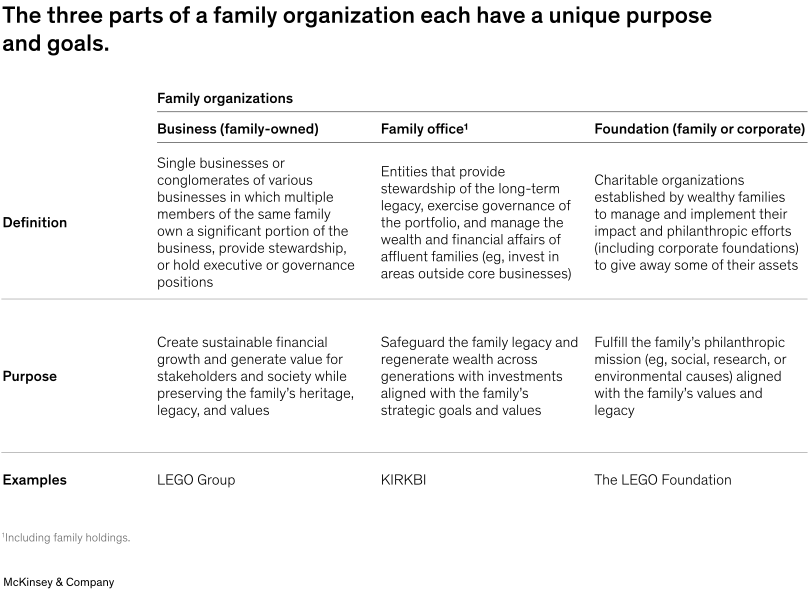
The potential of FOBs to drive transformative change is peaking as many long-time leaders prepare to hand the reins to a new generation. In these moments of change, successors have an opportunity to change the direction of the company and reassess its goals for the future, including by looking at areas where it can invest to generate the greatest impact for both itself and society. So how can next-generation leaders create the most impact with the capital they have?
Regardless of a FOB’s wealth, history shows that a family’s level of wealth and its holistic impact may not go hand in hand. There are families with bold impact ambition and consistent commitment that can create a greater degree of impact compared with other families that hold more wealth. By planning a smarter trajectory, organizations can leverage their influence, social networks, and assets to instill real change, further just causes, and empower community members.
Four areas where FOBs can contribute
To maximize their impact holistically, families should evaluate how they deploy their family capital, including assets, relationships, and influence, to four areas of impact: business, economy, society, and environment (Exhibit 2).
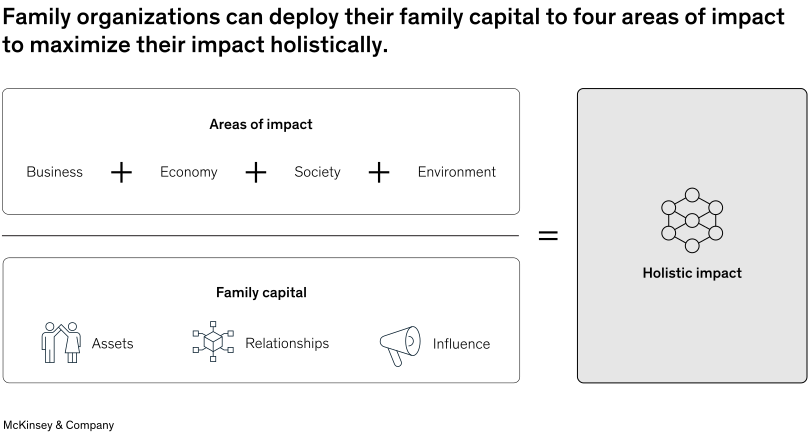
Direct impact through business. Family organizations primarily affect the individuals they employ through their businesses. In addition to creating jobs, FOBs can enhance people’s lives by offering competitive compensation, benefits that address inequalities (such as health insurance), and work environments that promote well-being. They can also invest in employee development through upskilling initiatives. For example, Walmart, owned by the Walton family, employs more than 2.1 million people globally.2 In the United States, where there are more than six million employer firms,3 Walmart alone represents nearly 1 percent of local employment as of December 2024.4
Broader impact on the economy. Family organizations significantly contribute to the broader economy. Throughout their value chains, encompassing suppliers and contractors, they catalyze economic growth through innovation and global business ripple effects. Their family offices are pivotal; these are the nexus of investments through venture capital and private equity, which support the development and expansion of enterprises and new ventures. For instance, Koç Holding plays a pivotal role in the Turkish economy, contributing more than 7 percent to the national GDP and exports. In addition, the company represents nearly 20 percent of the Borsa Istanbul 100 Index.5 Its influence extends globally: It is the only Turkish company featured in the Fortune Global 500 ranking,6 further highlighting its significance in bolstering the country’s economic presence on the world stage.
Addressing societal issues. A recent McKinsey Global Institute article highlighted the pivotal role private companies play globally in helping individuals reach the “empowerment line.”7 As major employers worldwide, FOBs are inherently positioned to empower employees, customers, suppliers, and communities. Our analysis identifies approximately 70 types of corporate empowerment initiatives, including subsidized employee healthcare and donations, food banks that make essentials more affordable, and training programs that increase income-earning potential. Outside of empowering individuals, family organizations can exert an even greater influence on societal challenges. Beyond addressing societal concerns through corporate social responsibility initiatives, they can leverage their family office and philanthropic efforts to extend their reach through family or corporate foundations. For instance, the Aliko Dangote Foundation (the philanthropic arm of the Dangote family) focuses on health, education, economic empowerment, and disaster relief across Africa thanks to a $1.25 billion endowment. It is the largest private foundation in sub-Saharan Africa.8
Supporting the environment. Family organizations could help mitigate climate change by lowering their businesses’ CO2 emissions and supporting green initiatives such as the energy transition, reforestation, and recycling programs. By leveraging their strong reputation and legacy, they can act as role models, inspiring other companies within their industry. For example, IKEA has committed to becoming a circular business by 2030 by producing 100 percent circular products and using only renewable and recycled materials.9
Holistic impact pathways that fit the family organization
There are various avenues for delivering holistic impact. Some families focus solely on their businesses, creating significant impact through employment and the taxes they pay. Others channel resources toward societal issues that resonate with their values. For instance, Fondation L’Oréal, owned by the Bettencourt family in France, focuses on empowering women through three programs: women in science, inclusive beauty, and women and climate.10
Delivering holistic impact is not limited to multibillion-dollar family-owned enterprises. Many small family businesses create substantial impact for their local communities and the wider economic landscape. Measuring impact should be proportional to family resources (family capital), which include financial and nonfinancial assets, relational depth and breadth, and overall influence of the family.
Family organizations can take stock of their priorities and their broader impact potential to determine the direction they should move in, especially during moments of change.
How family organizations can assess their holistic impact
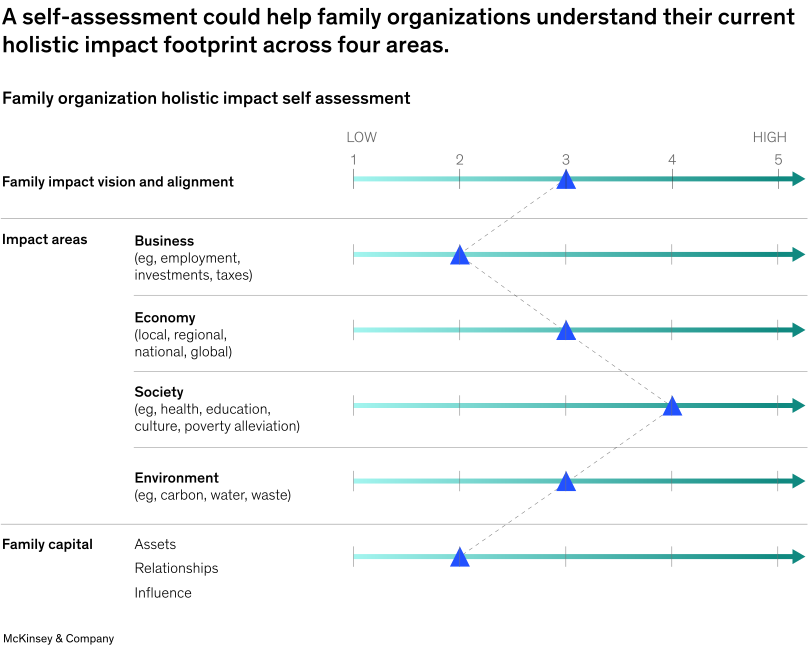
Establishing a clear understanding of their current footprint is crucial for FOBs aiming to enhance their holistic impact. They can gain a better sense of their reach by evaluating 21 strategic measures across six dimensions (Exhibit 3).
Family impact vision and alignment:
- Our family has a clear and aligned vision of the kind of impact we aim to achieve.
- We measure and evaluate the impact we are creating effectively.
- We have set up the right institutions within our family organization to deliver impact.
- Our next generation upholds the family’s vision and aspiration for impact.
Direct impact through business:
- The influence we have on employment (directly and indirectly) is adequate for our size, sector, and country.
- We offer competitive salaries, benefits, and work conditions to our employees.
- We provide outstanding support for our employees to grow and develop within our business (through regular trainings, for example).
- Our overall contribution inside and outside the company (investments and taxes, for example) is adequate relative to the size of our business.
Broader impact on the economy:
- We generate significant value across our business ecosystem and value chain.
- We invest enough to support the broader community in which we operate.
- Our contribution to the local, regional, national, or global economy—or some combination thereof—is meaningful.
Addressing societal issues:
- We have defined priority social areas as a family.
- Our contribution to help address societal issues is appropriate.
- The impact we have on the areas we invest in is significant.
Supporting the environment:
- We sufficiently incorporate environmental considerations into our business strategy decisions.
- Our contribution to reduce the environmental impact of our business is appropriate.
- We adequately support initiatives focused on environmental improvement, such as green energy or recycling programs.
Family capital:
- Our family has significant resources (financial and nonfinancial) to deliver impact.
- We have been able to build a wide network and a broad range of important relationships.
- Our family has significant influence in the environment we operate in.
- We leverage our tangible family capital (financial and nonfinancial assets) effectively to maximize our impact.
Multiple family members should participate in this self-assessment, and the results should be collectively discussed.
This approach will illuminate the family’s current impact profile, highlight areas where impact potential is most significant, identify potential for increased or decreased impact, and uncover obstacles that are hindering desired outcomes.
It will also assess whether the impact aligns with the overall family capital and identify consensus (or lack thereof) among family members regarding the focus and extent of desired areas of impact (Exhibit 4).
What’s next? Four strategic steps can help family organizations elevate their holistic impact
Following this self-assessment, family members need to reflect and set their holistic impact aspiration. They could consider four strategic steps to elevate their impact.
Define the family’s vision and aspiration for impact. Above all, defining the family’s vision and aspiration for impact is essential. This step involves bringing family members together to craft a compelling and cohesive vision that aligns with the family’s core values and long-term goals. It is important to identify and prioritize key areas of focus, ensuring a strong sense of purpose and ambition underpins each area. A well-defined vision serves as a North Star, guiding the family’s efforts and uniting them under a common cause. By taking the time to articulate this vision, families can foster a shared understanding and commitment to their impact goals, which is crucial for sustained and meaningful progress.
Design the holistic impact road map. Once the vision is set, the next step is to design a holistic impact road map. This step involves developing an extensive and actionable plan for the next five years, complete with clear and measurable objectives. Establishing KPIs and critical milestones is crucial for tracking progress and ensuring accountability. A detailed road map not only provides a clear direction but also allows for monitoring and adjusting strategies as needed to achieve the desired outcomes.
Allocate resources effectively. Effective resource allocation is another critical component. Families must commit to dedicating both financial and nonfinancial resources, including assets, relationships, and influence, to support their impact initiatives. Strategically deploying these resources maximizes their effectiveness and drives meaningful change. By leveraging their unique strengths and assets, families can amplify their impact and create a lasting difference in their chosen areas of focus.
Establish robust governance. Effective family governance is key to driving and sustaining holistic impact. This step includes creating the right forums for the family to engage in meaningful discussions about their impact goals and progress. For example, families can incorporate impact tracking as a recurring agenda item during annual family council meetings or dedicated strategy sessions. These forums provide an opportunity to align on priorities, review progress, and adapt strategies as needed. By institutionalizing these discussions, family businesses can ensure areas of impact remain a central and ongoing focus, fostering accountability and continuous improvement.
Family organizations play a significant role in today’s global business landscape, which faces economic and environmental uncertainty. By adopting a more holistic and intentional approach, FOBs can elevate their impact. FOBs can address critical societal issues while strengthening their own enterprises by tapping their remarkable longevity, substantial resources, and deep-rooted influence. They can start by assessing their impact potential and being purposeful in their strategies, establishing strong governance, and aligning values with meaningful actions. In doing so, family businesses can establish a legacy of transformative change that benefits both their enterprises and the world for generations to come.