After three years of dampened dealmaking, we observed early in 2025 that the global private equity (PE) industry was “emerging from the fog.” Now, the fog has finally burned off. Dealmaking returned in 2025 in force: Buyouts surged, exits rebounded, and initial public offerings (IPOs) reemerged.
Indeed, buyout and growth deals larger than $500 million in deal size1—a typical barometer for industry health—increased 44 percent to over $1 trillion in value, eclipsing 2021’s total to become the highest year on record for deals of this size. Deal value, when measured across all buyout and growth deal sizes, increased 17 percent. The value of PE-backed exits globally surged as well—up more than 40 percent—aided by a nearly 100 percent increase in PE exit deal volume via IPO. “Megadeals” (that is, transactions larger than $2.5 billion) also returned, reflecting the changed environment of 2025 compared with the recent past. Not only did 2025 see the largest PE deal in history (the announced $55 billion take-private of Electronic Arts by a syndicate of firms), but it also marked the third-highest year ever for take-private activity by either total deal count or value.
Now, with improved visibility, we can more clearly observe how much the private equity terrain has changed. Shifts in deployment, returns, value creation, and traditional fundraising—previously considered to be episodic—are more likely structural features of a maturing industry. Moreover, the rapid innovation and implementation of AI is reshaping industry structures, introducing new competitors, and promising significant productivity increases. The technology offers both investment risks and opportunities (and could significantly change how PE firms themselves operate). The landscape is, therefore, now both more technical and more demanding, even for experienced drivers. Success on the road ahead will depend less on speed than on having the right vehicle—fit for the changed terrain, properly equipped, and driven with discipline.
More technical, demanding terrain
For the typical private equity dealmaker, many assets have never been more expensive. The median private equity purchase multiple increased from 11.3x EBITDA in 2024 to 11.8x in 2025. When compared with public markets, PE returns remain subdued. The backlog of PE-owned companies still on the books has never been bigger. We estimate that more than 16,000 companies globally have been held for more than four years, equivalent to 52 percent of total buyout-backed inventory as of 2025—the highest on record, and ten percentage points higher than the past five-year average. Holding periods also remain well above historical levels. The typical company in the portfolio of a general partner (GP) is now held on average for more than six and a half years.
Moreover, liquidity for investors remains more a trickle than a flood. Trends that first appeared to be “niche” or temporary solutions after the dealmaking exuberance of 2020 and 2021, including the growth in secondaries, the rise of continuation vehicles, and the emergence of net asset value (NAV) lending, now appear to be enduring—even growing—elements of this more technically demanding private equity terrain.
What’s more, even while dealmaking value rose globally, capital deployment remains challenging. The count of buyouts of all sizes fell 5 percent, and the effect held true in all regions. North America slowed the most, with buyout count declining 7 percent; European buyout counts declined 4 percent, while Asia–Pacific declined 3 percent. The dry powder available to PE sponsors is getting even drier—historically, it has never been older. We estimate that more than 40 percent of the dry powder ready for deployment by GPs today has been available for the past two years (15 percentage points higher than the five-year average).
PE returns—especially compared with active public markets awash with AI exuberance—continue to be modest at best. In 2025, top-quartile global buyout returns averaged 8 percent (measured on a pooled internal-rate-of-return [IRR] basis), less than half of the returns generated by companies in the S&P 500 (18 percent) and MSCI World (22 percent) indexes. Older buyout vintages are a major driver of this dynamic: The 2015–17 vintages are generating roughly 2 percent IRRs, pulling average buyout return from 2015 to 2025 to about 6 percent despite newer vintages showing—largely unrealized—15 percent IRR.
Without the tailwinds of multiple expansion and cheap leverage (which accounted for 59 percent of returns between 2010 and 2022), success will depend on what’s under the hood rather than the slope of the road itself. Operational value creation, which often used to be more a marketing narrative than a true institutional capability, is now likely to be the primary source of returns for GPs and their limited partners (LPs). GPs are increasingly recognizing the importance of underwriting value creation improvements as core parts of their deal theses and are building out capabilities to best capture the full potential of these initiatives. And AI will be a catalytic force.
Core closed-end fundraising has become more competitive, selective, and time consuming. While North American fundraising increased 8 percent year on year to $432 billion, Asia–Pacific (APAC) fundraising continued to struggle, experiencing a 49 percent decline to $49 billion raised. Additionally, European fundraising declined 41 percent to $118 billion in 2025, though that occurred in large part because some of its largest buyout funds successfully closed their fundraising in 2023 and 2024.
Taken together, these indicators at first glance could be read as pointing to an increasingly steep—if not, at times, impassable—road ahead for private equity. But on closer inspection, the dynamics are more likely the signs of an industry maturing, where competition is intensifying, market structure is shifting, and stakeholders are becoming more sophisticated.
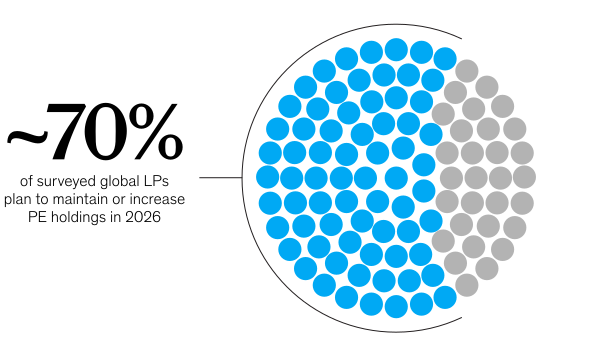
In this environment, outcomes are increasingly shaped less by exposure to the asset class and more by deliberate choices about how firms source deals (including discipline on the multiples and prices they pay), create value from operational improvements, build leadership, and operate through longer and more complex holding periods. Even as conditions become more demanding, LPs recognize that the best private equity firms remain difficult to beat. As in any mature industry, scaled and differentiated managers tend to outperform. In fact, in the last ten years, the top quartile of buyout funds (24 percent IRR) has historically beaten both the S&P 500 (15 percent total shareholder return) and MSCI World (13 percent total shareholder return) indexes. Indeed, in our survey of 300 global LPs from January 2026, about 70 percent reported plans to maintain or increase their private equity allocations in 2026.
Join authors for an exclusive webcast
February 18, 2026, 10:00 a.m.–11:00 a.m. ET/3:00 p.m.–4:00 p.m. GMT
Different equipment needed going forward
With greater visibility from 2025’s improved conditions, we see clear road signs that now mark the need for different equipment to navigate that more technical terrain ahead. What kind of vehicle—size, engine, drivetrain, fuel, and suspension—will be required to perform reliably on a steeper and rougher road?
First, the sheer size of the vehicle matters. Smaller vehicles may not have the traction that they once did, especially without differentiation. We observed in 2025 that funds raising less than $500 million account for a smaller share of fundraising compared with five years ago (13 percent versus 17 percent), just as funds larger than $5 billion account for a significantly larger share. Today, there are also fewer first-time funds than at any point in the past decade. Correspondingly, announced strategic M&A activity among the 100 largest GPs by size close to doubled from nearly $18 billion in 2024 to more than $34 billion in 2025.
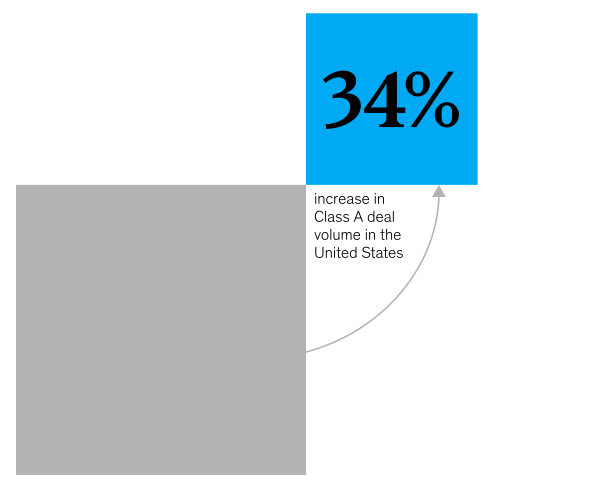
Second, improved navigation and instrumentation are also critical, especially to discern mispriced assets. For dealmakers, the resurgence in take-private deals speaks to an embrace of complexity. Globally, take-private value increased 43 percent in 2025 (North America take-privates, in particular, rose 72 percent), a recognition that there may be more alpha in discounted public assets than in private ones. So too for carve-outs, where complexity may have more operational value creation potential than other comparable investment opportunities. When we examine returns data, we also observe that specialist funds (which, for example, focus on specific sectors) appear to be doing better than their generalist peers.
Third, engine horsepower matters, because alpha increasingly needs to be generated (it does not simply materialize). Especially with often higher purchase multiples, increased macroeconomic uncertainty, and greater equity contributions (coupled with relatively elevated interest rates), GPs are increasingly recognizing the importance of underwriting operational value creation as core parts of their deal theses. They are rapidly building capabilities to capture the full potential of these initiatives, and to do so quickly and consistently.
Fourth, AI will undoubtedly help GPs to create alpha in ways they never envisaged. Today, only 6 percent of GPs see AI delivering high impact in their own internal operations and investment processes—but 70 percent of GPs expect high impact in three to five years. In this current, demanding PE environment, AI is already emerging as a force multiplier for the best firms: sharpening underwriting, accelerating operational improvements, and enabling faster, more disciplined decision-making across the investment life cycle.
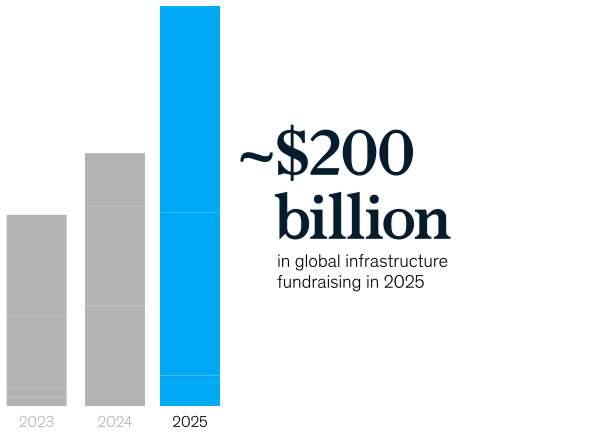
Fifth, high-performing vehicles are also using different fuel types. Alternative fund structures are going mainstream—or are, at least, becoming less alternative. As we noted last year, alternative forms of capital are growing quickly and becoming more mainstream—for example, fundraising into United States semiliquid private equity vehicles has more than doubled since 2023 to $204 billion in 2025, according to Robert A. Stanger & Company. Fundraising for these structures demands new capabilities from GPs—new distribution channels, fund vehicles, distribution partners, and marketing and brand competencies, to name a few. Not to mention that semiliquid products require heightened liquidity, risk management, and compliance capabilities. Considering the broader universe of alternative fundraising, a case can be made that overall private equity fundraising modestly increased in 2025, notwithstanding the decline for closed-end funds.
Finally, GPs’ vehicles will need to become more reliable, stalling less. Liquidity pressures are reshaping the private equity industry. That dynamic is likely to continue. In our survey of 300 of the world’s leading LPs, distributions to paid-in capital (DPI) is now tied with multiple of invested capital (MOIC) for the second-most-important metric shaping their allocation decisions (IRR remains the leading focus). The LPs have a point. DPI as a share of total PE assets under management (AUM) was 6 percent in the 12-month period ended June 2025, compared with the 2015–19 average of 16 percent. More important, five-year rolling DPI as a share of total PE AUM hit its lowest recorded level, about 10 percent, in June 2025. In other words, as a share of the size of assets in the industry, cash outflows have never been lower. The explosive growth in PE secondaries volume (the traded value of which increased 48 percent in 2025) and fundraising (up 5 percent in 2025) is all driven by the same reality: LPs want to realize meaningful returns.
The year 2025 may have marked a sunnier environment for the private equity industry after several challenging years, but the visibly technical terrain ahead has a stark implication: This maturing industry will need to continue to adapt.
For GPs and LPs alike, the overarching implication is that private equity is increasingly less about timing the next cycle and more about clarity of position on the road ahead. GPs should be asking whether their vehicle is built for this terrain: one where alpha is made, purchase-price discipline is ever more critical, leadership quality is demanded, operational value creation is continuous and active across the life cycle, and operational resilience is nonnegotiable. The more rapidly evolving market structure invites foundational questions for GPs about their size, their access to the right distribution channels, or whether they are specialized enough to thrive. LPs, in turn, face a sharper sorting question: Which managers are genuinely equipped to navigate these conditions, and which are still driving with maps designed for smoother roads and are assuming faster exits, cheaper leverage, and favorable tailwinds? How these questions are answered will increasingly determine which vehicles pull ahead and which struggle to stay on the road.
In this report, we analyze how PE fared in 2025 and what we think awaits from the perspective of four groups: dealmakers, operators of privately held companies, fundraisers, and LPs. We provide, too, the key questions that each group should be asking right now.
Dealmakers: Deal value rises, but challenges increase, too
Deal value surged in 2025 for entries and exits. But the road ahead is hardly a superhighway. A closer analysis reveals both challenges and opportunities.
Entries
Private equity deal value rebounded in 2025, increasing 19 percent to $2.6 trillion. Global buyout dealmaking value across all sizes reached its second-highest year on record, nearly $1.8 trillion—a 20 percent increase over 2024. Buyout accounted for nearly three-quarters of the total increase in private equity deal value in 2025 (Exhibit 1).
A look at larger deals, a critical metric in assessing overall industry health, is revealing. For buyout and growth deals larger than $500 million, 2025 was a record year, increasing 44 percent versus 2024 to $1.1 trillion, higher than 2021’s previous peak. Buyout deals larger than $500 million increased 51 percent in value to more than $900 billion, and buyout deals larger than $2.5 billion increased 72 percent to over $600 billion. While buyout deal count across all transaction sizes dropped 5 percent, the number of buyout deals over $500 million rose 20 percent. That led to an average deal size just above $910 million for buyouts overall (compared with just over $610 million in 2024). These results highlight a critical dynamic of the dealmaking landscape: Larger fund managers, with the ability to drive megadeals, have an increasingly outsize ability to determine the movement of overall value and deal count industry-wide.
New highs in deal value, coupled with simultaneous declines in deal count, reflect the cautious navigation of 2025’s geopolitical flashpoints and uncertain cross-border trade environments, leading to more cautious underwriting and deal timing. Indeed, the second quarter of 2025 saw buyout deal value across all sizes drop 13 percent from the first quarter. Yet despite these hurdles, the resiliency of private equity as an industry shone through.
Geographical perspective sharpens the picture. In North America, buyout deal value increased 29 percent, accounting for 57 percent of total global buyout deal value (Exhibit 2). Europe also saw an increase (8 percent), but APAC declined (3 percent). This type of differentiation was mirrored in buyout deals of more than $500 million in value: North America experienced a 74 percent increase (accounting for 64 percent of global value), Europe increased 19 percent, and APAC declined 5 percent.
Our analyses point to four critical, global trends in capital deployment:
1. Bigger deals are back: Deployment pressure is combining with buyers paying more for quality.
The rebound in deal value occurred because acquirers are paying more, rather than doing more deals. The median EBITDA multiples that buyout firms paid reached a record high of 11.8 times in 2025, marginally surpassing the previous high of 2022 (Exhibit 3).
Some of that change is simply a function of more, and bigger, deals in the mix of overall transactions. Bigger deals typically trade at higher multiples, reflecting that scaled companies often have greater earnings stability. The average of median multiples for deals above $500 million in the last five years is 15.8 times, compared with an overall average of median multiples of 11.5 times in the same period. Those multiples are rising in part because quality is scarce and deployment pressures are exerting themselves.
GPs may be amenable to spending more, given the greater accumulation of aging dry powder at their disposal. Indeed, the share of dry powder two years or older (approximately 40 percent) hit a new peak in June 2025, compared with the midyear levels of the last seven years (Exhibit 4). We suspect that some GPs may feel the pressure to deploy these funds, leading to increased willingness to deploy equity into deals and at a higher percentage.
That deployment pressure is also colliding with a limited supply of resilient assets. This is fueling a flight to quality, where we see GPs willing to pay premium multiples for durability and downside protection in an uncertain macro environment.
All this has important consequences: The more an acquirer pays at entry, the greater its need to deliver material, operational value creation.
That imperative is becoming more acute because buyout sizes are rising without a corresponding increase in leverage. Even as financing costs have eased, buyers are contributing more equity in absolute terms.2 This means GPs can rely even less on leverage (which accounted for about 45 percent of returns between 2010 and 2022) to produce outsize returns.
2. AI is raising the bar on asset quality and reshaping capital flows across sectors.
Healthcare (51 percent), technology (29 percent), and energy (28 percent) sectors saw the greatest increases in buyout deal value in 2025, the second-highest year on record for all three sectors. When looking at buyout deals greater than $500 million, the top three sectors that saw the most growth in 2025 by deal value were healthcare (173 percent), energy (70 percent), and financial services (61 percent).
These dynamics could be explained in part as an effort to chase returns in sectors that are likely to benefit from the dividends of AI-informed productivity (for example, technology) or the backbone required to deliver AI services (as with energy). But in other sectors, such as healthcare, the resurgence may be a function of investors seeking areas less likely to be disrupted in the near term.
AI is profoundly reshaping how dealmakers underwrite risk and value. We observe that in the past 12 months, the focus has shifted away from broad, sector-level disruption narratives toward a more granular assessment of asset quality, as companies operating in the same industries and markets increasingly diverge based on verifiable competitive moats, data advantages, embedded workflows, and execution capability. For deal teams, this raises the bar on underwriting. Sector exposure alone matters less than whether a specific asset can use AI to protect margins, accelerate growth, or sustain its competitive position. The dynamic is most visible in tech-enabled services and manual or factory services, where assets with strong data moats and credible paths to AI-enabled productivity or defenses are attracting disproportionate interest.
While experimentation with AI is now widespread in deal sourcing, diligence, and monitoring, the translation of that activity into consistently realized efficiencies remains uneven within GPs’ own internal processes. AI is improving the speed and consistency of sourcing, diligence, and portfolio monitoring. Some GPs report productivity gains of 30 to 40 percent in analyst-intensive tasks, but adoption remains uneven and often limited to lighthouse use cases.
There is, however, an emerging and clear gap between the leading AI-forward sponsors and the rest. Leading firms increasingly reflect AI upside and downside directly in diligence, investment committee materials, and operational value creation plans—across pricing, sales effectiveness, customer support, software development, and back-office automation. Some GPs are ceasing to underwrite AI as a long-dated option and are instead focusing on near-term, executable use cases that can move performance within the holding period. Indeed, multiple funds focused on AI-based transformations have formed. Assets that can translate AI into tangible operating improvements are being underwritten with greater confidence; those that cannot are facing sharper scrutiny.
3. GPs are running toward rather than away from complexity.
Reflecting the changing terrain, GPs are becoming more creative dealmakers. Deal value for take-private transactions increased 43 percent in 2025, compared with 20 percent for all buyout deals. This was most clear in North America, where take-private value for deals larger than $500 million grew 72 percent to $240 billion from 2024. As we noted last year, despite the challenges involved with executing public transactions, dealmakers are increasingly finding publicly listed companies that trade below their intrinsic value; 2025 was the third-highest year on record for the number of take-private transactions globally.
Additionally, GPs announced several large multiyear partnerships with companies, especially on topics related to AI, data centers, and power infrastructure, as a means of deploying capital and benefiting from industry expertise across asset classes.
4. Transatlantic disparities are widening.
The difference in North American and European multiples widened slightly in 2025, from 1.0 times in 2024 to 2.0 times in 2025. Multiple GPs view this disparity as an opportunity, investing in quality European assets at lower entry multiples and repositioning them to be more North America focused, with the goal of achieving a valuation at North American levels.
Exits
Exit value, too, experienced a rebound in 2025, increasing 41 percent to $1.3 trillion—the second-highest year on record (Exhibit 5). Growth was driven in large part by a recovery in PE-backed IPO markets, which nearly doubled in value year over year to over $320 billion. But total exit count declined 15 percent. In fact, when measured by count, all exit types experienced a slowdown except for IPOs, which increased 8 percent over 2024.
The 98 percent increase in IPO exit value was nearly all due to larger (above $2.5 billion) IPOs, which grew 148 percent, from $98 billion in 2024 to $246 billion in 2025. The year 2025 was also the second-highest year on record among large (more than $2.5 billion) IPOs. Market participants note improving investor confidence in the IPO market, as well as public-market confidence in the quality of PE-owned assets. These dynamics may sway GPs to exit their assets via the public market, where valuations are more likely to meet their expectations. While IPOs comprised only 5 percent of total exits by count, they accounted for 23 percent of PE-backed exits in 2025 above $500 million by count.
The reopening of the IPO window mattered most for larger sponsors. But there is likely still a lag between an IPO occurring and a sponsor ultimately realizing an exit. Under new, more complex market conditions, GPs typically float less of a company initially and need to sell their stakes down over time—a different reality for sponsors accustomed to having their assets be marked monthly or quarterly.
Four key trends marked the 2025 exit landscape:
1. An improving exit environment for some barely dents the backlog.
Global PE-backed exit value as a percentage of total new buyouts reached 68 percent in 2025, its highest level since 2021 and an increase of ten percentage points over 2024. Yet that mark remains below the long-term trend (the average between 2015 and 2020 was 72 percent). Similarly, average holding periods of 6.6 years lag behind the 6.1-year average observed between 2011 and 2020.
The net effect is that the total backlog increased from approximately 13,000 to 16,000 companies held in the portfolio for four years or longer globally. That means more than half (52 percent) of buyout-backed portfolio companies have been in portfolios for four years or longer in 2025, up from 43 percent in 2024. Exuberant dealmaking in 2021 caused that jump. Historically (from 2011 to 2020), GPs had sold 30 percent of their investments by year four, but just 19 percent of the 2021 acquisitions had been sold by 2025.
2. Bid/ask spreads have converged.
The valuation gap between held and exited PE-backed assets has closed, after expanding between 2021 and 2024 (Exhibit 6). The median PE-backed company now exits at 0.3 turns higher than held values. We observe from market participants that higher-quality (“A”-grade) assets are the most likely to succeed at exit in this environment, which is reflected in the 1.6x turns of EBITDA increase in exit multiples. Sponsors, furthermore, do not appear to be marking up their own books meaningfully at these already high values.
Despite closing the valuation gap prior to 2025, for many assets—particularly those below “A”-grade—there is a spread between buyer and seller expectations: buyers underwrite softer demand and late-cycle risk, while sellers underwrite resilient growth and view consumer concerns as overstated. Geopolitical disruptions and volatility further impact this disparity in valuation expectations.
3. Liquidity solutions remain king ...
LPs demand more than paper returns. Their understandable imperative is causing LPs and GPs alike to turn to a full suite of liquidity solutions, such as partial realizations and a more robust secondaries market.
Partial realizations provide GPs with temporary liquidity relief they can extend to LPs, which are increasingly calling up capital. The uptick in median hold periods at the time of first, partial realizations demonstrates GPs’ growing recognition of the viability in gaining liquidity from aging assets.
Secondaries transaction values, after reaching all-time highs in 2024, reached new records in 2025, growing 48 percent to $240 billion,3 driven by a continued search for liquidity in a low-distribution environment. Average LP deal size grew to $450 million in 2025 compared with $425 million in 2024, reflecting strong buyer capitalization. Meanwhile, GP-led volume reached $115 billion in 2025, fueled by an ever-greater use of continuation vehicles, even as the IPO market rebounded. However, average buyout pricing declined 200 basis points to 92 percent of NAV, as more mature portfolios came to market.
4. ... and are here to stay.
Liquidity solutions, like GP-led secondary transactions (the majority of which are continuation vehicles), have more than tripled in value in the last five years, rising from $35 billion in 2020 to $115 billion in 2025. It is currently estimated that 14 percent of all sponsor-backed exits go through continuation vehicles.4 LPs forecast that figure to increase further; they expect 20 percent of deals reaching the end of their term to pass through continuation vehicles today, and 29 percent to pass through continuation vehicles five years from now.
However, LPs express concern that continuation vehicles may be used to hide underperforming assets. Our survey indicates that about 30 percent of LPs consider assets in these vehicles as “distressed” or “challenged,” and 22 percent categorize them as “complicated.” This underscores the need for transparency and alignment between GPs and LPs as the PE industry navigates a more complex investment life cycle. Nevertheless, our survey also indicates that LPs will typically not penalize GPs that use continuation vehicles to extend the lifetime of assets; nearly two-thirds of surveyed LPs reported at least a neutral, if not positive, likelihood to invest in GPs that more frequently use continuation vehicles.
Additional evidence suggests that continuation vehicles might be unfairly tagged with a bad reputation. First-quartile continuation funds outperform first-quartile buyout funds by 0.2 times turns of net MOIC among 2018–23 vintages, and 0.1 times turns for both median and third-quartile funds, according to MSCI.
The results raise the question: Is there a “new normal” for private equity? At present, a strong case can be made that the traditional five-year holding period is in the rearview mirror, and new, adaptive liquidity solutions will remain a permanent and significant part of private markets infrastructure going forward.
Key questions for dealmakers: Underwriting the full life cycle, not just entry
- Do you own “zombies”?
- Where are you paying for “quality” at entry without a clear line of sight to who will pay for it again, and on what basis, at exit?
- Which of your assets would command the same premium from the next buyer today, and which are implicitly underwritten to a market recovery?
- Are you underwriting AI, value creation, and exit readiness as an integrated thesis, or are you assuming that the exit market will just paper over the gaps?
- If exit conditions remain selective and holding periods get longer, which of your deals still clear return hurdles, and why?
Operators: The primacy of operational value creation
As we noted last year, the traditional drivers of past private equity returns (low purchase prices, multiple expansion, and cheap leverage) are largely spent. Beyond better deal sourcing (including greater entry-multiple discipline), the next decade will need to rely far more on operational value creation.
Analysis by StepStone Group indicates that, for deals done between 2010 and 2022, leverage and multiple expansion comprised 59 percent of returns. The remaining 41 percent came from revenue growth and EBITDA margin expansion net of dividends and debt paydown (Exhibit 7). Over the past decade, however, the share of debt as a percentage of entry multiples has declined from 44 percent in 2016 to 37 percent in 2025, reflecting that GPs are relying less on leverage to generate returns. In addition, the increase in entry multiples over the last decade has forced managers to focus on operational improvements to achieve their target returns.5 As a result, operators’ ability to increase top-line revenue and improve margins is increasingly under scrutiny from GPs and LPs.
The case for GPs to be more proactive with value creation,6 particularly earlier in the holding period, is underscored by the fact that value creation’s share of total enterprise value uplift has not changed much. In fact, it remained broadly stable from 2010 to 2022. Returns also aren’t linear. Consider deals that have successfully exited in the past decade: Value creation is not evenly distributed across the holding period. Instead, it tends to accelerate as exit approaches. For deals exited since 2019, 6 percent of the total ending EBITDA margin is generated in the final year, while 4 percent is derived in the penultimate holding year with roughly 1 percent accrued each holding year prior to that.
These patterns suggest that value creation is often back-loaded. Like cramming for an exam, a lot of effort is concentrated later in the process, when an asset is prepared for sale, rather than evenly expended consistently from start to end (that is, over the entire holding period). In our experience, using the full duration of ownership to execute value creation levers continually generates better returns. Now, in an environment where operational value creation must carry more of the returns burden, shifting from late-stage acceleration to earlier and sustained execution will increasingly be essential. In fact, value creation is a full life cycle effort: establishing momentum early, formally recalibrating midcycle, and ensuring that the business is genuinely exit-ready well before a sale process begins. Now, more than ever, GPs must be asset managers, not asset holders. For some, that means their approach will need to change.
As private equity enters a more mature and technically demanding phase, the center of gravity is shifting decisively. Operators are no longer just supporting the investment thesis; they are increasingly determining whether the investment succeeds or fails. Four key trends are particularly notable when reflecting on what it takes to truly create value in private equity today.
1. GPs and LPs alike recognize the new reality and are adapting to it.
Underwriting value creation during the diligence phase is rapidly becoming table stakes. Yet there is still a chasm between the “best and the rest” when it comes to delivering impact during the holding period. In an environment where holding periods are likely longer, there are also more opportunities to course-correct to get things right.
Top performers spring to action with comprehensive postclose value creation plans (VCPs) that identify the full-potential opportunity. The most effective postclose VCPs translate the investment thesis into a practical plan, defining the baseline “momentum case,” assessing the full potential (clean-sheet, best-of-best performance) for improvement across value creation levers, detailing priority initiatives, and developing a robust execution plan to close the gap. Many of these activities start during diligence and continue preclose, so management teams can start the needed changes sooner.
These top performers also revisit value creation opportunities throughout the deal life cycle. Successful midcycle VCPs evaluate the hits and misses to date, reassess the sponsor’s view on market evolution (especially relevant in recent years due to the convulsive shocks of AI), determine how much closer the companies are to achieving the full-potential opportunity, and focus on select, high-impact levers that can generate a second wave of value creation to create additional momentum for exit.
To support this increased emphasis on value creation, many GPs have been expanding the size of their operating teams. We found that firms have more than doubled the size of operating groups on average since 2021, independent of fund AUM. Increased size has come with an increase in specialization, too. As firms have added functional specialists in this period, they have increased their frequency of engagement with portfolio companies on specific topics, led by IT and technology infrastructure (up 13 percentage points), procurement and supply chain (up nine percentage points), and digital and AI (up nine percentage points). Firms also have been engaging operating group members earlier in the deal life cycle, with 60 percent of respondents using operating group members to identify and quantify bankable performance improvements during diligence processes. From our experience, the most successful PE operating groups align with the portfolio company CEO’s operating model, instead of approaching value creation with a one-size-fits-all playbook. This involves hiring talent with the relevant industry expertise, and being aware of what new talent can bring to the table.
Operational value creation can not only improve returns; it can also help to attract LP capital: 53 percent of 300 LPs surveyed in January 2026 ranked a GP’s value creation strategy a top-five metric in selecting a manager. This placed it third most important on manager selection criteria (behind performance and quality of investment team and diligence), replacing sectoral expertise as the third-most-important metric when LPs were surveyed one year earlier. What’s more, the ability to consistently create value is closely correlated with distribution performance7—another critical LP consideration. By investing in their in-house operating capabilities, GPs more effectively meet their LPs’ key needs.
2. AI raises the stakes across the ownership life cycle.
AI is increasingly forcing sponsors to re-underwrite their portfolios, not just assess new deals differently. As AI alters cost curves and affects competitive dynamics in uneven ways, both within and across sectors, sponsors are actively reevaluating portfolio companies and moving more decisively on where to invest, reposition, or exit. We observe that, in practice, a more detailed portfolio triage is taking place. Sponsors are either doubling down on companies where AI can meaningfully accelerate growth or margin expansion, trimming exposure where execution risk is rising, accelerating exits where AI may erode value faster than value can be created, or subtly repositioning a company if AI poses a threat in one area but an opportunity in another.
While experimentation with AI is now widespread across portfolio companies, the translation of that activity into sustained, P&L-level impact remains uneven. For most operators, early gains have come through productivity and decision support, while fully embedded, scaled use cases are still emerging.
Leading operators are embedding AI directly into traditional value creation levers and are now doing so earlier in the ownership cycle. Rather than treating AI as a stand-alone initiative, sponsors are applying it to familiar drivers such as pricing, marketing effectiveness, sales productivity, customer support, software development, and back-office automation. They are helping their companies to take a broader, often domain-based approach (rather than just pilots or select use cases) to reimagine how processes should work and ensure that improvements translate to the bottom line.
Increasingly, initiatives begin in the earliest days of ownership and sometimes even during diligence. Exit preparation is also starting earlier: Operators are working to “AI-ify” portfolio companies well ahead of sale, ensuring that productivity gains, operating metrics, and decision processes are institutionalized and visible to buyers. When the process is done well, AI strengthens the exit narrative and supports valuation. When it’s done poorly, AI can be dismissed as experimental or superficial.
3. CEO selection and development are key drivers of portfolio company alpha.
The greater emphasis on operational value creation demands exceptional leadership. We call this “CEO Alpha”—the value created from CEOs’ outperforming in private equity. Without the right leader in place—that is, fit for purpose to the investment thesis and timing—even well-designed operational initiatives risk falling short.
The challenge is significant and more important than realized. Our data and other reports show that 60 to 70 percent of PE-backed companies experience a CEO change during ownership, often within the first few years, and the majority of these replacements (more than 60 percent) are first-time CEOs. That dynamic will only intensify as more companies go private worldwide and the pool of experienced candidates shrinks relative to the growth in global private company demand. For sponsors, this makes institutionalizing CEO outperformance—by recruiting, selecting, onboarding, developing, supporting, and building the next generation of CEOs—increasingly critical.
Capturing CEO Alpha requires rigor in both selection and ongoing development. Development often comes second to selection—a missed opportunity. What happens after the hire can be game changing. A GP should not wait, hoping that a CEO’s existing capabilities will be sufficient for the demands of the particular circumstances. Instead, GPs should systematically onboard, support, and develop their operating company leaders.
Based on our work with nearly 300 PE-backed CEOs, as well as research conducted in collaboration with Harvard Business School and published in Harvard Business Review, we have identified a set of leadership practices that consistently distinguish top-performing CEOs. These practices include leading and owning full-potential diligence, building a fit-for-purpose leadership team, rigorously reassessing both cost structures and revenue quality, executing with relentless focus, and treating time as a scarce asset.
Equally as critical as having the right CEO is building a high-performing executive leadership team around them. This ensures bench strength, with a clear succession plan and the right horsepower to drive the value creation thesis. For example, hiring an A-plus chief transformation officer is an often overlooked but critical decision.
4. Geopolitics is now a core consideration on the road ahead.
Operating excellence also requires navigating complex geopolitical currents. Trade fragmentation, reshoring, and regional industrial policy are reshaping supply chains, input costs, and routes to market for many portfolio companies. As holding periods lengthen, the ability to anticipate and actively manage these geopolitical exposures, rather than treat them as episodic shocks, has become an essential part of value preservation and creation.
Key questions for operators: Creating momentum early, and then sustaining it
- What is the full-potential opportunity when you remove constraints? What does “best of the best” look like, not just “top quartile”?
- What would it take for the company to achieve the five-year performance improvement in two years? And how does that change your actions now?
- Are AI and digital tools embedded into your core value creation levers or still treated as side initiatives that sit outside day-to-day execution?
- How do you start to prepare for exit now, rather than waiting 12 to 18 months before, particularly given the impact of AI?
Fundraisers: From open road to off road, fundraising charts a new path
Headlines of declines in closed-end private equity fundraising in 2025 obscure a more nuanced story. Closed-end PE fundraising at a global level declined 17 percent year over year, to approximately $616 billion (Exhibit 8). But taken alone, that data point conceals important regional variation, subasset class variation, the impact of geopolitical uncertainty, and novel forms of capital formation.
When looking at regions, fundraising in the largest and most mature market, North America, increased in 2025. North American fundraising in closed-end structures rose 8 percent. In contrast, Europe fell 41 percent, and APAC declined 49 percent to $49 billion. Much of the European decline can be attributed to the successful 2023 and 2024 closures of flagship, mega-cap buyout funds. Notably, CVC IX (which closed in 2023) and EQT X (which closed in 2024) each raised more than $20 billion.
When looking at PE subasset classes, declines were consistent at the global level. Yet there were pockets of resilience (Exhibit 9). For example, growth-equity fundraising rose in North America (16 percent) and Europe (8 percent). Additionally, while global buyout fundraising appeared depressed, North America’s buyout fundraising decline was less than 2 percent. Finally, closed-end fundraising figures—a traditional but partial measure—fail to take into account funds raised in nontraditional structures, such as separately managed accounts, semiliquid funds, and permanent capital. Growth across these nontraditional fund structures has accelerated. For example, in the United States, retail capital flowing into alternative structures8 reached $204 billion in 2025, more than double the 2023 level of $92 billion.9
Precise values for nontraditional PE fundraising are hard to come by. One helpful proxy is to look at the broader private capital AUM reported by GPs. By that measure, AUM across all alternative forms of capital grew approximately 10 to 15 percent year on year in 2025 from $8 trillion to $8.5 trillion. This growth clearly outpaced the roughly 5 to 10 percent year-on-year increase in traditional closed-end commingled AUM, which reached $16 trillion to $16.5 trillion.
In the “alternative” investment market, custom options (such as private accounts and side deals) are now the biggest and fastest-growing category (Exhibit 10); they grew 10 to 15 percent in 2025 and have averaged 15 to 20 percent growth since 2020, making up more than half of the total year-on-year growth in alternative AUM. Higher-liquidity products (such as interval funds, tender-offer funds, and private business development companies) accounted for 25 to 30 percent of year-on-year alternative AUM growth, posted the highest recent year-on-year growth rate (20 to 25 percent), and grew at 15 to 20 percent per year from 2020 to 2025. Finally, permanent-capital vehicles (for example, insurance balance sheet capital and perpetual-life structures) accounted for 15 to 20 percent of year-on-year alternative AUM growth and grew 10 to 15 percent year on year, and 10 to 15 percent per year from 2020 to 2025. While deployment trends influence reported AUM, the persistence of double-digit growth across alternative segments underscores stronger momentum for nontraditional vehicles relative to traditional closed-end funds.
Growth in these channels is likely to increase. Our survey of more than 1,300 financial advisors in the United States showed that they expect retail investors to increase allocations to private markets. For example, 42 percent of registered investment advisors in the United States expect that more than 25 percent of their clients will be invested in private market alternatives by 2030.
Our analysis highlights four implications for fundraisers.
1. Scale is creating its own gravitational pull.
Scale has become an increasingly important advantage. Larger buyout and growth platforms have again benefited disproportionately, often at the expense of the smallest managers. In 2020, funds smaller than $500 million raised $79 billion (17 percent of total fundraising). In 2025, funds smaller than $500 million raised $60 billion (13 percent of the total). Much of the capital accounting for this decline was shifted to funds larger than $5 billion (28 percent in 2021 of total fundraising versus 35 percent in 2025) (Exhibit 11).10 (The last time this concentration occurred was 2008.)
Space for new entrants has narrowed materially, competition has intensified, and consolidation of GPs appears to be accelerating. Between 2020 and 2025, the number of new PE firms declined approximately 18 percent per annum globally, while the number of first-time buyout fundraisers fell 15 percent per year. Significantly, competitive pressure is evident in the rising number of what are, for all practical purposes, inactive11 PE firms, which reached 304 in 2025, the highest level on record, largely driven by APAC.
Yet, despite recent discussion about managers struggling to raise successor funds, our analysis does not show that those challenges increased in 2025. Over the past 20 years, over 80 percent of managers have raised a subsequent flagship buyout fund within seven years of their previous generation’s close. The year 2025 was in line with that historical range. The observation holds true even when segmenting by region and fund size, where we do not yet see an uptick in the share of GPs failing to raise successor flagship funds. That could change, however, if delayed distributions continue to constrain LP liquidity; experience suggests that LPs will increasingly press GPs to return cash in a timely fashion.
Finally, we observe growing consolidation. Total M&A deal value involving the top 100 alternative asset managers acquiring other asset managers reached its highest value since 2006 in 2025 (approximately $34 billion), close to double the 2024 level (approximately $18 billion).
2. Specialization enables differentiation.
Not everyone can be big. But those that are not big had better be specialized. Buyout managers are increasingly differentiating themselves from generalist buyout peers through stronger performance and more resilient value creation. Across 2010–22 vintages, specialist buyout funds generated better returns than their generalist peers. Typically, they saw higher pooled IRRs (17 percent versus 13 percent) and total value multiples (2.2 times versus 2.1 times), and lower loss ratios (9 percent versus 12 percent) than generalist buyout funds did. The stronger performance of specialists is underpinned by a distinct focus on operational value creation. Compared with generalist buyout funds across the 2010–22 vintages, specialists generated nearly four times as much equity value from EBITDA margin expansion (43 percent versus 10 percent), while deriving a similarly high share of value from revenue growth (86 percent versus 82 percent). Specialists’ returns were also largely independent of multiple expansion (5 percent versus 35 percent for generalists), highlighting a more resilient and less-market-dependent return profile.
3. Alternative fund structures aren’t so alternative anymore—they’re becoming core growth channels.
Managers continue to adapt their fundraising models to a more selective environment by offering greater flexibility, customization, and durability of capital.
Just as an unpaved road demands more from a driver, the prominence of these vehicles demands more from an investment manager. GPs need different capabilities, including navigating periodic liquidity and conducting more frequent valuations, comporting with heightened disclosure and fiduciary requirements, building retail-ready distribution and investor education capabilities, and operating at greater scale with institutional-grade compliance, data, and operating infrastructure. Those demands can necessitate significant operational change.
The challenges are underpinned by the accelerating growth of retail capital into alternative private equity vehicles. Retail appetite for private markets remains strong, with financial advisors expecting a pronounced shift from low allocations (below 5 percent) toward double-digit exposure across all advisor channels by 2030. Regulatory reforms, led by developments in North America and Europe, are also increasingly facilitating retail access to private markets. In the United States, an executive order issued in August 2025 directed regulators to revisit guidance affecting whether and how defined contribution plans, such as 401(k)s, can offer asset allocation funds that include alternative assets. Moreover, the Securities and Exchange Commission has removed private asset allocation limits for closed-end funds, allowing them to be sold to retail brokerage clients even when investing more than 15 percent in underlying private funds. Similarly, the United Kingdom has launched pension fund reforms that set explicit targets for increased private asset allocations by 2030.
4. Closed-end PE fundraising is down—but not out for the count.
Amid these turbulent dynamics, there are signs that closed-end private equity fundraising has begun to stabilize. While the average time to close for buyout funds remains elevated, it declined in 2025 for the first time since 2019. New PE firms are still being launched—more than 400 in the past year—but at a slower pace than during the decade-long expansion following the global financial crisis of 2008. In addition, the share of flagship buyout funds reraising at a step up relative to their prior vintage has remained stable; 75 percent of flagship series reraised at a step up in 2025, in line with the previous five-year average, indicating that established managers with strong track records continue to access capital. The average time between fundraises also remained stable at 4.7 years in 2025, which slightly edges over the prior 15-year average of 4.6 years.
But while private equity fundraising has faced a challenging past few years, the evidence points to a market that entered maturity rather than made a precipitous retreat. Fundraising has transitioned from a simpler environment to a more uneven and selective one, where success requires either scale, specialization, or structural innovation. The one crucial determinant of successful GP fundraising is that GPs clearly exit their portfolio company backlog and return cash to LPs. In this sense, private equity fundraising has not stalled; it has simply gone off-road.
Key questions for fundraisers: Demonstrating durability, not just momentum
- Where is your fundraising story still anchored in past performance, rather than in evidence that your platform can deliver returns through longer holds, higher prices, and tougher exits?
- How clearly can you explain how value is created today across your platform, not just how much was created in prior vintages?
- Are your fund structures, pacing, and liquidity tools aligned with LP priorities around DPI and flexibility, or are they optimized for a market that has already moved on?
- Are your fundraising strategies, sources of capital, and capital-raising resources grounded in the past—or where capital is coming from now? Have you adapted to the right geographies and institutional and retail segments, and can you meet the sophisticated requirements of many LPs? Are you trying to be all things to all LPs or have you figured out a distinct value proposition that works for a select number of LP segments?
LPs: The demand to show traction
LPs, too, appear to be shifting gears for this more technically demanding road ahead. Effective allocations to private equity declined for the first time in more than a decade, despite target allocations remaining stable.
Two key factors are likely at play: the contrast between strong public-market performance and persistently muted private equity returns, and the rising importance of liquidity in LP decision-making. Together, those factors are shifting LP private equity allocations.
1. Recent public-market outperformance has overshadowed muted PE returns.
PE returns have not only trended downward over time; they appear to be at a historic low. Buyout fund IRRs reached a post-2002 trough between 2022 and 2025, averaging 5.7 percent on a pooled basis and ranking as the second-lowest period on a median basis at 5.4 percent (Exhibit 12). This deterioration reflects a combination of paying more (entry valuations are higher), macroeconomic uncertainty (inflation and higher interest rates especially hurt overall returns), and a persistently challenged realization environment (assets are harder to sell).
These pressures were evident again in 2025, when buyout funds underperformed US and global public equities for the third consecutive year, generating returns of approximately 7 percent compared with the S&P 500’s 18 percent and MSCI World’s 22 percent. Notably, the performance gap persisted even when excluding the Magnificent Seven,12 underscoring that PE underperformance cannot be attributed solely to a narrow concentration of public-market winners.
Even the best performers are affected by the bumpier terrain. Top-quartile buyout fund performance has declined over time; while IRRs from top-quartile buyout funds across the 2016–25 calendar years outperformed the S&P 500 and the MSCI World indexes over the same period (24 percent versus 15 percent and 13 percent, respectively), their performance has deteriorated. Average top-quartile buyout IRRs have decreased, falling from the mid-20s (approximately 25 percent) for between 2010 and 2014 to the low-20s (approximately 23 percent) for between 2018 and 2022 when excluding the outsize 2021 cohort. A further compression toward the mid-teens (and below) is evident post-2021, representing an additional decline of nearly seven percentage points in the most recent period.
2. The liquidity imperative.
Growth in asset values is important but not determinative; cash matters, too. LP priorities have shifted decisively toward liquidity. Our findings show that DPI is now considered “critical” or “most critical” by 54 percent of LPs, tied with MOIC as the second-most-important performance metric. More broadly, performance and liquidity challenges dominate LP sentiment: “Delayed exits from GPs/lack of liquidity” and “valuations write-downs” rank among the top three LP concerns, at 70 percent and 62 percent, respectively.
LPs have a point. The outlook on liquidity in private markets remains mixed, with five-year rolling DPI as a share of AUM for buyout funds hitting its lowest recorded level in 2025 (Exhibit 13). Additionally, distributions as a percentage of AUM declined to approximately 6 percent in the 6-month period ending June 2025—eight percentage points less than the ten-year (2015 to 2024) average of 14 percent. It is not all bad news for LPs, however. In 2025, buyout fund distributions exceeded capital calls for the second year in a row.
Longer holding periods and slower exits are directly limiting distributions to LPs, suppressing DPI. Moreover, extended holding periods further erode IRRs through time decay. Together, these dynamics create a reinforcing cycle of lower realized performance and reduced cash returns.
Recent buyout performance shows how longer holding periods are weighing on returns. From January 2022 through September 2025, buyout funds generated average returns of about 6 percent (Exhibit 14). While newer vintages posted double-digit IRRs during this period (almost 15 percent for funds launched between 2022 and 2024), older vintages lagged meaningfully (approximately 2 percent for assets bought between 2015 and 2017). The weaker overall performance over the past three years has been driven largely by older funds holding assets well beyond typical five-year timelines, without generating enough value to offset the drag of time on IRR. This dynamic also raises a question for newer vintages: Much of their strong performance remains unrealized. If exit conditions remain constrained, these funds could face similar pressure on returns over time.
3. Despite frustrations, LP allocations to PE remain relatively stable.
Despite these headwinds, most LPs are not abandoning private equity. In fact, LP allocations to private equity are expected to be broadly sustained. Our survey of 300 LPs indicates that, at an aggregate level, the share of LPs planning to maintain or increase PE deployment in 2026 remained stable: about 70 percent of LPs in H2 2026 versus 68 percent in the first half of the year.
Why? The same survey revealed that 77 percent of LPs indicated that they planned to either maintain or increase their allocation to buyouts over the next three years, driven mainly by expected increases in returns and better comparable performance than other asset classes in risk-adjusted returns. LPs’ evaluation criteria for committing capital, however, will evolve in lockstep with the increasing maturity the industry is experiencing. Capital commitment decisions will still be driven primarily by a GP’s historic IRR, but as discussed earlier, DPI will play a more important role going forward. Additional factors such as the availability of co-investment opportunities have also increasingly become a baseline expectation for LPs, putting pressure on traditional “2 and 20” GP economics. In our survey, 52 percent indicated that access to co-investments is a requirement for committing to a fund; roughly half of those LPs require co-investments to represent at least 20 percent of committed capital. Among LPs that do not formally require co-investment rights, 39 percent nonetheless expressed a preference for managers that at least offer opportunities for co-investment.
LPs know that the road ahead will be uneven. But rather than making a U-turn, they are choosing to stay the course and are shifting gears to navigate a more demanding terrain. Conviction in private equity remains intact; what is changing is how LPs allocate, evaluate, and engage as the industry trends toward greater maturity.
Key questions for LPs: Choosing the right vehicles for a challenging road
- Which of your managers can still generate returns when leverage, multiple expansion, and fast exits are no longer doing the work?
- Do you have a clear line of sight into how each general partner generates returns today, or are you still relying on historical IRRs and brand comfort?
- Are you prepared for longer holds, uneven exits, and partial liquidity—and is your portfolio constructed to withstand that reality?
- Are you deliberately concentrating capital behind scale, differentiation, and operating capability, or are you spreading exposure across managers without any clear edge?
Private equity in 2026 is now a mature industry—a dramatic shift from a decade ago.
This year, in fact, marks the tenth edition of McKinsey’s Global Private Markets Report. Our inaugural report in 2017 was titled A routinely exceptional year, a fitting reflection of an era when fundraising, deal value, and assets under management were all rising in tandem, powered by strong macro tailwinds.
As we noted last year, the conditions that once amplified returns—declining interest rates, expanding multiples, and abundant leverage—have passed. This year has only brought that changed terrain into clearer view. Over the next decade, outcomes will increasingly be shaped by deliberate choices: how GPs exert sufficient discipline on asset selection and entry multiple; how early and consistently they create operational value; how successfully they navigate and leverage AI for their portfolio companies and themselves; how rigorously they develop leadership; and how effectively they manage liquidity and risk through longer and more complex holding periods. Under those conditions, alpha is less likely to emerge from market dynamics alone. It will increasingly be made.
A maturing industry sharpens the need for differentiation. Scale, specialization, and operating discipline will matter more; generic strategies and reliance on past playbooks will matter less. Some firms will adapt quickly and extend their advantage. Others will struggle—not because private equity has lost relevance, but because the standards for performance have risen and the sources and formats of capital are changing. Industry market structure will change, too, particularly with continued M&A. For LPs, this calls for sharper selectivity and confidence that managers are equipped for longer holds, uneven exits, and a world where operational value creation must do more of the work. For GPs, it demands clarity about what kind of platforms they are building and whether they are truly fit for this next phase.
Private equity remains a powerful long-term model. But like other mature industries, it will increasingly reward those prepared to operate with discipline, depth, and a long-term view of value creation. The challenges ahead are real, but so are the opportunities for those prepared to meet them. The road ahead, while steeper and more demanding, remains very much open. Especially for the right vehicles.