




Dealmaking is critical to innovation in the life sciences sector. Most pharmaceutical companies—to different extents—rely on acquisitions and in-licensing to tap into exciting scientific breakthroughs. Since 2018, more than 70 percent of new molecular entity (NME) revenues have come from externally sourced products.1 Many of these innovations originate in small labs with no capacity to effectively bring them to market. In-licensing or acquiring such assets and technologies allows larger pharma companies to broaden their pipelines while managing risk.
While external innovation remains crucial to pharma organizations, persistent geopolitical and macroeconomic pressures—along with an imperative to boost R&D productivity—have reshaped dealmaking in recent years. Unlike the in-depth analysis we provided in our recent report on external innovation, this brief is intended as an annual “pulse check”—an observational snapshot of the market forces and strategic shifts that industry leaders should monitor.
The trends highlighted below provide essential context for pharma leaders developing their dealmaking strategies for 2025 and beyond.
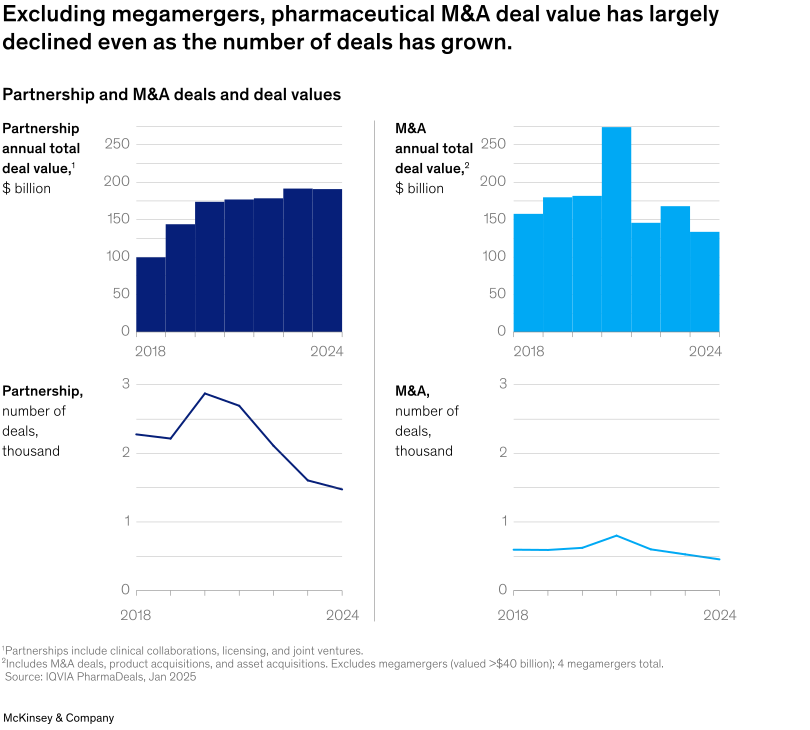
Deal volume down, deal values up
Innovation-focused dealmaking saw its peak during the COVID-19 pandemic, when medical urgencies came into sharp focus and brought increased investment and activity, especially in early-stage R&D. After that spike, however, the industry saw a steep decline in the number of deals executed annually, both for M&A and partnerships. In 2020, deal volume stood at 4,900; by 2023, that number fell to about 3,200.
Interestingly, deal value did not mirror the declining partnering trend; it continued to rise after 2020—peaking at $191 billion in 2024—albeit at a slower rate relative to the period prior to 2020. For M&A, excluding megamergers, the cumulative deal value remained essentially flat from 2018 to 2023—except for a COVID-related peak in 2021 (Exhibit 1).
Shift toward later-stage assets
Since the turn of the previous decade, R&D partnership deals have been shifting toward earlier-stage innovation, but in recent years, this trend appears to be reversing. In 2022–24, a higher proportion of deals were focused on assets in clinical development and beyond (Exhibit 2). Preclinical deals are now back to 2009 levels, but the share of clinical-stage deals keeps growing.
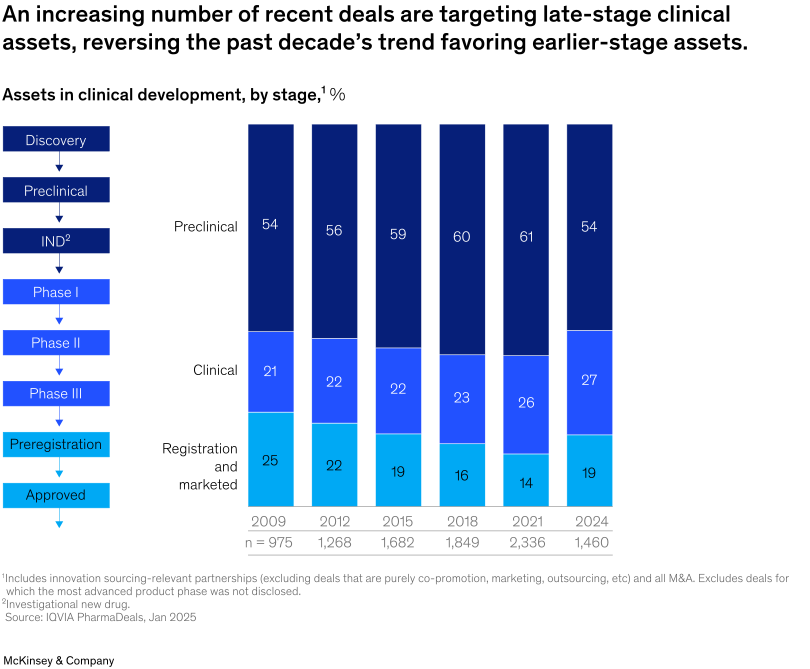
The relative increase in late-stage deals could be a result of several trends:
- There has been a postpandemic correction to the COVID-related spike in early-stage dealmaking.
- Industry players facing upcoming patent cliffs and strong investor pressures are strengthening their late-stage pipelines to offset potential revenue loss.
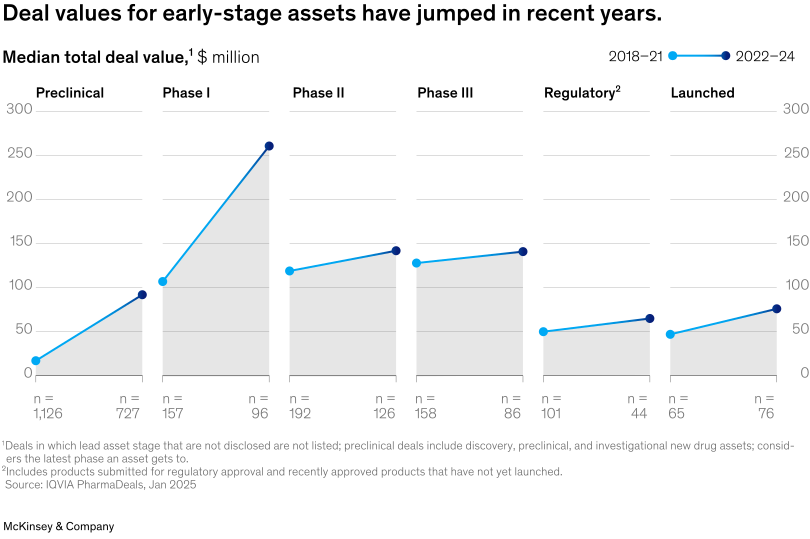
- Companies are becoming more selective with early-stage opportunities, moving away from less established modalities, such as gene therapies, and focusing on a lower volume of higher-value prospects. Since 2022, the increase in total deal value has been more pronounced in preclinical and Phase I stages (Exhibit 3).
These observations and trends are reinforced by large pharma organizations becoming more selective regarding early-stage R&D. This shift may portend a future where preclinical pipelines are smaller but higher quality and pharma companies are increasingly reliant on external innovation and clinical-stage dealmaking to fill the gap.
Macroeconomic factors driving current trends
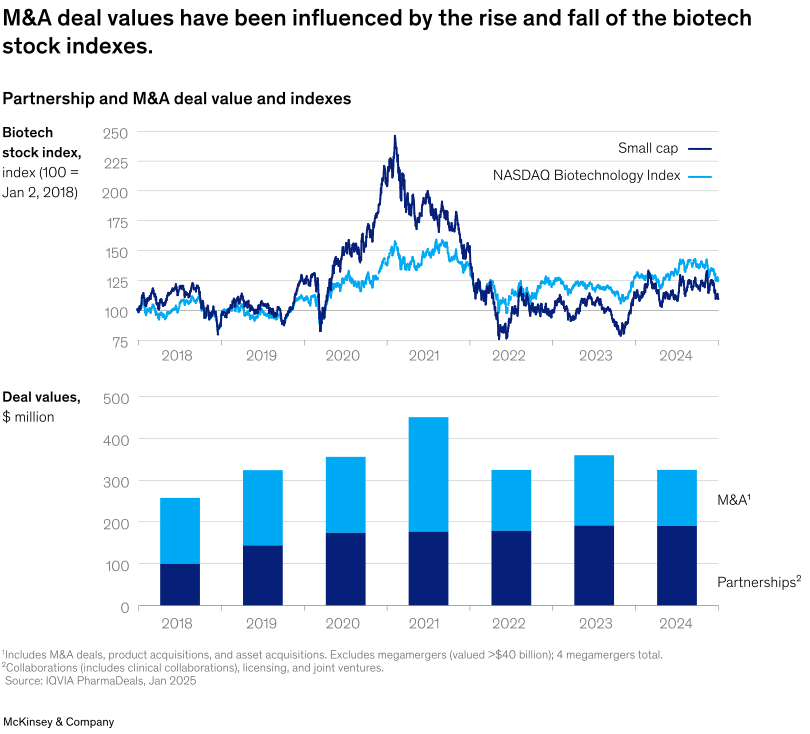
Dealmaking activity has been correlated with the biotech stock indices and interest rates (Exhibit 4). In 2020–21, high biotech valuations and an open IPO window made public markets more attractive to biotechs and made biotechs more attractive to potential pharma acquirers. Since 2022, rising interest rates have increased the time value of money, further slowing investing activity in pharma. With rates easing, biotech valuations dipping, and a number of high-value patents expiring, dealmaking could pick up—but geopolitical risks make the outlook uncertain.
Making swift and high-quality dealmaking decisions
The current dealmaking environment demands distinctive capabilities to identify and secure the most promising assets. McKinsey research shows that external innovation outperformers achieve 3.4 to 8.2 times greater returns on sourced assets. These companies excel by focusing on specific therapeutic areas, identifying opportunities early whenever possible. They also maintain rigorous yet streamlined evaluation processes, balancing speed with thorough scientific and commercial assessments—particularly when tapping into clinical-stage assets to address pipeline gaps.
To achieve success with external innovation, companies should also demonstrate strong capabilities in search, evaluation, deal execution, and alliance management, as well as deep therapeutic-area expertise and a proven track record of developing insourced assets. Organizations that do so could position themselves as a partner of choice, stand out in the competitive external innovation landscape, and deliver a much-needed boost to their R&D productivity.
The evolution of biopharma dealmaking reflects current, persistent, and emerging economic realities. However, companies that identify high-potential assets early and make confident decisions quickly can separate themselves from the pack while strengthening their pipelines for sustainable growth.
Bart Van de Vyver is a partner in McKinsey’s Geneva office; Brandon Parry is a senior partner in the Washington, DC, office; Rachel Moss is a partner in the London office; Katarzyna Smietana is a senior knowledge expert in the Wroclaw office; and Lucas Robke is a consultant in the Düsseldorf office.
The authors wish to thank Jillian Bernstein and Roerich Bansal for their contributions to this article.
This article was edited by Jermey Matthews, an editor in the Boston office.
1. McKinsey analysis based on Evaluate Pharma data.