Over the past year, consumer sentiment across the Asia–Pacific (APAC) region has reflected both resilience and recalibration. Most economies in the region have maintained or improved confidence, even amid ongoing challenges and unique conditions. Across the region, consumers remain cautiously optimistic—balancing relief from easing inflation and political stability with persistent concerns about costs and global uncertainty.
Key economies—Australia, China, India, Japan, and South Korea—are revealing nuanced shifts in how consumers feel, spend, and splurge. The following charts highlight these shifts, painting a picture of tempered positivity rather than outright exuberance.
Net sentiment: South Korea’s rebound
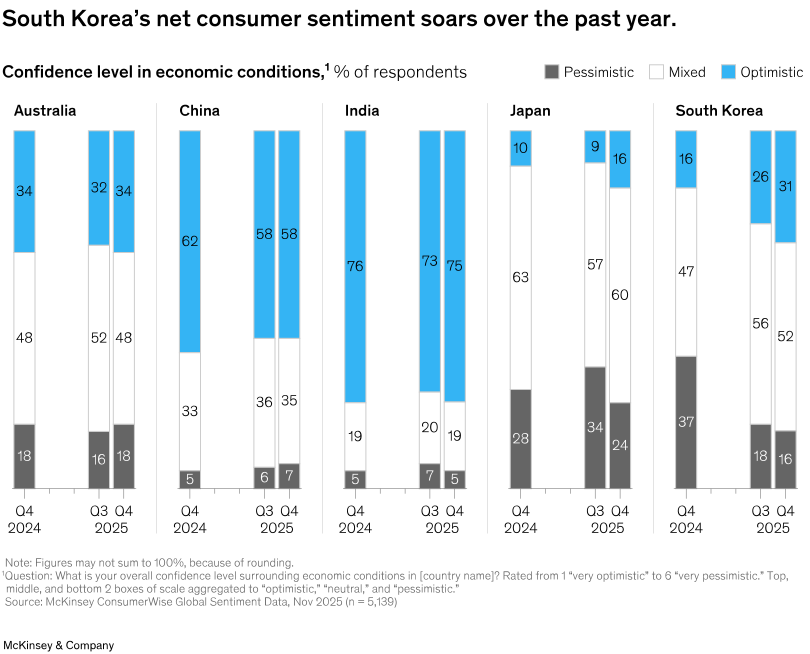
Among the five countries surveyed, South Korea recorded the largest improvement in net sentiment—the gap between optimism and pessimism—that widened by 36 percentage points since the fourth quarter of 2024. This rebound follows a period of political upheaval late last year. With stability returning, the lift in net consumer sentiment could also be attributed to an increase in tourism and a strong stock market.1 Additionally, concerns around tariffs have eased, down six percentage points since the previous quarter.
The number of consumers who intend to spend more in categories such as toys (up five percentage points) and vehicles (up two percentage points) has increased, consistent with global year-end shopping trends. However, our survey data shows that South Koreans still intend to spend less on discretionary goods overall, signaling continued caution.
Notably, high-income consumers—those earning more than 120 million won ($81,750) annually—are showing significantly increased intent to splurge, up 22 percentage points from the fourth quarter of 2024. This is a possible indication of widening divides between affluent and mid- to lower-income households.
Concerns: China’s stable optimism
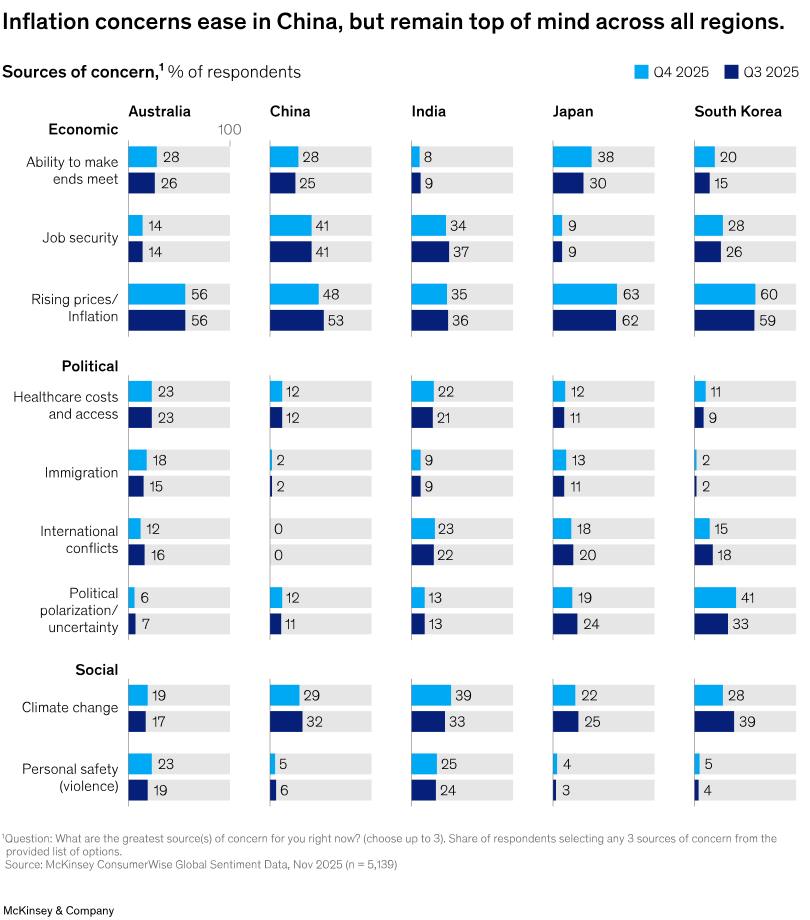
Consumer sentiment in China tells a more stable story. Although concerns about rising prices and inflation have fallen by eight percentage points year over year, overall optimism has remained unchanged since last quarter. Even with inflation hovering near zero, consumers are remaining cautious and tightening their discretionary spending budgets.2 And retail is increasing. From January to October, total retail sales of consumer goods increased by 4.3 percent compared to the same period in the previous year.3
While net intent to spend on essentials is up, intent to spend in discretionary categories remains negative. Splurge behavior has declined across generations, with Gen Z notably down 14 percentage points compared to the fourth quarter of 2024, the largest drop-off of any age group. Still, Gen Z remains the most likely demographic to treat themselves.
New shopping behaviors: Australia’s steady course
Australian consumer sentiment has also stayed broadly stable. The Reserve Bank’s rate cuts have eased cost-of-living pressures, though unemployment has ticked up. GDP growth continues to hover around 2 percent a year.4
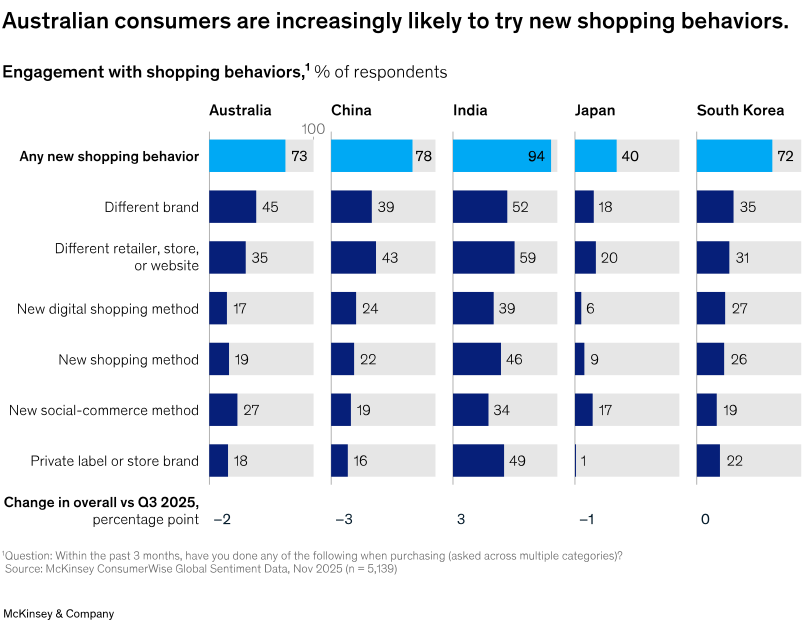
While Australian consumers remain increasingly likely to try new shopping behaviors, most aren’t experimenting with radical changes, apart from trying different brands—a pattern consistent with global behavior.
Net intent to spend is positive for essentials but negative for discretionary goods, highlighting continued caution. Intriguingly, low-income consumers—those earning less than AU $70,000 (US $45,800) annually—are showing more willingness to splurge than other groups. Meanwhile, middle-income consumers—earning between AU $70,000 and AU $125,000 (US $81,800)—are pulling back, an inversion of trends seen in other major markets.
Intent to spend: India’s confident consumer
India stands out as the most resilient consumer market in the region. Supported by robust GDP growth and low unemployment,5 Indian consumers are closing 2025 with strong spending intent across both essentials and discretionary categories—a sharp contrast to the caution prevailing in much of the world. This confidence aligns with the country’s consistently positive net sentiment.
The only outlier is the boomer generation, whose discretionary spend intent remains muted. The number of boomers who intend to splurge has dropped 25 percentage points since the fourth quarter of 2024, underscoring a widening generational divide in spending enthusiasm. Younger consumers, particularly Gen Z and millennials, continue to drive demand in categories such as technology, leisure, and personal care—suggesting India’s consumption engine remains firmly in motion.
Splurge behavior: Japan’s quiet optimism
In Japan, net sentiment remains lower than in most APAC markets, but the trend is unmistakably positive. For a country long known for its conservative consumer outlook, the recent rise in optimism to 16 percent—the highest since the pandemic—marks a meaningful shift. Pessimism has dropped by ten percentage points from the previous quarter, primarily driven by low unemployment and a buoyant stock market.6 Concerns about tariffs are also easing, falling from 23 percent of consumers in the second quarter to 9 percent this quarter, signaling greater stability in the trade environment.
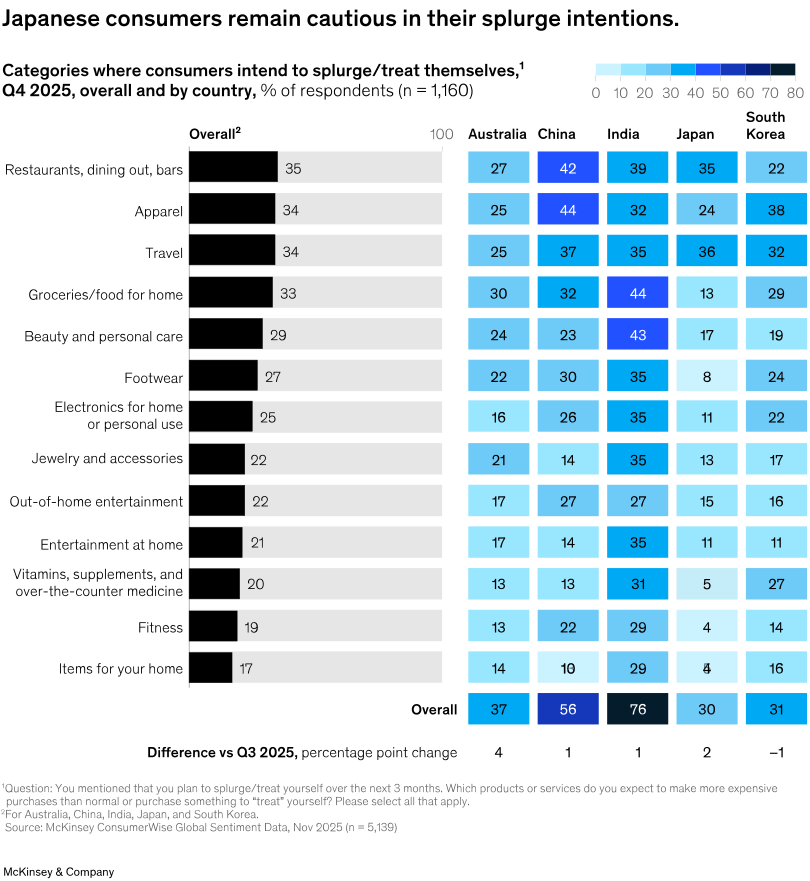
Yet, despite these encouraging indicators, intent to spend remains largely negative, even for essential items. There is an exception: intent to spend on travel is notably high, with a clear preference for domestic travel. This trend is likely driven by the weaker yen, which has made international travel more expensive for Japanese consumers and could be encouraging them to explore local destinations instead.7
This suggests that while consumers feel more economically secure, their behaviors have yet to fully align with improving sentiment—a familiar pattern in Japan’s cautious consumption landscape. The gradual improvement, however, points to potential upside for companies that can convert optimism into action through trust, innovation, and experience-driven engagement.
APAC’s mix of caution, resilience, and polarized market sentiments reveals opportunities for companies looking to capture growth in the market. By fine-tuning strategies, investing in local insight, and remaining nimble as sentiment evolves, organizations can position themselves to capitalize on changing behaviors in the region.
For more insights and updates on the state of the APAC consumer, visit our ConsumerWise page or contact us for additional information.
ABOUT THE AUTHOR(S)
Alex Harper is a partner in McKinsey’s Brisbane office, and Resil Das is an expert in the Bengaluru office.
The authors wish to thank A. Nandhini, Basundhara Bhattacharjee, and Eitan Urkowitz for their contributions to this article.
Asia–Pacific consumer sentiment: Spending shifts amid uncertainty
Asia–Pacific countries continue to show varied consumer behaviors in uncertain times. Our latest ConsumerWise research unpacks the diverse sentiments, concerns, and spending habits of the region.
Consumer sentiment across the Asia–Pacific (APAC) region is as varied as the economies themselves. Our latest research reveals a mix of optimism and caution, with spending behaviors reflecting both resilience and adaptation to economic pressures. India leads the region in discretionary spending, with consumers splurging across categories such as dining, travel, and electronics. In contrast, South Korean consumers are pulling back, particularly in travel, as they navigate economic headwinds. Meanwhile, Japanese consumers are adjusting to inflation levels not seen since the 1990s and sentiment remains subdued.
The following charts highlight key insights from our latest APAC consumer survey, showcasing how diverse economic conditions and consumer priorities are shaping spending habits across the region. We cover Australia, China, Japan, South Korea, and India.
Australia: Optimism rises, pessimism drops
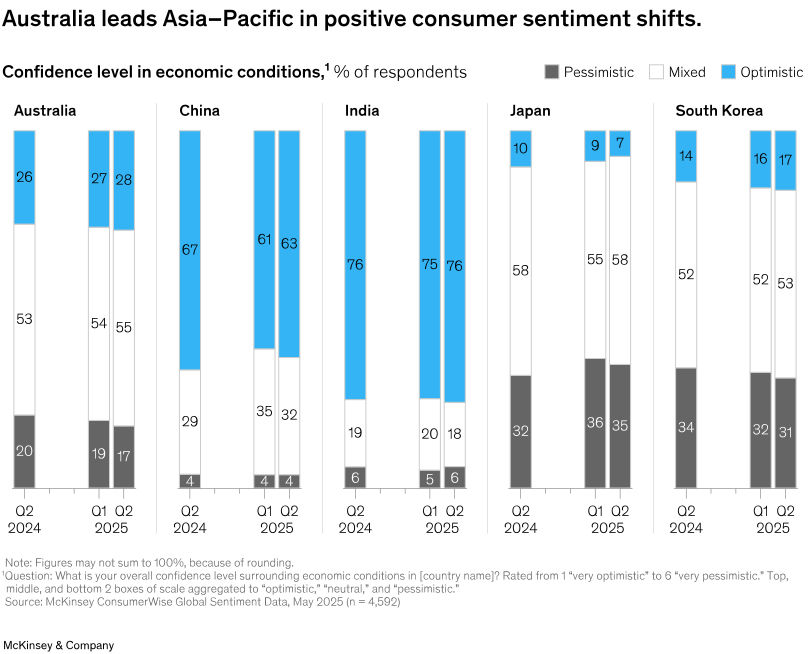
Among the five APAC countries surveyed, Australia experienced the greatest shift in consumer sentiment this quarter, with net sentiment (optimism minus pessimism) rising by three percentage points compared to the previous quarter. In contrast, consumer sentiment across most APAC countries has remained relatively unchanged, even amid ongoing geopolitical tensions.
In Australia, 20 percent of consumers reported actively seeking information about tariffs, and 21 percent indicated that they had adjusted their shopping behaviors in response to the tariff announcements—among the lowest levels of engagement across the surveyed countries. The positive sentiment shift in Australia likely reflects growing optimism about an anticipated economic rebound following a period of sluggish growth.
China: Optimistic yet uncertain
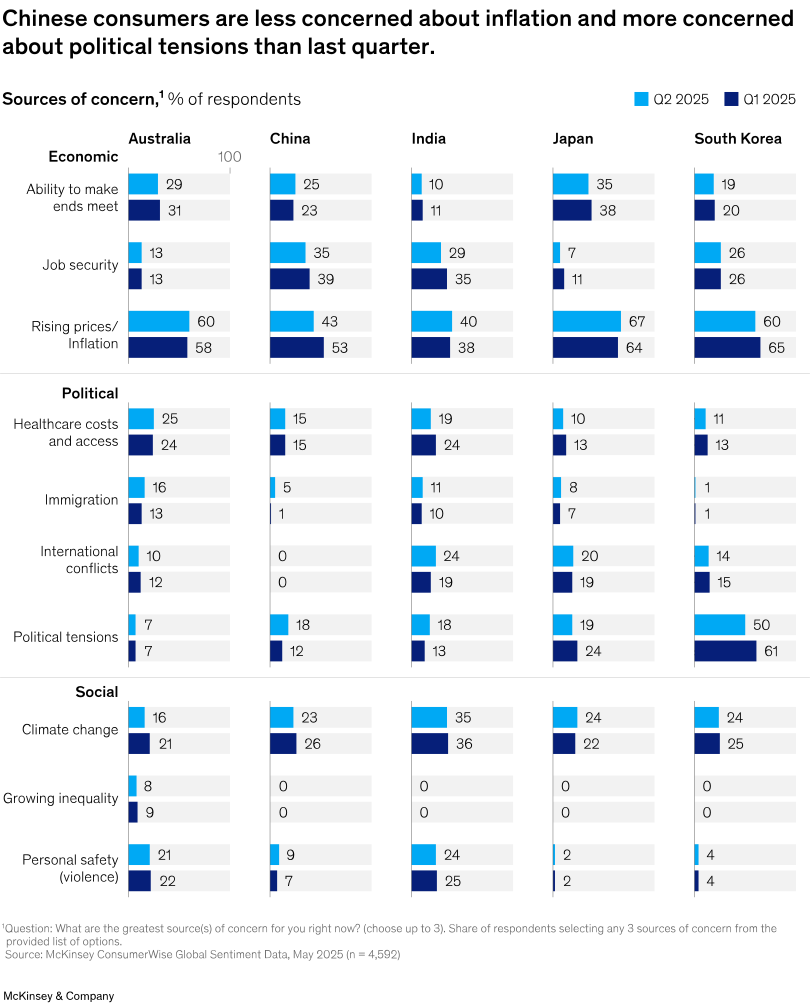
Despite ongoing uncertainty surrounding trade policies, Chinese consumers are increasingly optimistic about their economic prospects. In our work in the region, we’ve observed that many Chinese consumers view China’s trade position as favorable, and that consumption growth remains robust. This optimism is likely fueled by improving economic conditions and a drop in inflation in recent months.1
The survey results mirror these observations. The number of consumers citing rising prices as a top concern has dropped ten percentage points compared to the previous quarter. However, uncertainty persists. Approximately 23 percent of Chinese consumers report being extremely concerned about tariffs, highlighting lingering apprehensions. How this concern will influence spending behavior remains unclear, especially as the intent to splurge continues to rise from already elevated levels.
Japan: Pessimistic but evolving
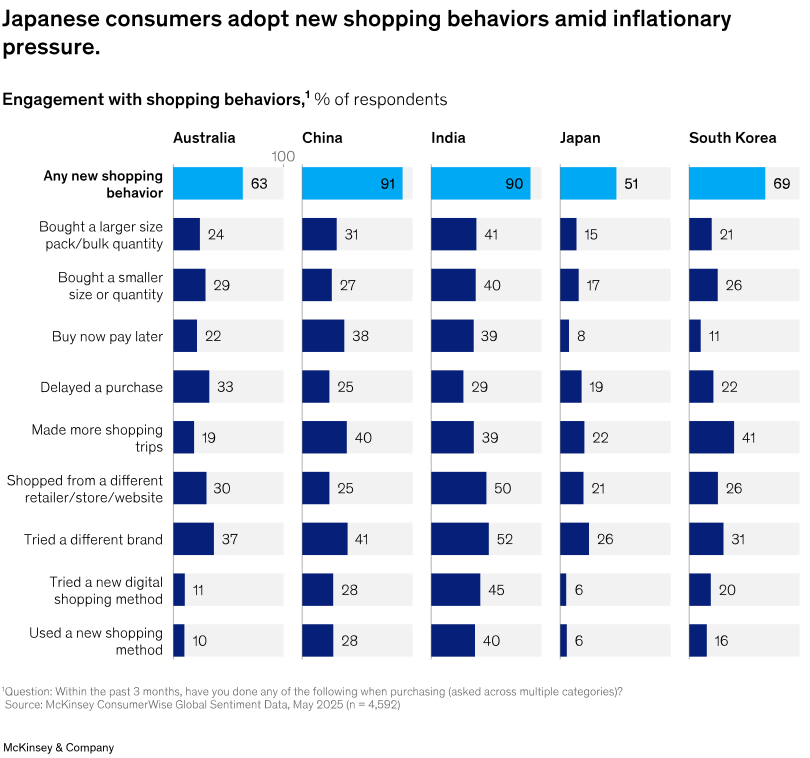
Japanese consumers have been slower to adopt new shopping behaviors compared to other APAC countries, but they experienced the most significant quarter-over-quarter change, with a 7 percent increase in consumers engaging in new shopping habits. This marks a notable shift in a market traditionally characterized by stability in consumer behavior.
The most prominent trend has been an increase in shopping frequency, which has been steadily rising over the past year, up six percentage points overall since Q2 2024. Additionally, more Japanese consumers are delaying purchases, with this behavior jumping from 13 percent to 19 percent in the last quarter. Overall, the proportion of consumers engaging in any new shopping behavior has surged from 36 percent to 51 percent over the past year.
These changes align with the challenges Japanese consumers are facing as they contend with inflation levels not seen since the 1990s. Consumer sentiment remains deeply pessimistic, with only 7 percent of respondents expressing optimism—a sharp 30-point decline over the past year. Furthermore, 67 percent of Japanese consumers cite rising prices and inflation as their top concern, the highest among all APAC countries surveyed. In a related trend, discount stores have gained popularity in Japan as consumers seek deals for daily necessities. The number of these stores tripled in the 15 years between the 2008 market crash and 2022.1
South Korea: Cautious amid challenges
South Korean consumers are pulling back on travel spending, reflecting a broader trend of cautious consumption. Across various travel categories—including flights, accommodation, and short-term rentals—spending intent has declined notably compared to the previous quarter. This marks a shift from last year, when travel spending was on the rise. The decline comes even as consumer pessimism has eased slightly in recent months, suggesting that other factors, such as economic uncertainty, may be influencing spending behavior.
While inflation in South Korea remains stable at 2.1 percent, the economy is facing headwinds that are contributing to a more cautious outlook.1 GDP has seen slight declines both year-over-year and quarter-over-quarter, and the Bank of Korea is expected to lower its 2025 growth forecast in response to these challenges.2 These economic pressures may be prompting many consumers to reassess their spending priorities, focus more on essentials, and scale back on discretionary purchases.
Tariffs are also weighing on South Korean consumers. In this survey, 26 percent of respondents identified tariffs as one of their top concerns. Notably, 43 percent of consumers have actively sought out information about tariffs—one of the highest percentages globally. While relatively few (6 percent) have already changed their spending habits in response, 40 percent indicated they expect to make adjustments soon. Among these changes, 67 percent of South Korean consumers plan to cut back on nonessential goods, signaling a shift toward more frugal and deliberate spending behaviors.
India: Resilient and optimistic
India continues to stand out as a leader in consumer spending across APAC. Intent to spend remains strong and intent to splurge remains at the highest level relative to other countries in the region. This trend spans a variety of discretionary categories, including dining out, jewelry, electronics, and travel, highlighting the resilience and optimism of Indian consumers.
Like their South Korean counterparts, Indian consumers are highly engaged when it comes to tariffs, with 43 percent actively seeking out information on the topic. Moreover, 72 percent of Indian respondents reported that they have already changed, or are expecting to change, their spending behavior due to tariffs. Despite these concerns, intent to spend on travel is on the rise, aligning with the broader trend of increased discretionary spending, particularly in categories associated with leisure and lifestyle.
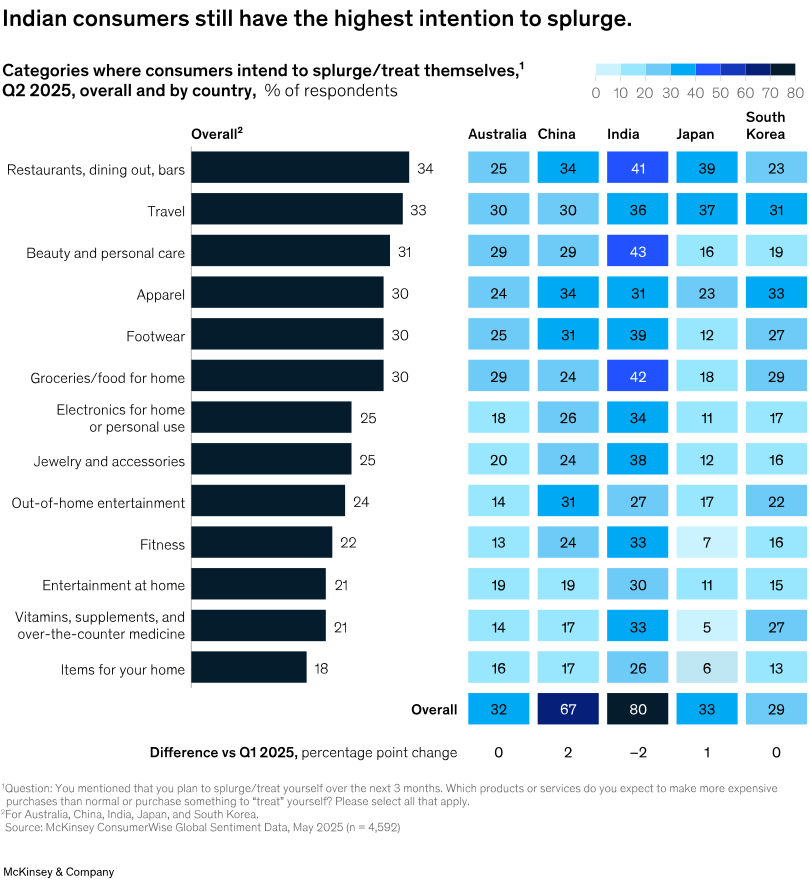
The consumer landscape across APAC reflects a complex interplay of economic pressures, cultural nuances, and shifting priorities. While markets like India showcase robust spending across discretionary categories, others, such as South Korea, highlight a more cautious approach as consumers navigate economic headwinds. Across the region, factors like tariffs, inflation, and evolving spending habits continue to shape consumer behavior in unique ways.
As businesses look to engage with APAC consumers, staying attuned to these diverse trends and adapting to local market dynamics will be key. For more insights and updates on the state of the APAC consumer, visit our ConsumerWise page or contact us for additional information.
ABOUT THE AUTHOR(S)
Alex Harper is a partner in McKinsey’s Brisbane office, and Resil Das is an expert in the Bengaluru office.
The authors wish to thank A Nandhini, Basundhara Bhattacharjee, and Eitan Urkowitz for their contributions to this article.