Global working-age populations are expected to peak in three waves, with the first wave including the United States and nearing its end. US demographic shifts are contributing to workforce shortages, which could accelerate, McKinsey Global Institute Partner Anu Madgavkar and coauthors note. This comes as the United States is already falling short in terms of labor productivity in sectors such as construction, healthcare, and small businesses.
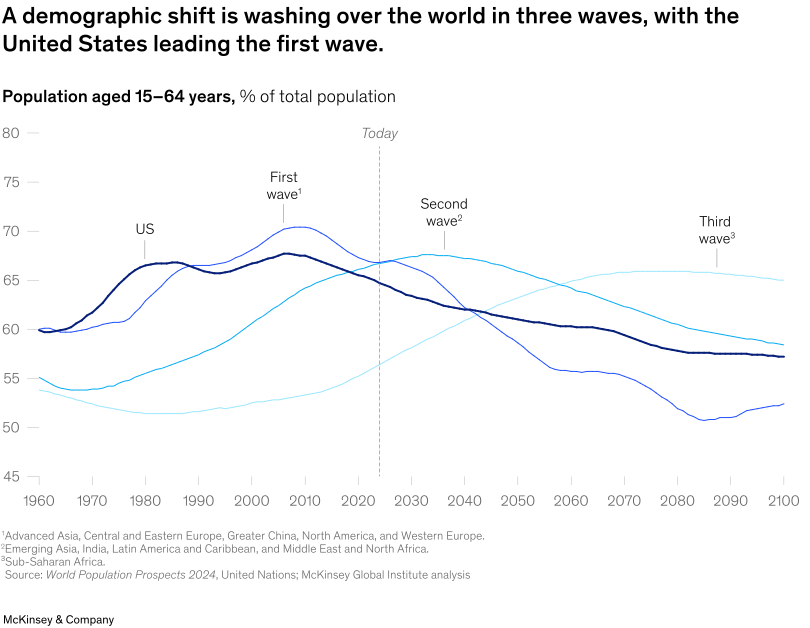
Image description:
A line chart displays the percentage of the global population aged 15–64 for three different regions across time, from 1960 to 2100. The chart shows 3 distinct waves of demographic change. The darkest blue line represents the United States. This line begins at approximately 60% in 1960, peaks at roughly 68% around 1980, and then gradually declines to approximately 58% by 2100. The first wave (which includes advanced Asia, Central and Eastern Europe, Greater China, North America, and Western Europe) starts at the same point as the US line, peaking about 70% in 2010 and then descending to about 53% in 2100. A lighter blue line, representing the second wave, starts at ~55% in 1960, rises more gradually to reach a peak near 68% around 2030, and then also declines to ~60% in 2100. A light blue line represents the third wave; it begins at approximately 54% in 1960, steadily rises to roughly 65% around 2080, and declines slightly afterward. A dashed vertical line marks “Today” on the chart, positioned around 2023.
Note: This image description was completed with the assistance of Writer, a gen AI tool.
Source: World Population Prospects 2024, United Nations; McKinsey Global Institute analysis.
End of image description.
To read the article, see “Empowering the US workforce,” April 28, 2025.