Venture capitalists are increasingly investing in climate-focused technology businesses. A significant investment shift is evident across various technology sectors, with a notable rise in capital for horizon three technologies, note Senior Partner Rajat Gupta and coauthors. Among strategic horizons for climate technology, horizon one includes core businesses (usually fossil fuel–based) that currently generate cash flow. Horizon two includes growth businesses now that are expected scale to generate profit. Horizon three businesses are the growth options for the future, such as research projects or pilot programs. Although horizon three businesses represent a small proportion of climate tech businesses, spending has increased on those that are approaching the horizon two boundary.
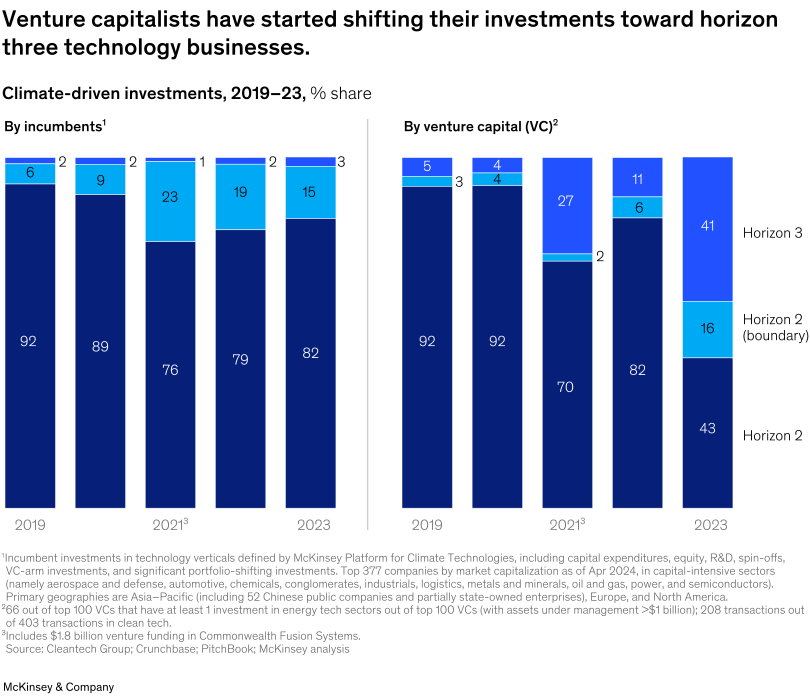
Image description:
A pair of stacked bar charts illustrate the percentage share of climate-driven investments from 2019 to 2023, categorized by investor type (incumbents and venture capital). The bar chart on the left shows the breakdown of investments by incumbents. In 2019, 92% of investments were in Horizon 2, 6% in the Horizon 2 boundary, and 2% in Horizon 3. In 2021, this shifted to 76% in Horizon 2, 23% in Horizon 2 boundary, and 1% in Horizon 3. In 2023, the distribution showed 82% in Horizon 2, 15% in Horizon 2 boundary, and 3% in Horizon 3. The chart on the right presents a similar breakdown for venture capital investments. In 2019, 92% of investments were concentrated in Horizon 2, with 5% in Horizon 3. By 2021, the proportion in Horizon 2 decreased to 70%, while the investments in Horizon 3 rose to 27%. In 2023, a substantial shift is visible, with 43% of the investments in Horizon 2 and 41% in Horizon 3.
Note: This image description was completed with the assistance of Writer, a gen AI tool.
Source: Cleantech Group; Crunchbase; PitchBook; McKinsey analysis.
End of image description.
To read the report, see “How incumbents can succeed in climate-driven growth investments,” April 1, 2025.