While commercial air traffic and aircraft deliveries have recovered to prepandemic levels, the aerospace supply chain is experiencing inefficiencies. Partner Michelle Bryant and coauthors note that commercial aerospace inventory has reached $240 billion, but inventory turns—which measures how many times a business has sold and replaced its total inventory during a given period—reached a ten-year low, declining from 3.0 in 2015 to 1.9 in 2024. Companies that can effectively address inventory inefficiencies could strengthen supplier relationships and position their organizations for sustainable growth.
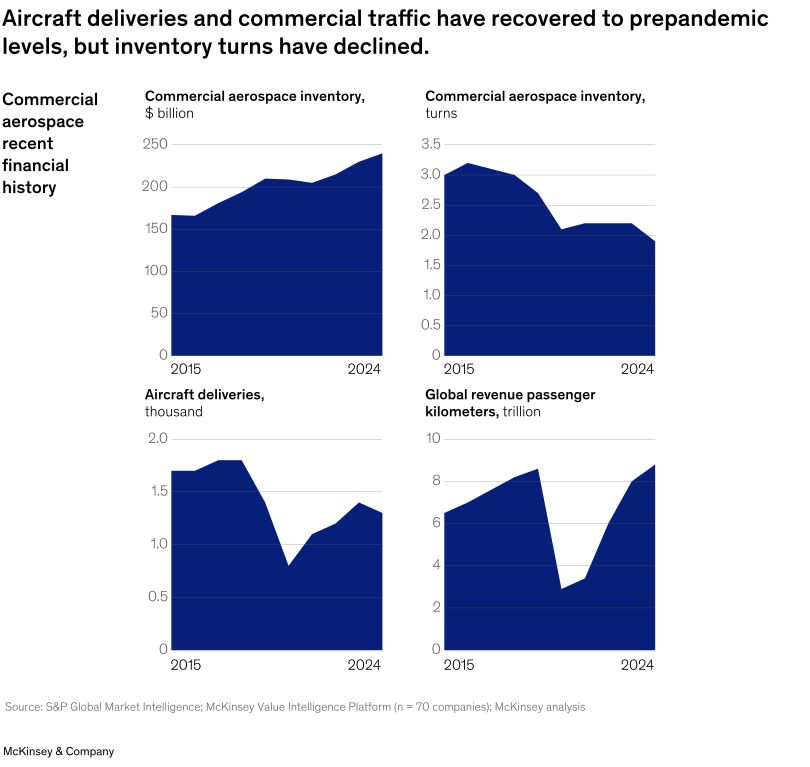
Image description:
Line charts track the evolution of commercial aerospace inventory levels, inventory turns, aircraft deliveries, and global revenue passenger kilometers from 2015 to 2024. Commercial aerospace inventory is shown in billions of dollars, which rises steadily from $167 billion in 2015 to $240 billion by 2024. Over the same period, commercial aerospace inventory turns declined from 3.2 in 2016 to 1.9 in 2024. Aircraft deliveries are shown in thousands, which are relatively stable at 1.7–1.8 before dropping to 0.8 in 2020 and then partially rebounding to 1.3 in 2024. Global revenue passenger kilometers increased from 6.5 trillion in 2015 to 8.8 trillion in 2024, although it dipped sharply to 2.9 trillion in 2020 before recovering.
Note: This image description was completed with the assistance of Writer, a gen AI tool.
Source: S&P Global Market Intelligence; McKinsey Value Intelligence Platform (n = 70 companies); McKinsey analysis.
End of image description.
To read the article, see “Fly high, stock higher: Managing A&D inventory to save $60 billion,” November 19, 2025.