Despite technology investments and cost-cutting efforts, banks and insurers have struggled to achieve significant productivity gains in the past two decades, with cost efficiency remaining stagnant or declining. Challenges such as regulatory changes, the rise of gen AI, and high employee attrition have strained the industry, Senior Partner Roger Rudisuli and coauthors note. They highlight that quick fixes often fail due to flawed strategies and underinvestment in talent, and advocate instead for a holistic, people-focused approach and redesigning organizational units to drive sustainable value creation.
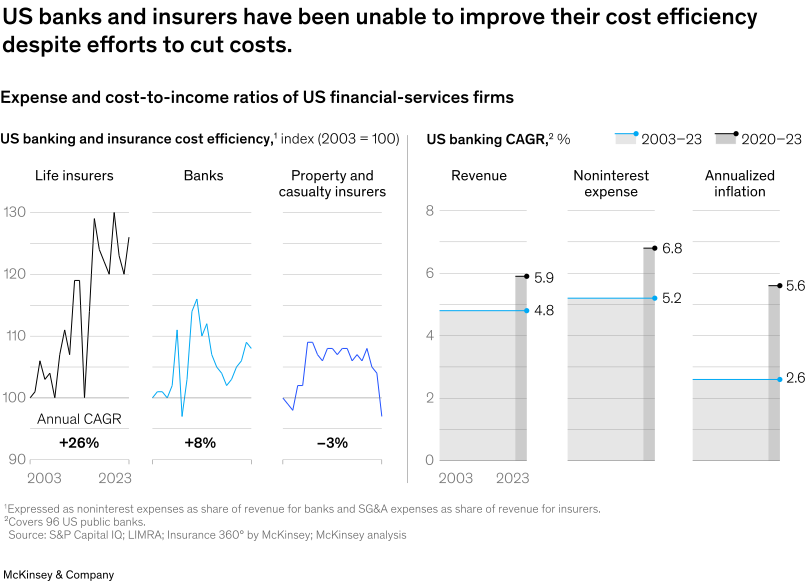
Image description:
Three line charts and 3 bar charts compare the cost efficiency of US financial-services firms from 2003 to 2023. The 3 line charts each display the US banking and insurance cost efficiency index, where 2003 equals 100, for life insurers, banks, and property and casualty insurers, respectively. Life insurers have an annual CAGR of +26%, while banks have a CAGR of +8% and property and casualty insurers have a CAGR of –3%. The 3 bar charts each display the US banking CAGR percentage from 2003 to 2023 and from 2020 to 2023 for revenue, noninterest expense, and annualized inflation, respectively. Revenue grew from 4.8% to 5.9%, noninterest expense grew from 5.2% to 6.8%, and annualized inflation grew from 2.6% to 5.6%.
Note: This image description was completed with the assistance of Writer, a gen AI tool.
Source: S&P Capital IQ; LIMRA; Insurance 360° by McKinsey; McKinsey analysis.
End of image description.
To read the article, see “Going back to basics to unlock sustained efficiency and productivity gains in financial services,” May 29, 2025.