In many sectors, R&D investment has been yielding less innovation over time. AI, though, has the power to substantially accelerate R&D across a set of industries that account for 80 percent of large corporate R&D spending, say Senior Partner Lareina Yee and coauthors. For example, in computer gaming, where intellectual property is paramount, AI could boost output by 150 percent. In industries closely aligned with scientific discovery, such as chemicals and pharmaceuticals, AI could enhance R&D throughput by up to 75 and more than 100 percent, respectively. In electronics, which demands multidisciplinary engineering, AI could nearly double the pace of product design, while commercial aerospace could see a 25 percent increase.
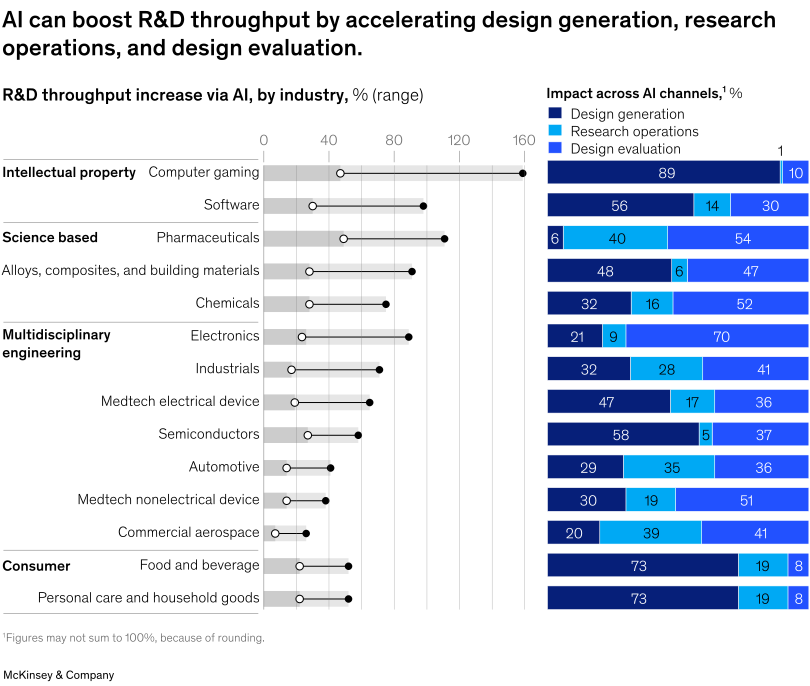
Image description:
A horizontal bar graph illustrates the impact of AI on R&D throughput across various industries, categorized into four groups: intellectual property, science-based, multidisciplinary engineering, and consumer. The left side of the chart displays a range of R&D throughput increases via AI, with percentages ranging from 0 to 160. Industries such as computer gaming and pharma show significant increases, with upper ranges extending beyond 100%. The right side of the chart breaks down the % share of impact across AI channels, including design generation, research operations, and design evaluation. For instance, pharmaceuticals shows a substantial impact on design evaluation at 54%, while food and beverage and personal care and household goods have a significant impact on design generation, both at 73%. Other industries, such as electronics and industrials, demonstrate varying distributions across the AI channels, with electronics showing 21% in design generation, 9% in research operations, and 70% in design evaluation, and industrials having 32% in design generation, 28% in research operations, and 41% in design evaluation.
Note: This image description was completed with the assistance of Writer, a gen AI tool.
End of image description.
To read the article, see “The next innovation revolution—powered by AI,” June 20, 2025.