Over the past year, the materials industry has undergone notable shifts, including rising resource nationalism, new demand from AI and defense, and a productivity rebound. The sector contracted in 2024, as metals and mining revenues fell 6 percent to about $3 trillion. Future success in metals and mining will require capturing growth, improving productivity, and delivering sustainable solutions, note Senior Partners Michel Van Hoey and Karel Eloot and coauthors. By 2035, demand growth could add about 620 megatons of CO₂ annually, largely counterbalanced by grid decarbonization, efficiency gains, and increased use of recycled materials. McKinsey projections estimate that these trends could yield a net emissions reduction by about 6 percent.
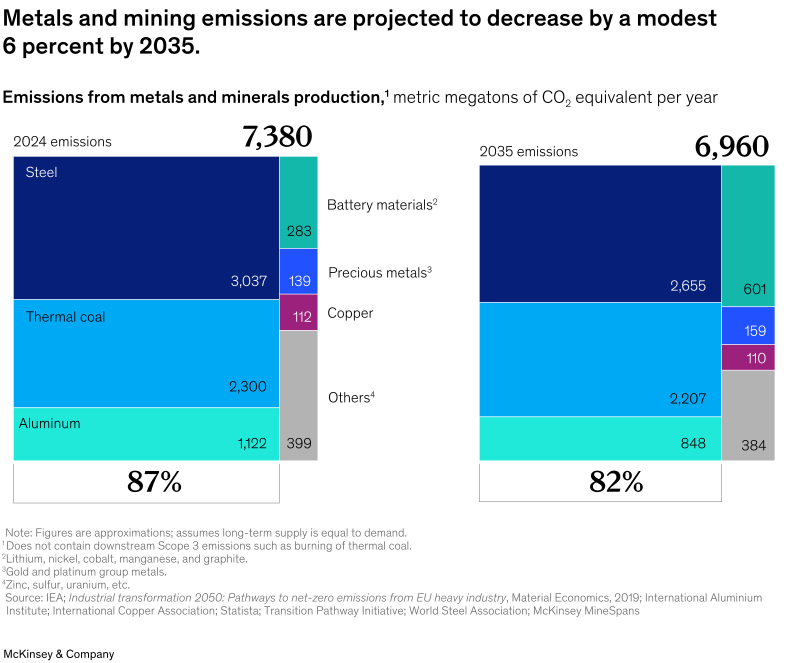
Image description.
A pair of treemap charts compare emissions from metals and minerals production in metric megatons of CO2 equivalent per year for 2024 and 2035. The 2024 chart on the left shows a total of 7,380 metric megatons of CO2 equivalent, with the largest share coming from steel and thermal coal, together accounting for 87% of the total emissions. The chart on the right for 2035 shows a total of 6,960 metric megatons of CO2 equivalent, with steel and thermal coal again being the largest contributors, but their combined share decreasing to 82% of the total emissions. The charts also show smaller shares from battery materials, precious metals, copper, aluminum, and others in both years. The proportion of emissions from battery materials is noticeably larger in 2035 compared to 2024.
This image description was completed with the assistance of Writer, a gen AI tool.
Source: IEA; Industrial transformation 2050: Pathways to net-zero emissions from EU heavy industry, Material Economics, 2019; International Aluminium Institute; International Copper Association; Statista; World Steel Association; Transition Pathway Initiative; McKinsey MineSpans
End of image description.
To read the report, see “Global Materials Perspective 2025,” October 7, 2025.