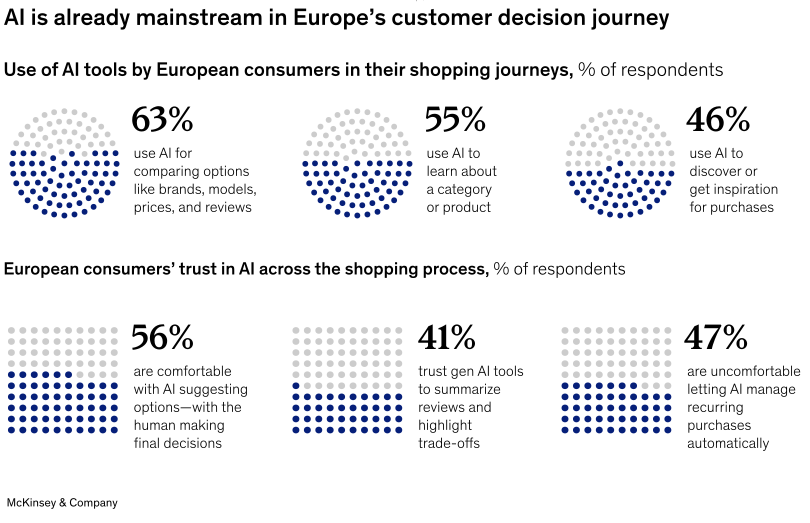
AI is already an integral part of the shopping journey for many European consumers: In a recent McKinsey survey, 63 percent of respondents report using AI-powered tools to compare options and learn about products. More than half of shoppers indicate they are comfortable with AI suggesting options, but they prefer to retain final decision-making authority, note McKinsey’s Katharina Schumacher, Marcus Keutel, Philipp Kluge, and coauthors. For consumer companies seeking to stay relevant in the agentic-commerce era, the question is how to design agentic experiences that provide transparent reasoning, explicit authority, and clear responsibilities.
Image description:
An infographic is split into 2 sections. The first section shows the use of AI tools by European consumers in their shopping journeys, % of respondents, with 3 dot-matrix visualizations: 63% use AI for comparing options like brands, models, prices, and reviews; 55% use AI to learn about a category or product; 46% use AI to discover or get inspiration for purchases. In the second section, another set of 3 dot-matrix visualizations shows European consumers’' trust in AI across the shopping process for European consumers: 56% of respondents are comfortable with AI suggesting options, but with humans making final decisions; 41% trust gen AI tools to summarize reviews and highlight trade-offs; 47% are uncomfortable letting AI manage recurring purchases automatically.
Note: This image description was completed with the assistance of Writer, a gen AI tool.
End of image description.