In retail, early signs of a second transition from AI-assisted decisions to AI-executed transactions are emerging, note McKinsey’s Elizabeth Silliman, Jack Trotter, Kelsey Robinson, and their coauthors. Across categories, 7 to 18 percent of AI users in the United States completed purchases with AI, according to the McKinsey Agentic Commerce Consumer Survey. Apparel purchases led the way and saw an 8.5 percentage-point change from 2025. Retailers are moving quickly to implement AI shopping capabilities, but the scale of the change needed may constrain the full potential in the short term.
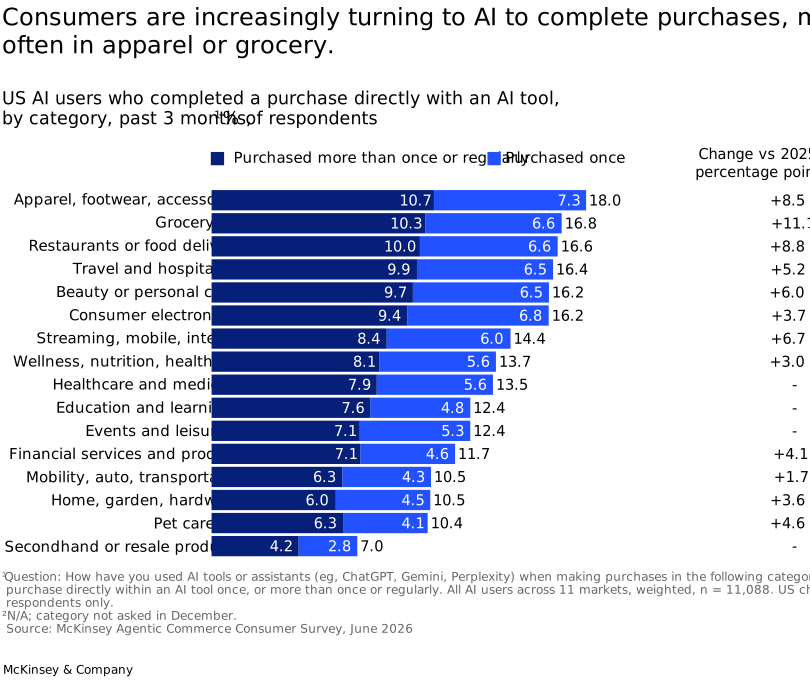
Image description:
Stacked horizontal bar chart showing the percentage of US AI users who completed purchases directly through an AI tool in the past three months, by category, in June 2026. Dark blue represents repeat or regular purchases, while bright blue represents one-time purchases. Apparel, footwear, and accessories lead at 18.0%, followed by grocery at 16.8%, restaurants or food delivery at 16.6%, travel and hospitality at 16.4%, and beauty or personal care and consumer electronics, both at 16.2%. Other categories range from 14.4% for streaming, mobile, and internet to 7.0% for secondhand or resale products. Repeat purchases account for more than half of purchases in every category. Compared with December 2025, grocery shows the largest increase at 11.1 percentage points, followed by restaurants or food delivery at 8.8 points and apparel at 8.5 points. Results are based on a survey of 11,088 AI users across 11 markets, with US respondents shown.
Source: McKinsey Agentic Commerce Consumer Survey, June 2026
End of image description.
To read the article, see “Who wins when AI does the shopping? New evidence on agentic commerce,” October 28, 2026.