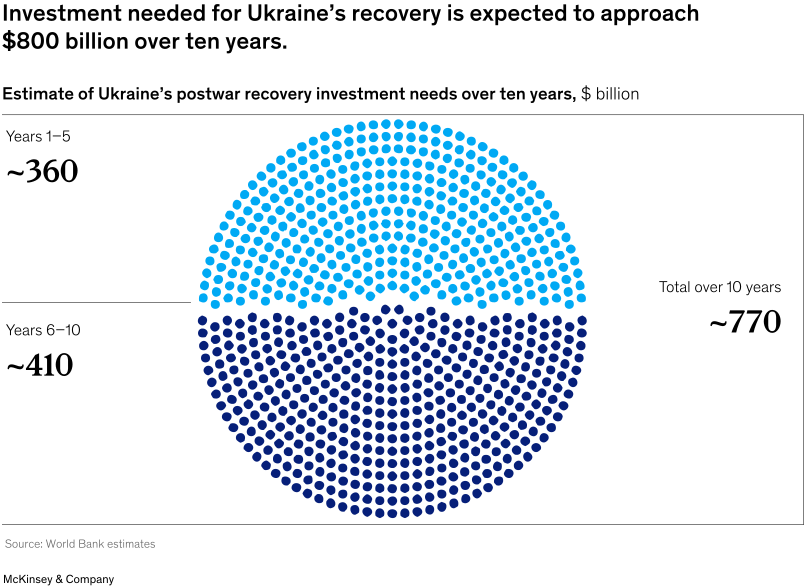
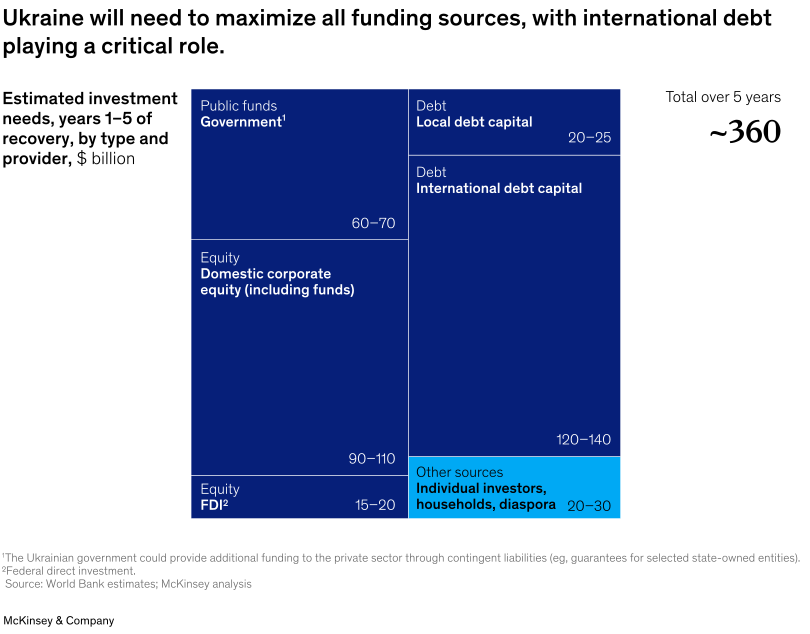
The large-scale destruction of infrastructure, industrial facilities, and homes over the past four years has devastated Ukraine’s economy and its people. Even as the war continues, the country’s leaders and their partners need to prepare for an eventual reconstruction on a grand scale—not only to replace what’s been lost but to build a modern economy for the future. Our analysis in partnership with the World Bank estimates the total investment needed at nearly $800 billion over a decade, equivalent to between 24 and 30 percent of Ukraine’s annual GDP (Exhibit 1). The five years right after the war’s end will be a critical period. Approximately $360 billion will be needed during those early years to shore up industrial capacity, raise the confidence of investors and the nation’s talent, and thus prevent potential prolonged economic stagnation.
A successful recovery will rest on two core pillars: the availability of projects that can secure bank financing and access to affordable funding. Addressing both imperatives in parallel will be vital to mobilizing the scale of investment Ukraine needs. For example, project preparation facilities can strengthen project bankability by ensuring robust design, governance, and financial structure. At the same time, comprehensive risk-reduction mechanisms can open access to capital at affordable costs.
International debt will be critical to financing the recovery. However, Ukraine’s sovereign credit rating, which is likely to remain elevated for some time after the war ends, will influence the interest of global debt markets and the cost of capital. Effective derisking will therefore be essential to mitigate perceived risks, lower financing costs, and attract private and institutional investors.
Many risk-reduction instruments are already in place. The Ukraine Facility,1 for example, is an important step toward building a comprehensive risk mitigation architecture. However, the economy’s scale and the complexity of its needs will require a significant expansion of risk mitigation efforts. By acting early, the Ukrainian government and its international partners can improve the coverage of and access to existing funding mechanisms and lay the institutional and financial foundations that can support comprehensive risk mitigation. This article explores how an enhanced and expanded derisking architecture can unlock sustainable, large-scale investment and accelerate Ukraine’s recovery.
How risk mitigation can ease access to needed funding
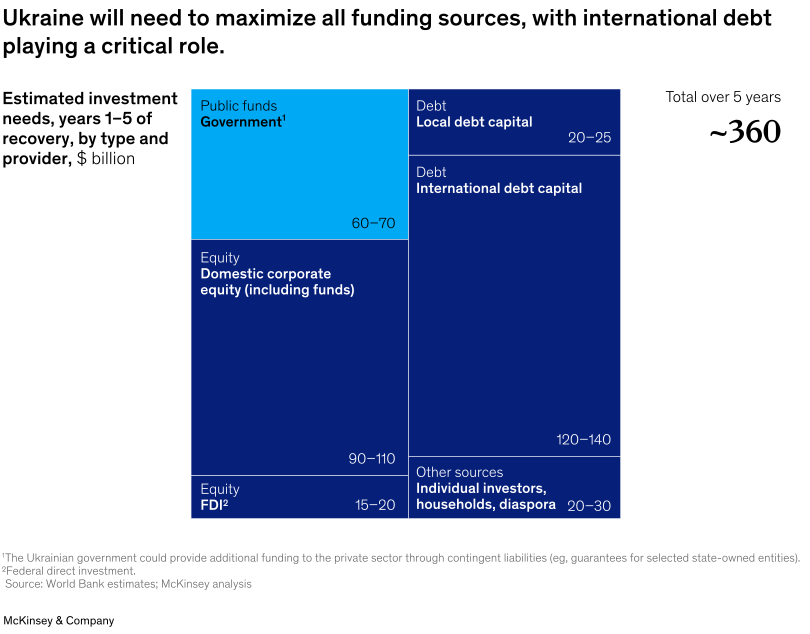
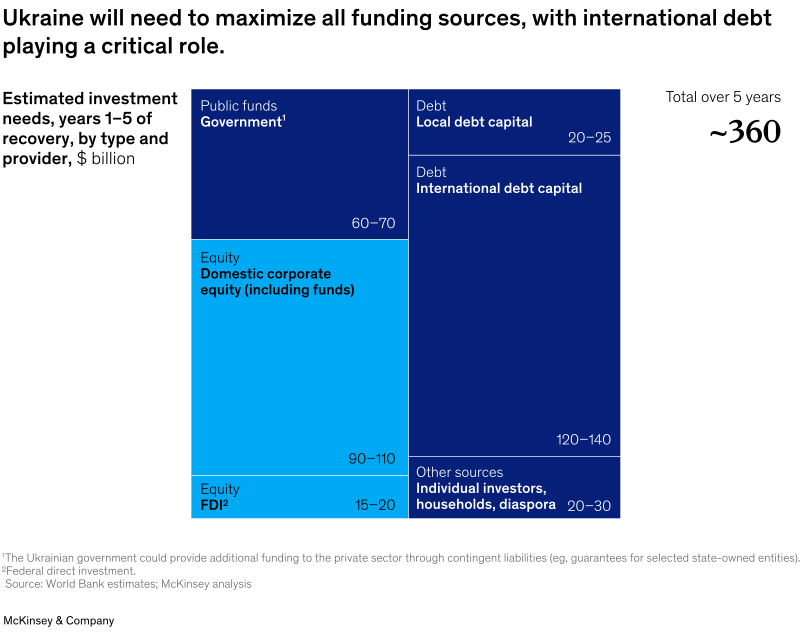
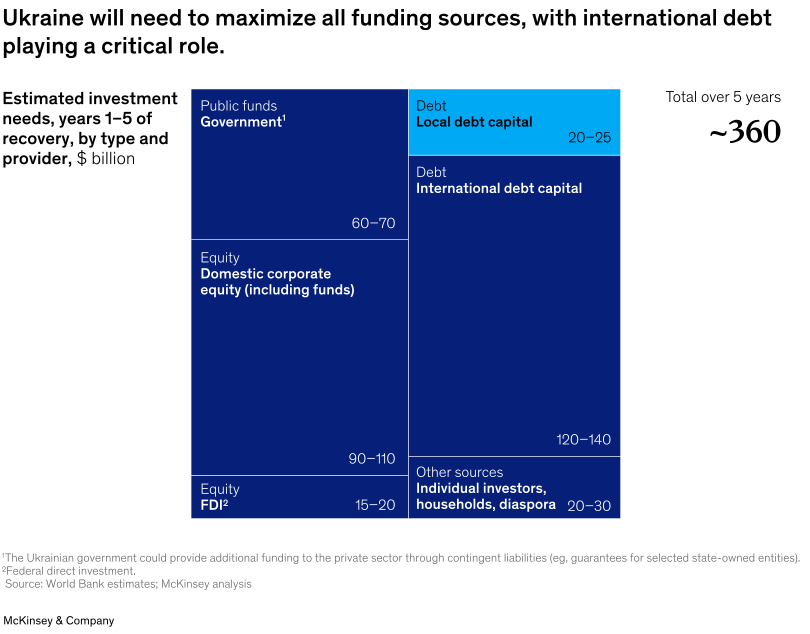
Ukraine’s domestic sources of capital are unlikely to fulfill the country’s reconstruction needs for several reasons. First, domestic public funding will be limited by postwar fiscal realities. Second, domestic companies and investment funds lack capital on the scale needed to finance the recovery, and Ukraine’s capital and debt markets are not sufficiently robust. Finally, both domestic and foreign equity investors would need considerable leverage to optimize internal rates of return in the high-risk postwar environment. Given these constraints, international debt will likely play a critical role. We estimate that foreign lenders would need to fill a funding gap of approximately $120 billion to $140 billion within the first five years alone (Exhibit 2).
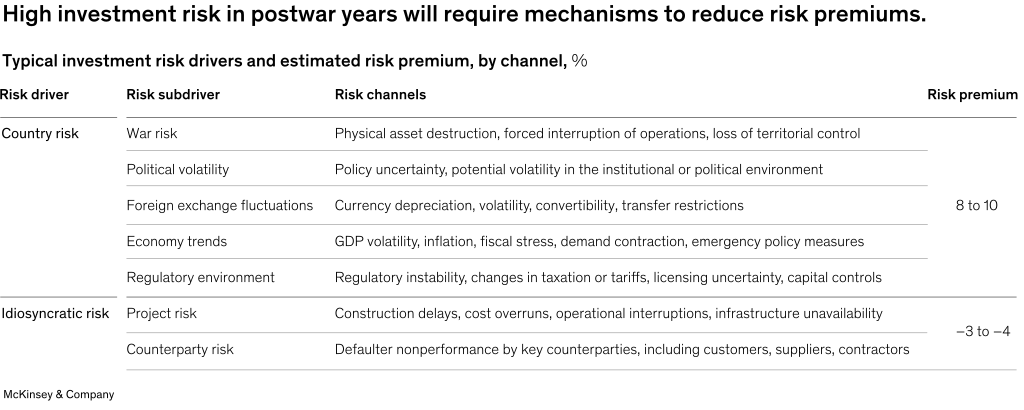
However, given the high expected macroeconomic and foreign exchange risks in postwar Ukraine, global banks and institutional investors may be cautious about committing significant funds to the country, and their loans would come at a high cost. Even with a ceasefire or a peace deal in place, Ukraine’s sovereign credit rating will likely remain low for some time, limiting international debt providers’ appetite for financing projects in the country. Mitigating risk for lenders and investors is thus a priority, because it can both expand the availability of international debt capital and improve its affordability (Exhibit 3). Moreover, derisking debt can generate a strong multiplier effect on limited donor capital, which can serve as leverage to mobilize additional private credit at a reasonable cost.
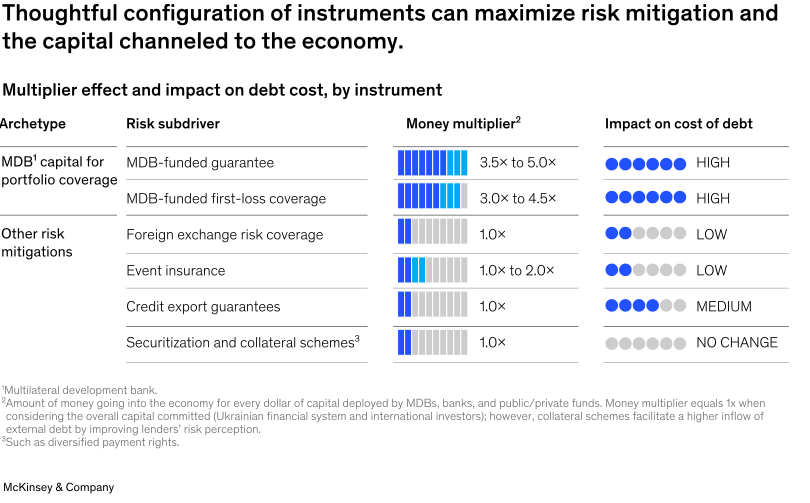
Potential risk reduction instruments include portfolio and first-loss guarantees funded by multilateral development banks (MDBs), foreign exchange risk coverage, political and war risk insurance, export credit guarantees, collateral schemes, and diversified payment rights instruments. Our comparative assessment of the capital multiplier effect and the impact on debt costs shows that MDB-funded portfolio guarantees (potentially backed by publicly sponsored first-loss tranches) can provide the most comprehensive mitigation of both country and idiosyncratic risks2 (Exhibit 4). When complemented by private first-loss capital, these structures would reduce MDB capital intensity and expand the involvement of private funds. Other instruments can then address specific risks. Our analysis suggests that a thoughtful configuration of derisking instruments could reduce the cost of private debt by up to six percentage points, making projects previously ineligible for bank loans viable.3
Elements of the risk mitigation infrastructure are already in place (such as the aforementioned Ukraine Facility) but can benefit from enhancement and expansion to fully enable recovery. However, it’s important to assess the impact of the following constraints:
- Historical focus on small and medium-size enterprises (SMEs). Derisking instruments in Ukraine have traditionally been geared toward SMEs. While instruments suitable for large corporations and sizable recovery projects are emerging—including individual guarantees—they are not yet widely used and appear to be operating below the capacity required to support the recovery’s funding needs.
- Eligibility and processing limitations. Strict requirements regarding the ownership structures of participating banks and recipient companies—as well as comprehensive environmental, social, and governance standards and compliance requirements—limit the pool of projects eligible for funding. These requirements also lead to substantial due diligence and processing timelines, particularly for complex instruments such as large, bespoke risk-sharing arrangements, thereby slowing deployment and constraining the system’s ability to scale rapidly.
- Limited capital allocation for risk mitigation. A material share of existing instruments provides funding (in the form of loans) rather than risk transfers (in the form of guarantees and other derisking instruments). Expanding guarantees and risk-sharing mechanisms can create leverage and stimulate higher participation from international and domestic private-sector lenders, which have sufficient liquidity to deploy as long as the risk–reward structure is acceptable to them.
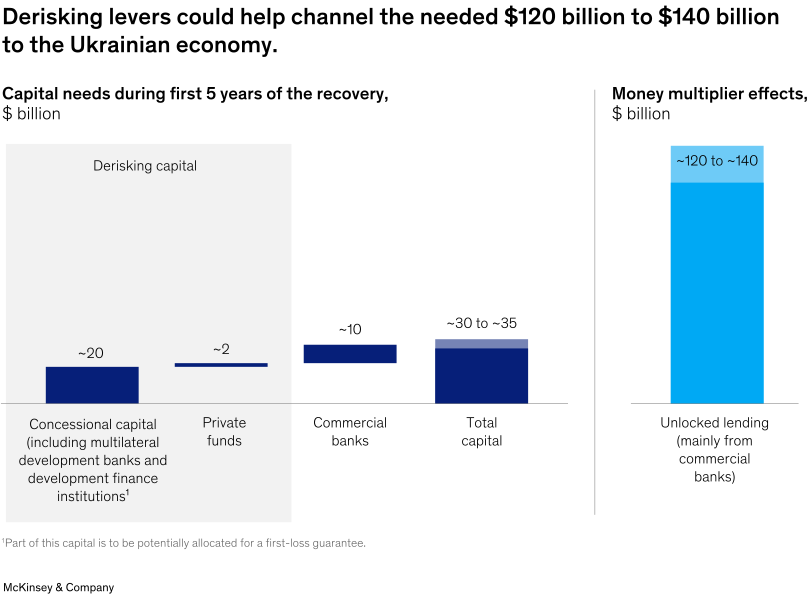
Engaging private funds for first-loss capital early in the process will be critical to reducing concessional capital4 needs and attracting investment to Ukraine. While some investor interest is already emerging, high risks immediately postwar will likely limit appetite. A prudent expectation would be up to $2 billion in privately funded first-loss capital within the first five years of the recovery. Combined with MDB and bank loans, that could be sufficient to channel the needed $120 billion to $140 billion to the Ukrainian economy (Exhibit 5).
To sustain investor confidence, structural reforms—ranging from strengthening the country’s capital markets and the financial sector’s resilience to enhancing regulatory predictability—will be essential, as will a rigorous governance model. Managing a derisking architecture of this magnitude will require close coordination among Ukrainian authorities, MDBs and development finance institutions, donor governments, banks, and institutional investors. The governance model will need to ensure strong alignment between economic development priorities and the pipeline of projects supported through risk-reduction mechanisms, and to effectively coordinate the multiple providers of derisking capital.
The two leading options entail trade-offs between strategic alignment, speed, and flexibility. A centralized governance model, as used in the Western Balkans Investment Framework and Climate Investment Funds, would feature a single entity with representation from government officials, international donors, and financial institutions. Its benefits include coordinated distribution of funds in line with defined investment priorities and streamlined administrative processes, thanks to harmonized appraisal and reporting standards. However, establishing such an entity would be complex and time-consuming, and its formal governance structure could reduce flexibility in providing tailored mechanisms for specific projects.
The alternative is a decentralized approach in which MDBs and international financial institutions operate independently, coordinating with each other and the Ukrainian government on national priorities. Such a model could provide high flexibility and fast execution, with the potential to tailor risk mitigation instruments to specific sectors, counterparties, and portfolios. On the other hand, the model would make it more difficult for the government to guide the allocation of funds toward critical recovery projects, creating a risk of funding overlaps and parallel initiatives if coordination lacks rigor.
Moving from ambition to execution
Postconflict periods often present narrow but decisive windows to mobilize private capital, making early risk mitigation essential. Past international experience suggests that the following steps can prepare Ukraine for a quick launch of its recovery:
- enhancing Ukraine’s recovery plan, including identifying priority sectors and investment pipelines
- tailoring instruments to different financing needs and investor profiles, identifying solutions for addressing specific risks such as foreign exchange fluctuations, and removing bottlenecks that slow access to funds
- engaging with MDBs and donors to secure additional capital for derisking instruments
- assessing the interest of foreign financial institutions in participating in recovery financing
- defining the governance model and establishing a robust coordination mechanism
- undertaking structural reforms, with a focus on strengthening financial markets
Over time, these reforms will help lower risk premiums, reduce reliance on guarantees, and enable a transition from donor-backed recovery to market-led growth.
Ukraine’s reconstruction will require not only a vast amount of capital but also strong coordination among public institutions, development banks, and private investors. Deploying effective derisking mechanisms and establishing strong governance from the outset can help Ukraine and its international partners mobilize the scale of foreign debt needed to rebuild the country’s infrastructure and economic base. Early preparation—including before the war ends—can help ensure that recovery begins quickly and evolves toward sustained, market-driven growth.