Advanced planning systems (APSs) promise smarter, faster, and more responsive supply chains, yet McKinsey research shows that around 65 percent of APS programs fail to achieve their expected return on investment. One of the top five reasons is poor data management.1
When master and transactional data are fragmented, incomplete, or inconsistently owned, even the most sophisticated planning engine will struggle to produce reliable results, making data the quiet enabler behind every successful APS deployment.
Many organizations, however, start an APS deployment program assuming their data is fit for purpose, only for gaps in hierarchies, parameters, and master records to become visible once integration testing begins. These data gaps typically include unavailable data for commonly utilized elements, or incorrect and inconsistent data across the supply network. In a typical supply chain planning scenario, it is quite common, for example, to find inconsistencies in lot-sizing data between production versions and the material master for the same products.
In our experience, this late discovery can double testing timelines for an APS deployment and add 15 to 20 percent to project budgets. By contrast, companies that begin structured data preparation three months before the detailed design phase often cut remediation efforts by half and accelerate go-live timelines.
For many supply chain teams, the data challenge is not exclusive to APS deployment; it also plays a crucial role in achieving impact across all digitization and AI initiatives. Agentic AI systems rely on quality data to function effectively and make decisions autonomously; the data foundations needed for APS solutions are the same that, in future, will enable agentic AI to take corrective actions in real time.
The three reinforcing pillars of data management
Structured data management is the make-or-break factor for APS implementation success. Organizations that prioritize and adopt robust data management practices set themselves up for smoother deployments, including three to six months shorter deployment timelines for pilot sites, and networkwide rollouts completed up to a year faster. They also see 50 percent improvements in productivity during the testing phase of the implementation and lower their risk of budget overruns, based on what we see with clients.
Clean, reliable data builds trust in the APS deployment plan from the start, creating positive momentum for the program. To ensure and sustain data quality during an APS deployment, organizations can focus on three reinforcing pillars: governance and stakeholder alignment, standardization and reusability, and AI-led analytics and automation.
Governance and stakeholder alignment
Strong data governance starts with clear ownership, including mobilizing the right teams and people across the organization to take swift action on data correction activities.
Good data governance ensures that data is not “someone else’s problem” but a shared operational responsibility. Business, IT, and master data teams need to collaborate from day one of an APS deployment, with individuals and team leaders clearly understanding their role in data management. This includes being fully aware of the time commitment required to support data correction efforts alongside their day-to-day responsibilities.
To drive accountability, each data domain—such as product, location, resource, customer, and supplier—needs its own steward and escalation path. Decision-making authority for each data object should be defined and aligned at the beginning, in line with the organization’s data accountability setup.
Visibility at the leadership level is crucial here, too. Regular readiness checkpoints can support transparency and prevent late surprises, with leadership stepping in to resolve bottlenecks quickly.
Standardization and reusability
Reusing industry- and vendor-specific data-mapping templates can help teams avoid reinventing data definitions.
Typically, more than 80 percent of the data objects and fields within an enterprise resource planning (ERP) tool that are required for planning are standard across specific industries and have similar definitions. The most widely used APS solutions also share common data models that map to specific modules and features.
Data-mapping templates can create a consistent structure for required fields and naming conventions, and support mapping between ERP and APS systems. This allows teams to produce week one data quality reports and prioritize improvement efforts, instead of re-creating mappings from scratch, which requires additional cross-functional alignment.
AI-led analytics and automation
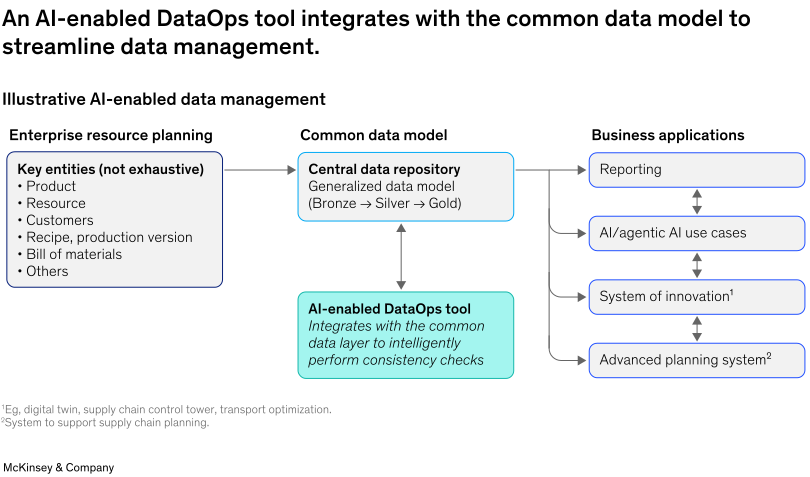
Automation and AI-led data analytics tools make data management measurable and continuous. For example, an AI-enabled DataOps tool that integrates with the common data model helps streamline data management while supporting supply chain applications (Exhibit 1).
An AI-enabled data quality assessment tool can connect directly to ERP or APS schemas, run supply-chain-specific availability and consistency checks, and generate data quality scorecards (Exhibit 2).
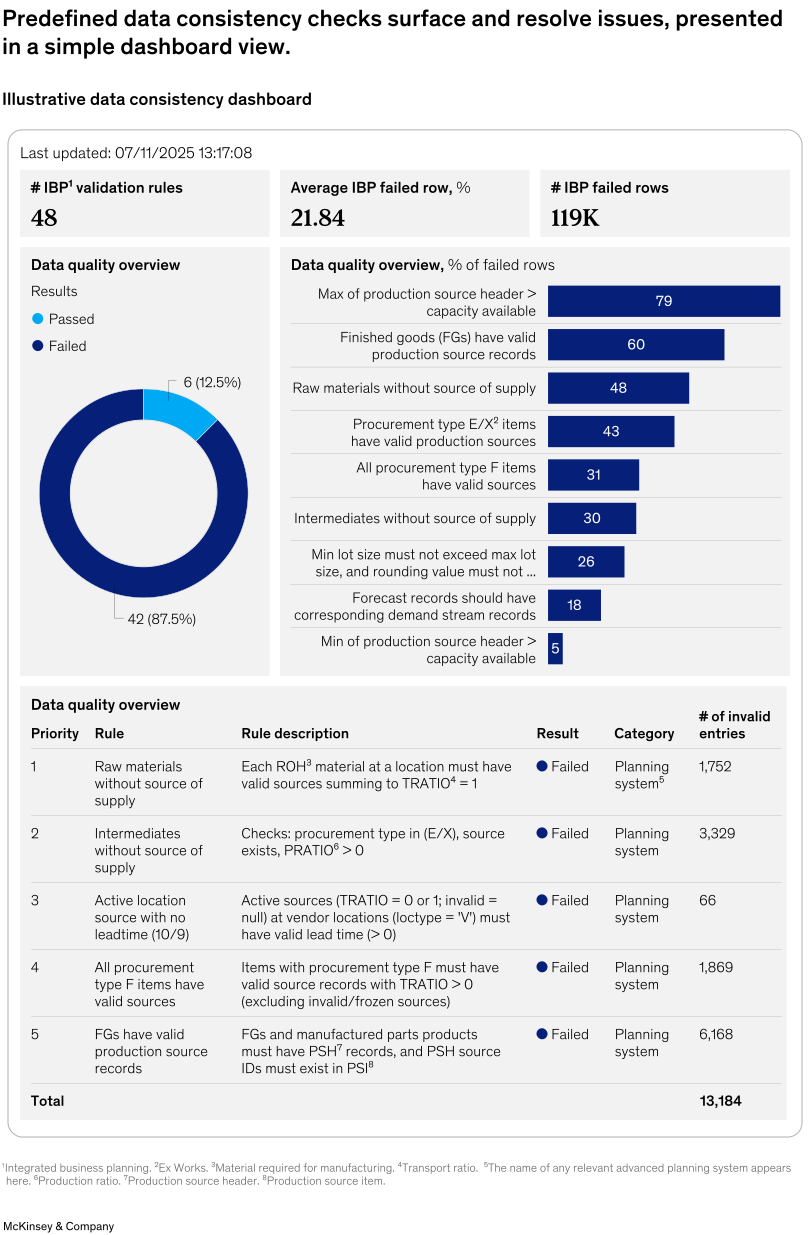
In addition to descriptive analytics, these AI-driven tools support end-to-end data management capabilities by generating specific extracts to facilitate corrections at source, and revalidate data after corrections have been made.
Such tools—ideally deployed three months prior to the design phase of the implementation—can expedite the discovery of data gaps and enable teams to dedicate undivided time and attention to resolving them. This lets subject matter experts and users spend time testing the accuracy of the algorithm and its priorities rather than being bogged down by data gaps during the testing phase.
Importantly, such automation doesn’t replace the need for robust data governance; it strengthens it by giving planners and stewards visibility of the metrics that matter most—freshness, completeness, and consistency.
Sustaining data quality beyond go-live
Of course, data management best practices look different depending on the APS life cycle stage (see sidebar, “Embedding data readiness in the APS life cycle”). After deployment, leading organizations embed data management to sustain data quality over time. Data management frameworks combine governance, standardized workflows, and unified tooling across the value chain, all underpinned by change management.
In one global pharmaceutical company, this approach helped reduce data errors by more than 90 percent. The organization set up a central data management organization, defined clear master data management processes, and assigned ownership across data management and data owner functions. A data management tool set covering data quality management, workflow management, systems integration, and process automation reduced effort by more than 50 percent, accelerated APS launches, and strengthened confidence in the decisions made using the new APS tool.
The lesson from years of APS implementations is clear: Organizations that design APS programs around data governance from the start achieve faster go-lives and lasting business impact.
When governance, standardization, and AI-led analytics come together, companies can finally trust their supply chain plans—and execute them with confidence. This confidence will only grow in importance as agentic AI proliferates across supply chain planning. Solving data challenges now is critical for companies to build the foundation for intelligent, self-optimizing, autonomous supply chains and the competitive edge that could bring.
Organizations can no longer afford to treat data management as a back-office cleanup exercise. Data management is now a strategic capability, acting as the connective tissue between process, technology, and decision-making.