Modernizing sales without losing the human touch
ArcelorMittal runs one of the largest steel sales operations in Brazil, with over 1,000 representatives serving customers across regions and channels.
But sales performance varied widely. Without a unified system, sales strategies were largely shaped by the habits and instincts of individual salespeople. To answer simple yet critical questions, such as delivery timing or product availability, they often relied on handwritten notes and navigated cumbersome processes—inefficiencies that could lead to missed opportunities.
ArcelorMittal set out to rewire its sales approach using AI, partnering with McKinsey to build a digital sales companion.
Before designing a solution, the McKinsey team traveled across Brazil, from Fortaleza to Belo Horizonte to São Paulo—shadowing sales representatives and sitting in on customer visits.
The human side of sales was strong. Representatives, many of whom had been with the company for 20 years, had deep relationships with clients, built on years of trust. In one case, a salesperson brought a client their favorite homemade cake.
But these strong relationships often masked operational gaps. Without real-time access to pricing, delivery, or inventory data, salespeople had to call headquarters, pull information from multiple sources, or follow up later—inefficiencies that could lead to missed opportunities, including mismatches between promised and feasible delivery timelines.
At the same time, the system rewarded volume rather than profitability. Salespeople often offered deep discounts to move more steel, even when doing so eroded margins.
Monica Szwarcwald, a McKinsey partner, reflects: “When you looked across the system, the pattern was clear: too many tools, too much manual work, and no consistent way of selling. This wasn’t a technology gap—it was a sales model problem.”

A new way of selling, enabled by AI
McKinsey began by redesigning the sales journey end to end. Working with ArcelorMittal, the team mapped each step—from initial contact to order fulfillment—to identify delays, inefficiencies, and value leaks. Those insights shaped AMis (ArcelorMittal intelligent sales), a mobile “sales companion” that brings together the information and tools sales people need in one place. The insights also informed new sales processes, performance management, and ways of working that helped embed the new tools into everyday commercial operations.
According to Gustavo Canaan, ArcelorMittal’s commercial vice president, probing for the pain points salespeople experienced made all the difference: “Hearing the end user—that marked our transformation.”
ArcelorMittal did not have an in-house product team to support this effort, so McKinsey brought together designers, engineers, and business experts to build the app side by side with the client.
“We built it with the sales team, not for them,” says Pedro Fernandes, a McKinsey partner. “That’s what made the difference on the front line.”

Early versions went straight into the field. Salespeople tested them, gave feedback, and helped shape the final product.
Instead of switching between multiple systems, salespeople could work from a single mobile app. Representatives generated quotes by voice during customer meetings, automatically captured customer conversations as structured notes, and received AI-powered recommendations based on each customer's purchasing history. Direct connections to ArcelorMittal's core systems kept inventory, pricing, and delivery information current, allowing salespeople to answer customer questions on the spot instead of calling back later.

“The key was putting the insights right where decisions happen,” says Nelson Ferreira, a McKinsey senior partner. “Salespeople don’t have time to dig through dashboards. They need answers in the moment.”

The team rolled out AMis through a pilot with a control group, allowing for a clear comparison with existing ways of working, while training sessions, field visits, and workshops helped support adoption. At the same time, ArcelorMittal changed how teams measured and managed sales performance, adding profitability alongside volume and introducing new routines to help managers coach teams using real-time data. The company also built internal product and engineering capabilities to continue evolving AMis after the initial deployment.
“This wasn’t just about digitizing sales,” says Ferreira. “It was about redefining performance.”
More selling, better decisions, stronger results

Within weeks, sales reps using AMis began to outperform their peers. The pilot generated an estimated 53 million Brazilian reais (about $10.5 million) in margin impact, while time spent on administrative tasks declined. Salespeople shifted their focus toward customer interactions, and customer contacts nearly tripled.
“The app allowed our salespeople to focus on what is most important: generating value for our clients,” says Canaan.
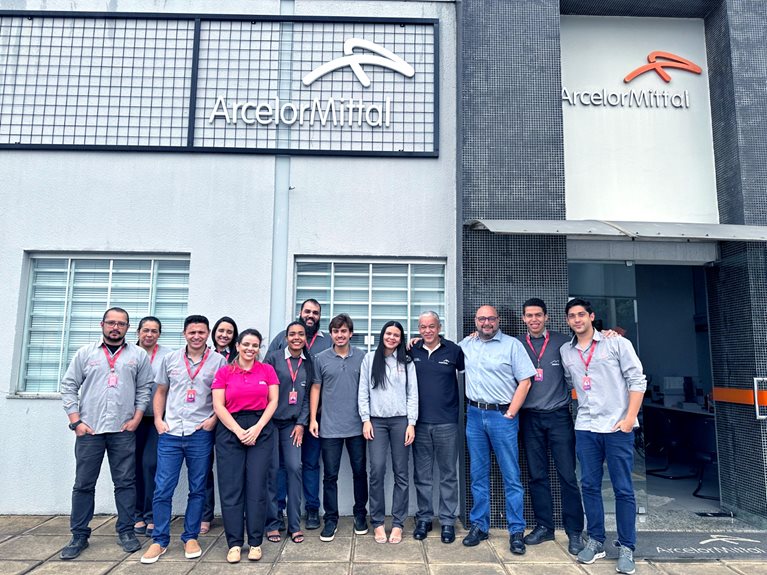
With real-time information at their fingertips, salespeople could respond immediately to customer questions, improving trust and reducing delays. Sales teams began planning more deliberately and focusing on higher-value opportunities.
After the pilot, ArcelorMittal rolled out AMis across most of its commercial teams in Brazil. Adoption quickly reached about 70 percent and continues to grow. The company also built a dedicated team to further develop the app and add new features.
AMis is now more than a tool. It has become the backbone of a new sales model—one that combines relationship-based selling with real-time data and smarter decision-making.
Related Articles
How B.TECH transformed into a technology-powered retailer

When AI becomes part of the workflow: Redesigning how software gets built

How KPN is building an agentic AI engine for customer care
The team

Erick Colares
PartnerBelo Horizonte

Pedro Fernandes
PartnerSão Paulo

Nelson Ferreira
Senior PartnerSão Paulo

Reinaldo Fiorini
Senior PartnerSão Paulo
