
On a sweltering Paris day, ice cream is not dessert. It is infrastructure. It is moral support. It is urban air-conditioning served in a cone. For Henri Guittet (Paris, 2007-2010), founder of Glazed, that means every scoop must do double duty: delight the customer and survive the very real operational chaos of heat, queues, refrigeration, fruit, staffing, and melting-point physics.
His journey involved selling his sports car, buying a 1966 Citroën van, and inventing ice cream recipes like fig leaf, mango and Espelette pepper, and a flavor called Grapefruit Dead. Turns out the McKinsey toolkit travels surprisingly well, all the way to a melting scoop on a very hot afternoon.
Henri, your post-McKinsey story is particularly interesting. You went from consulting to building something intensely physical, sensory, and perishable. What did consulting teach you that still shows up behind the counter at Glazed, and was there anything you had to unlearn?
McKinsey taught me how to structure chaos. That is incredibly useful in an ice cream business. Behind the counter, you deal with recipes, production planning, staffing, weather, cash flow, refrigeration, queues, customer experience, suppliers, and brand — often all on the same day. The ability to break a problem down, identify the real issue, prioritize, and act quickly is something I definitely brought from consulting.
It also taught me to be hypothesis-driven. A new flavor is almost like a small case: What is the insight? What are we trying to prove? Who is it for? What would make it fail? Then you test, learn, and refine.
What I had to unlearn was the comfort of abstraction. In consulting, the recommendation can be brilliant on a slide. In food, the truth is brutally physical. A freezer breaks. A texture is wrong. A batch is too sweet. A customer tastes something and immediately gives you the answer with the expression on their face. It goes beyond strategy because you also have to make something real, every day.
What was the first “case” you had to crack as an entrepreneur: recipes, supply chain, brand, cash flow, or convincing Parisians to try something new?
The first case was probably legitimacy.
I left McKinsey in 2011, passed both the CAP Glacier and CAP Pâtissier, sold my sports car to buy a 1966 Citroën HY van, and opened Glazed in Paris in 2012. But the real question was: why should anyone care about another ice cream shop?
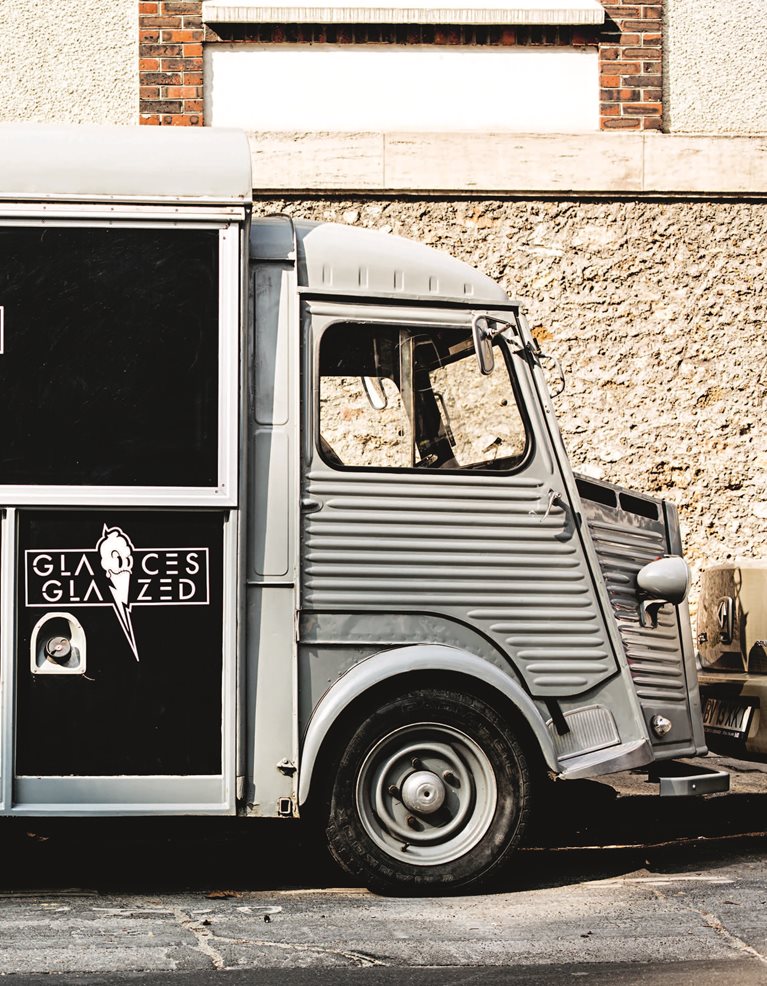
Paris already had an excellent traditional food culture. My challenge was to prove that artisan ice cream could be rigorous and handmade, but also creative, modern, and a little rock’n’roll. I wanted to move away from the postcard version of ice cream — vanilla, chocolate, strawberry, pistachio — and show that it could be a real field of culinary expression.
So the first case was not only recipes or supply chain. It was building the right to be different.
How do you decide when a flavor is daring enough, but still delicious enough, to sell?
At Glazed, a flavor can be unusual, but it can never be just a joke.
The test is simple: the first spoon can surprise you, but the third spoon has to make you want a fourth. If the idea is clever but the pleasure is not there, it does not go on the counter.
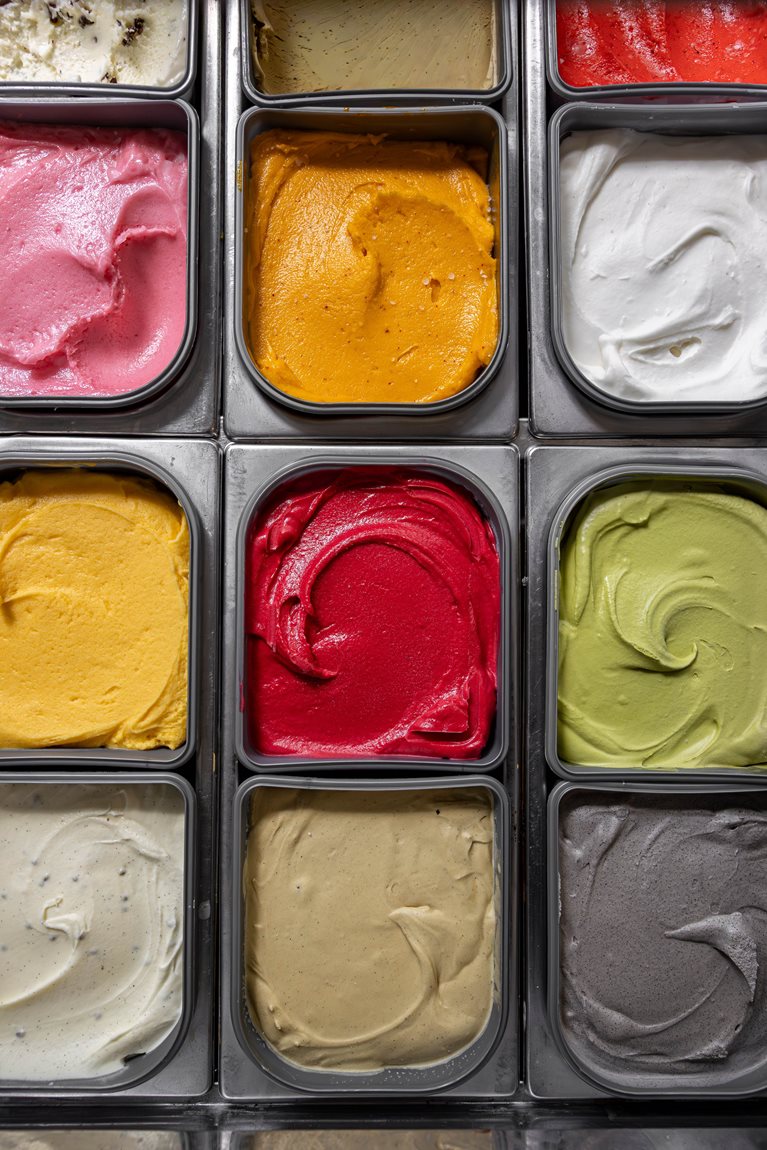
A good Glazed flavor usually has three layers. First, a clear taste architecture: acidity, fat, sweetness, bitterness, salt, texture. Second, an emotional or cultural hook — a memory, a song, a place, a dish, a mood. Third, a form of tension: something familiar pushed slightly off-center.
That is where the fun begins. Mango with Espelette pepper works because the fruit is generous and sunny, and the chili adds a warm, almost addictive finish. Fig leaf works because it tastes both green and creamy, familiar and mysterious. The goal is not provocation. The goal is intensity.
The Glazed universe is full of “twists.” When you think about your flavors, do you start with an ingredient, a memory, a mood, or a title?
It can start anywhere — but very often it starts with a tension.
Sometimes it starts with an ingredient: a fig leaf, a spice, a fruit at peak ripeness, a dairy product from a supplier we like. Sometimes it starts with a title. We have always loved music and pop culture at Glazed, so names like Smoke on the Water, Pump up the Volume, Dark Side, or Grapefruit Dead are not decoration; they create a world around the flavor.
But the best flavors usually come from a mood. I am interested in what a flavor makes you feel before I am interested in whether it sounds technically impressive. Is it nostalgic? Insolent? Elegant? Summer-like? Dangerous? Comforting? A bit weird?
Once the mood is clear, the recipe becomes a way to make that emotion edible.
Those titles are so much fun. What hasn’t been fun is that France, along with many other parts of the world, has once again been in the grip of terrible heat waves. Ice cream suddenly represents not just pleasure but relief. During a heat wave, do you feel Glazed becoming part of the city’s coping mechanism?
Yes, absolutely.
During a heat wave, ice cream changes status. It is no longer only a treat. It becomes relief. People come in slightly exhausted by the city, the metro, the asphalt, the lack of air. They are not just looking for dessert; they are looking for ten minutes of cold, flavor, and comfort.
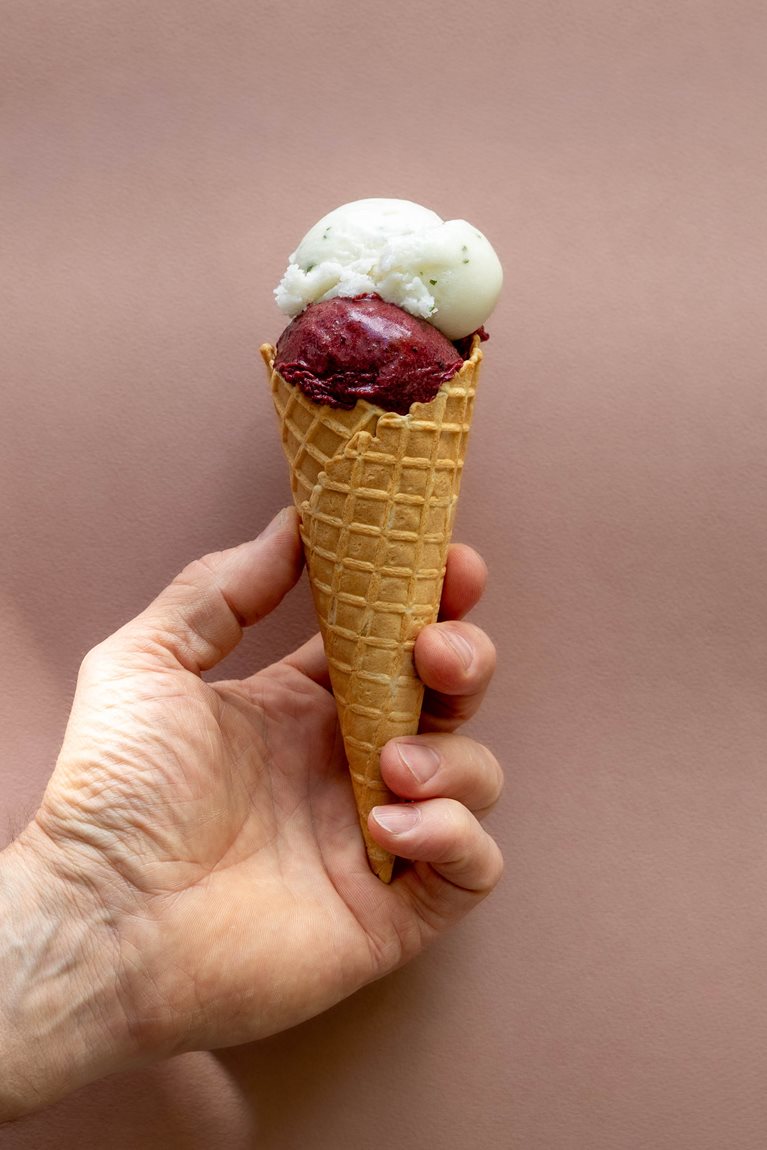
In those moments, the shop becomes almost a small refuge. People slow down. Kids stop complaining. Adults allow themselves something simple. There is something very human about that.
Of course, we are not saving the world with a scoop of sorbet. But in a hot Paris summer, giving people a moment of pleasure and freshness is not nothing.
A heat wave makes cold food emotionally powerful, but it also puts pressure on refrigeration, teams, deliveries, and ingredients.
What does extreme heat look like from inside an ice cream business?
From the outside, a heat wave looks like opportunity. From the inside, it looks like a stress test.
Everything becomes more fragile. Refrigeration is under pressure. Deliveries are more complicated. Products soften faster. Teams get tired more quickly. Queues can build up suddenly. Fruit quality can change. Even the way customers choose flavors changes — sorbets and fresh profiles become more important.
You also have to protect the team. In an ice cream business, the irony is that the product is cold, but the work can be physically intense: production, service, carrying tubs, cleaning, restocking, managing crowds. During extreme heat, we sometimes have to adapt opening hours, simplify operations, and make very practical decisions to keep both quality and people safe.
It is a reminder that craft is not romantic all the time. It is also logistics, discipline, maintenance, and stamina.
A new edition of your book, “Glaces,” was just released. What changes when your craft moves from the lab and boutique into readers’ kitchens?
When you write a book, you have to translate instinct into method.
In the lab or boutique, a lot of decisions are made through touch, sight, temperature, and repetition. You know when a mix feels right. You know how a sorbet should behave in the machine. You know when a balance is off. But a reader does not have your equipment, your ingredients, or your habits.
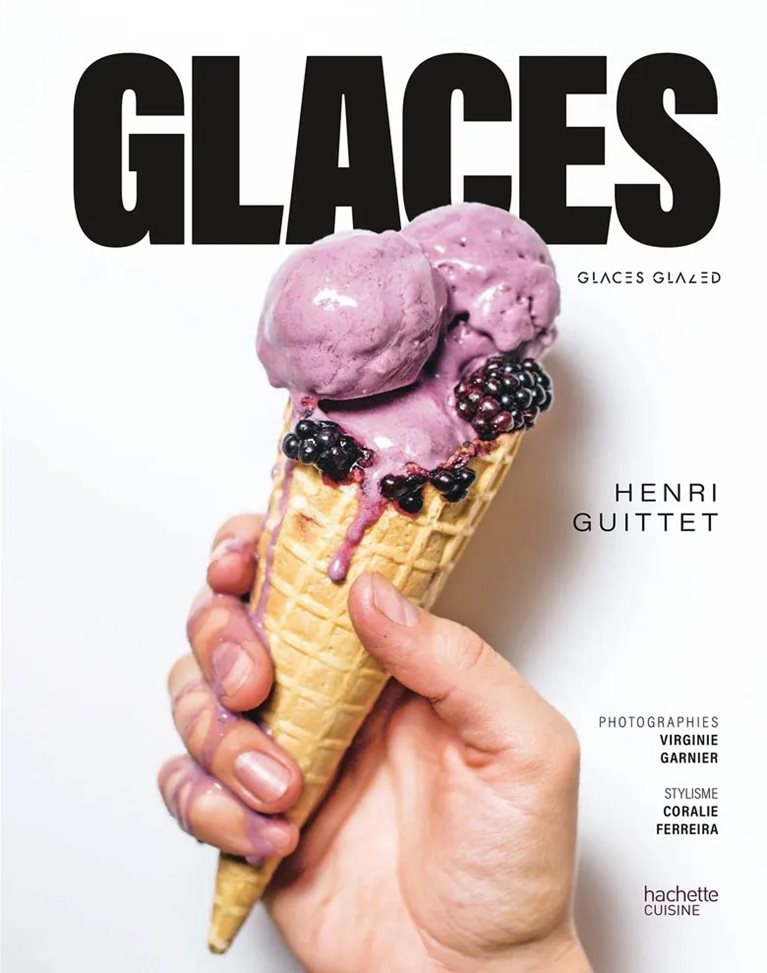
So the challenge is to make the craft accessible without making it superficial. I want people to understand that ice cream is not magic. It is technique, balance, patience, and good ingredients. But I also want them to feel the freedom of it — the idea that you can create flavors that tell a story.
For me, the book is not just a collection of recipes. It is a way to share a point of view: ice cream can be serious craft without becoming boring.
This has been fascinating. Is there anything else you’d like to share with our alumni community?
I would say that changing paths is not the opposite of using what you learned before.
When I left consulting, it may have looked like a radical break: from boardrooms to ice cream, from strategy to scoops, from PowerPoint to pasteurizers. But in reality, everything connected. McKinsey gave me structure, analytical discipline, and exposure to business problems. Glazed gave me material, emotion, craft, and direct contact with customers.
Today, Glazed has three shops in Paris, more than 160 original recipes, a growing event and B2B activity, and I was recently awarded the title of Maître Artisan Glacier. But the entrepreneurial journey is still very much a work in progress. The next challenge is to make the company more scalable, more transmissible, and less dependent on me personally — without losing the creative energy that made it exist in the first place.
So my message to the alumni community would be this: the skills we build in consulting can travel very far. Sometimes much farther than expected. Even all the way to a melting scoop of mango and Espelette pepper on a very hot day in Paris.

