The Ali Forney Center: A new strategy to meet the rising needs of unhoused LGBTQ+ youth
When Alexander “Alex” Roque joined the Ali Forney Center (AFC) in 2011, fewer than 100 young people were on the organization’s waitlist for temporary housing. Today, that number exceeds 450.
Since 2020, Alex has served as president and executive director of AFC, a New York City nonprofit that provides housing and support services for LGBTQ+ youth experiencing homelessness. The challenge he and the organization faced was determining how to allocate the limited resources of a nonprofit amid rapidly growing demand.
To help answer that question, a McKinsey team partnered with AFC on a ten-week strategic planning engagement to develop a five-year strategy to meet rising need.
What the team discovered ultimately challenged some of AFC’s assumptions about growth—and revealed a faster path to impact.
From lived experience to strategic choices
The engagement began with a broad assessment of AFC’s programs, operations, funding model, and long-term aspirations. As the work progressed, the team identified a difficult strategic question: Which services should AFC continue providing directly, and where could partnerships create greater impact?
“Every service on AFC’s roster was important,” says McKinsey Partner Sebastian Kohls. “The work was to identify what AFC is uniquely positioned to do and where it could leverage partners. Did it need to make food for residents, or could a food service organization handle that more effectively?”
The analysis also brought another challenge to light: funding its ambitions. AFC—like many nonprofits—faced uncertainty around government funding, which accounted for a significant portion of its support.

The team helped AFC build a more resilient funding strategy, identifying opportunities to diversify revenue sources, strengthen relationships with foundations and major donors, improve impact reporting, and develop the capabilities needed to support future growth.
“The goal wasn’t simply to raise more money by further tapping into the same sources,” says McKinsey Associate Partner Eleni Watts. “It was to build a funding model that could support AFC’s ambitions over the long term and make the organization more resilient.”
A shift in strategy
Through interviews, data analysis, and benchmarking, the team identified where AFC creates the greatest value. Its core strength was helping young people navigate the path to independence through affirming support, case management, and assistance obtaining social services.

AFC’s youth advisers, all former recipients of the organization’s services, reinforced this finding through their own lived experiences and day-to-day interactions with AFC’s current clients.
They also emerged as a valuable resource for young people navigating AFC’s programs.
“Many youth advisers described how leadership opportunities helped them build confidence, learn about pathways to long-term stability, and support other young people navigating similar challenges,” says McKinsey Business Analyst Justin Li. “Those experiences became an important part of how they prepared for their next step after AFC.”
Their experiences underscored a broader lesson from the engagement: helping young people achieve long-term stability requires more than housing alone.
“Case management emerged as the place where so much of the impact actually happens,” says McKinsey Engagement Manager Andrew Bower. “Again and again, we heard that trusted relationships and navigation support were what helped young people stabilize during moments of great need and move toward long-term independence.”
The breakthrough was realizing that we didn’t have to wait a decade to make a difference.
The team analyzed client journeys, staffing levels, waitlists, and outcomes, ultimately revealing that heavy caseloads were creating bottlenecks throughout the system. Strengthening case management could reduce wait times for placement into AFC’s temporary housing programs and help clients become independent more quickly. This ultimately results in faster placements into stable housing, and higher rates of clients remaining in housing long term.
This insight changed the organization’s focus. Rather than trying to build enough housing to match the growing waitlist—a costly effort that could take years—AFC could create greater impact through targeted housing growth and stronger case-management support.
“The breakthrough was realizing that we didn’t have to wait a decade to make a difference,” says Alex. “By increasing case-management capacity and adding housing that strategically addresses our biggest bottlenecks, we could help more young people move through the system and reach stable housing much sooner.”
Building a road map for sustainable growth
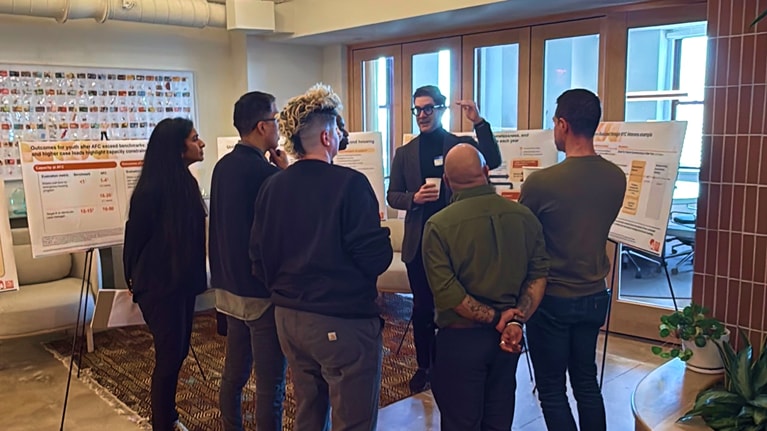
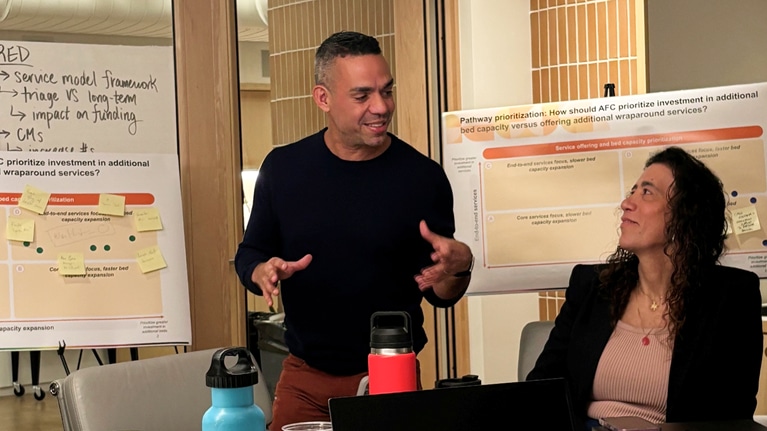
The McKinsey team wanted to ensure AFC had ownership of the recommendations in the five-year strategy and was empowered to implement them. It brought together staff, board members, leadership, and youth advisers at a strategic planning retreat with gallery walk displays and interactive workshops. Participants reviewed the findings, challenged assumptions, and helped shape the final recommendations.
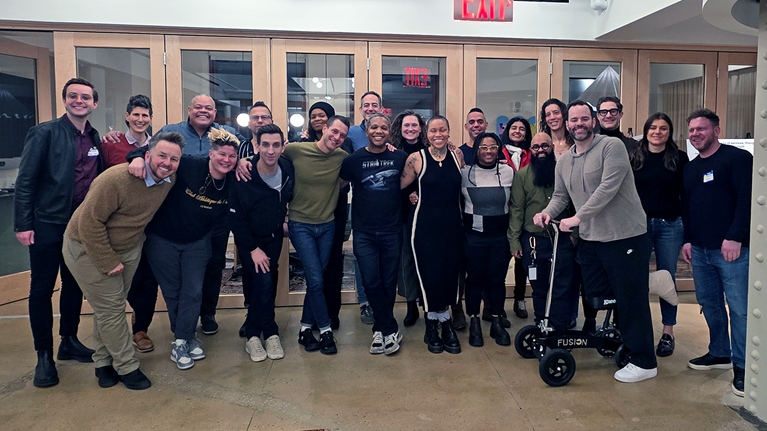
“The retreat created a shared understanding of both the challenges and the opportunities,” says Alex. “People could see the same facts, discuss them together, and help shape the path forward.”
For Alex, however, the most important aspect of the work was the detail. The strategy included more than 20 initiatives, each with implementation milestones, governance structures, and performance metrics designed to help AFC translate recommendations into action.
“I’ve seen a lot of strategic plans that end up sitting on a shelf,” he says. “What was different here was that this was an operational road map we could use on a daily basis.”
By the final board presentation, AFC leaders—not the consulting team—were presenting the strategy themselves.
For Sebastian, that moment reflected the success of the engagement.
“When the organization owns the strategy and can carry it forward without you,” the McKinsey partner says, “that’s when you know the work has made a difference.”