From classrooms to boardrooms: How Teach For America alumni carry teaching into consulting
McKinsey’s Nikita Ramanujam (right) with her fourth-grade class in Oakland, California.
In college, Nikita Ramanujam volunteered on Chicago’s South Side teaching financial literacy courses to high school students. She was struck by the difference in conditions from her own public-school education.
“I always had the resources I needed. For the students I was volunteering with, nothing was guaranteed. The difference was radical,” says Nikita, a McKinsey associate who works in the firm’s Social Sector Practice.

That’s what led her to take on a two-year fellowship at Teach For America in Oakland, California—a school district near but quite different from where she grew up in Fremont. She taught all subjects in fourth grade and stayed on for two additional years after the fellowship—through the lockdowns and reopening of schools during COVID-19.
“The experience was rewarding and humbling and taught me a wealth of skills I use today,” she says.
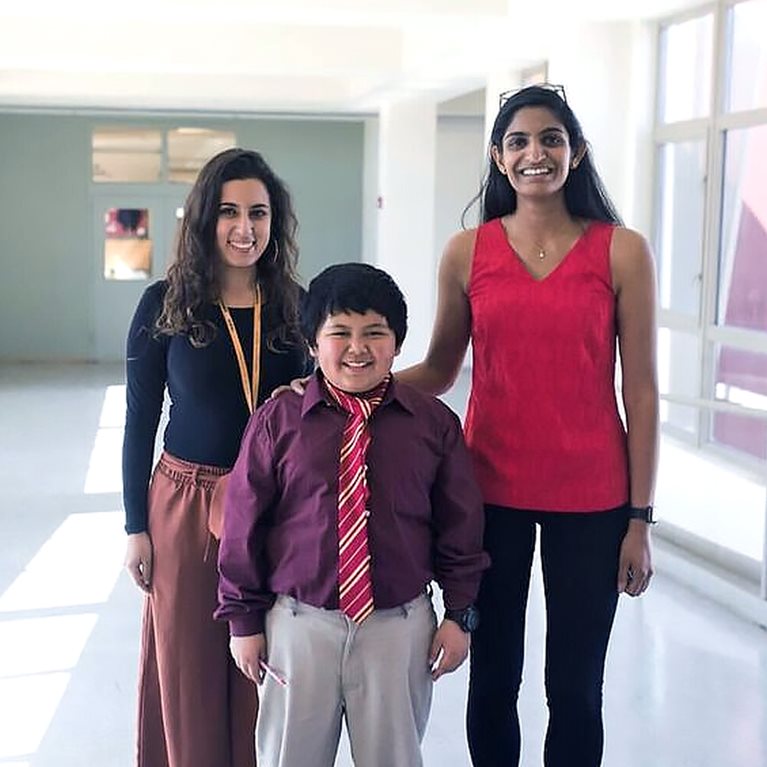
The skill level of Nikita’s students varied, with some behind on basics, like reading. To meet the needs of the full class, she created a culture where kids were empowered to work autonomously and in groups so she could pull aside those who were behind.
“The key was understanding that not all kids learn the same way or on the same timeline and trying different approaches until the lesson clicked,” she says. “One day there would be a breakthrough, and a child who could barely read was finally able to read independently.”
She uses this same iterative problem-solving process approach at McKinsey. On a recent project, she worked with a university and a foundation to design and launch a STEM-focused campus in a new city. The campus will help create new employment opportunities, establish the city as a tech hub, and attract other industries into the local economy. She helped with budget design, talent attraction strategies, and real estate and construction planning.
“This project has major potential to transform the local community. Success requires constantly reevaluating decisions to make sure we are coming up with the best possible strategies—just like I did with my students,” says Nikita.

McKinsey Associate Partner Katie Krieg taught sixth-grade science with Teach For America in Texas’s Rio Grande Valley.
She spent her second year at the firm as a fellow with Generation, the now-independent workforce development nonprofit McKinsey founded in 2014. She worked on developing partnerships and training curriculums with employers in several new cities across the country. This led her to focus her work at the firm on higher education, including helping to meet increased demand for online learning after the pandemic.
Success at McKinsey requires constantly reevaluating decisions to make sure we are coming up with the best possible strategies—just like I did with my students.
She counsels universities on how to grow online programs, ensure an exceptional student experience, and develop partnerships with employers for staff to pursue advanced degrees.
“With Teach For America, I was in a rural area where a quality education was a big determinant for a student’s future,” says Katie. “Access is a pervasive issue at every level of education, and online programs provide access to a quality education that may otherwise be out of reach.”
David Fuller, a McKinsey partner, taught high school math in Detroit. One of the skills he developed there and uses at the firm is being flexible with verbal communication.
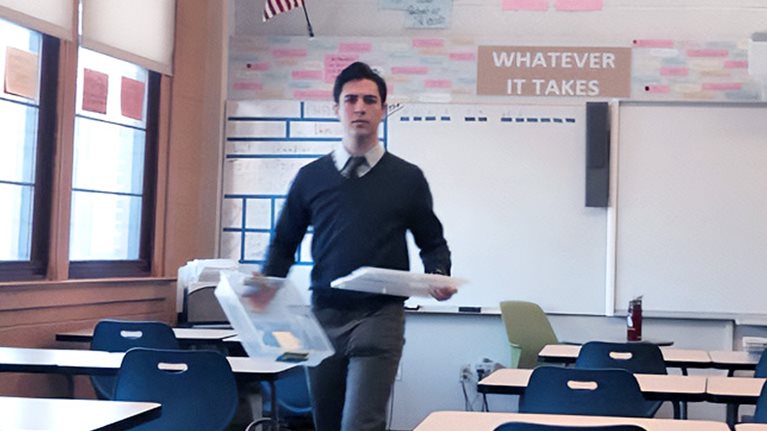
“You have to describe difficult content and concepts in easily digestible ways—and then pivot really quickly if the way you explained it didn’t work,” says David.
This is the type of soft skill he utilized leading a pro bono engagement with a school district focused on workforce and skill development. He helped it reset its curriculum for technology and automation disruptions in both blue- and white-collar jobs, through a variety of skill sets.
“The district’s fundamental question was, ‘How do we prepare students for this new world?’” David says. “In an automated future, students need to boost soft skills but also technical skills, such as understanding effective AI prompting.”
All three consultants emphasize how teaching prepared them for impact-focused work at McKinsey.
“Teaching requires you to push yourself mentally, emotionally, and physically all at once—it’s intense,” says Katie. “If you can do that, you can do anything.”