Fábio Porchat on humor, failure, and the power of staying human
Fábio Porchat and Heloisa Callegaro
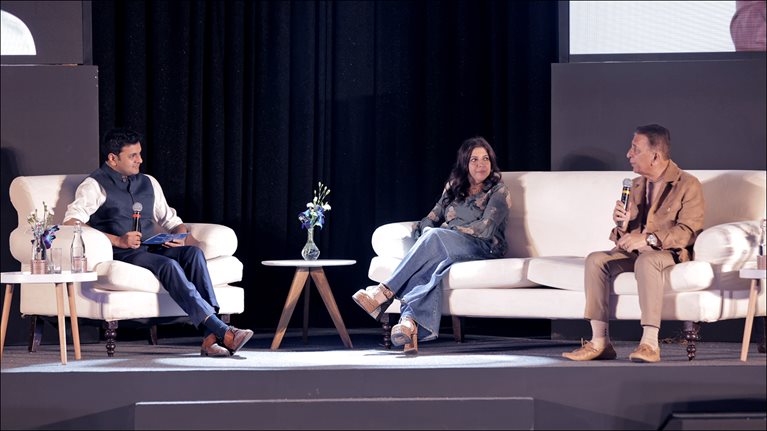
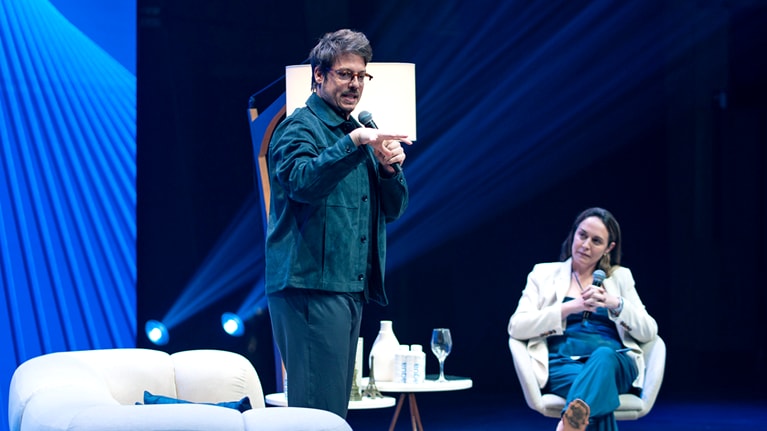
At Brilliant Moves: Live in Brazil, comedian, actor, writer, and entrepreneur Fábio Porchat reflected, in a conversation with Heloisa Callegaro, senior partner and managing partner, Brazil, on a career built not only on humor but also on experimentation, reinvention, and learning how to stay creatively awake.
A breakthrough moment

Porchat still remembers the moment he realized what he wanted to do with his life. As a university student, he unexpectedly walked onto the stage of Brazil’s most famous late-night show, hosted by Jô Soares, and performed a comedy sketch in front of a live audience. The first moments were silent. Then people started laughing.
“That was the moment,” he recalls. “I thought: This is what I want to do for the rest of my life.”
That breakthrough eventually led to a career spanning theater, television, film, and Porta dos Fundos, the comedy collective that helped redefine digital entertainment in Brazil.
Why failure matters
Porchat’s path to success was not a straight line to the top. Before the viral sketches, sold-out theaters, and millions of views, there were plays no one came to see, projects that failed, and opportunities that never materialized.
Você precisa ser ruim primeiro, para depois ser um pouquinho melhor.
You need to be bad first so you can become a little better.
Rather than seeing failure as something to avoid, Porchat described it as an essential part of creative growth. Early setbacks forced him to improve, adapt, and keep experimenting. In one case, the cancellation of a television comedy project ultimately pushed him and his collaborators to create Porta dos Fundos independently—a move that reshaped Brazilian comedy online.
Creativity—and impact—starts with connection
Throughout the conversation, Porchat returned repeatedly to the importance of authenticity. Comedy, he states, only works when audiences believe it. Whether performing on stage, interviewing guests, or writing sketches, his goal is not simply to make people laugh but to create a genuine connection with the audience so they see themselves in the story.
That idea extends beyond entertainment. In business, leadership, and everyday relationships, Porchat believes people respond to honesty, presence, and human connection far more than polished performance.
“We are people speaking to people,” he says. “The audience can tell when it is real.”

When asked about creativity, Porchat spoke about it as something that must be actively cultivated. He encourages people to step outside their routines by reading fiction, traveling, going to the theater, and exposing themselves to unfamiliar ideas and perspectives.
But creativity, he asserts, is not limited to artists; it matters equally in business, consulting, and leadership, and it must be cultivated to be genuine—as people can tell when something is forced.
Leadership means learning from others
Porchat also spoke about leadership as the ability to build and collaborate with others—not simply manage a group of individual performances.
Sempre se una a gente mais inteligente que você, que faz melhor que você, que trabalha mais que você.
Always join forces with people who are smarter than you, who do things better than you, who work harder than you.
One of his strongest pieces of advice was to surround yourself with people who challenge you, because they will raise the quality of the work.
He also challenged the idea that leadership is purely innate. While some people may naturally lead from a young age, leadership can also be developed. But strong teams also depend on people who know how to listen, collaborate, and execute. To be a good leader, he states, you need to know how to follow.
Reinvention starts with asking what comes next
Looking ahead, one question lingered for Porchat: What comes next for comedy? It changes and reinvents itself constantly; what works in one era rarely works forever.
Qual é o novo fazer humor? O que é o diferente que eu não sei ainda e que está chegando aí?
What is the new way of doing humor? What is the different thing that I do not know yet but that is coming?

For Porchat, success requires staying alert to cultural shifts, listening to people, experimenting, and remaining open to what is emerging.
His next brilliant move, he suggests, may not come from having all the answers—but from continuing to search for them.
Editor’s note: Porchat spoke in Portuguese, and all quotes are translated.