Our mission is to provide a fact base to aid decision making on the economic and business issues most critical to the world’s companies and policy leaders.
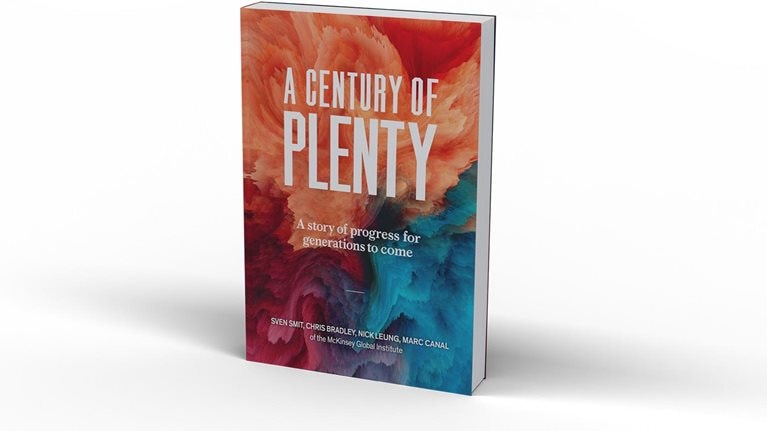
This book, a major research effort from the McKinsey Global Institute, explores the advances of the past century and what drove them—what we call the progress machine.
Several asset classes grew further out of balance with the economy, raising the possibility of corrections through inflation, asset valuation losses, or, optimally, productivity.
Competitiveness has moved to the top of the global agenda, and investment is its indicator and its outcome. In the context of dramatically diverging investment patterns globally, companies and regions can pull seven levers to level up.
Join the McKinsey Global Institute for discussions on our latest research, featuring presentations, panels, and Q&A with MGI leaders and other experts.
Media Center
Reports issued by the McKinsey Global Institute are often cited in international media, and MGI authors frequently contribute to leading business publications.
Summer in the Northern Hemisphere has gotten off to a very hot start. This has focused attention on the impacts of heat on health, infrastructure, and economic productivity—and how to best manage them. That is a good thing. While past discourse on adaptation has often focused on the impacts of severe flooding, our recent McKinsey Global Institute report on climate adaptation found that heat is likely to affect far more people and account for a larger share of adaptation costs, write Sylvain Johansson, Mekala Krishnan, Kanmani Chockalingam, and Annabel Farr in Fortune.
As the United States approaches its 250th anniversary, intensifying technological competition and geopolitical risks have resurfaced a decades-old question with renewed urgency: Should the United States rebuild its industrial base, write Erik Kutcher and Shubham Singhal in Fortune.
As America prepares to celebrate its 250th birthday, I've been reflecting on the generations that built the country's success and what it will take to prepare the next generation for the economic transition ahead. Like so many parents, I think about the future my children and their peers will inherit: the opportunities available to them, the skills that will matter, and whether they are prepared for a world changing faster than ever before, writes Kweilin Ellingrud in Forbes.