| This week, how the COVID-19 crisis could force a rethinking of healthcare that would accelerate growth for decades to come. Plus, consumer optimism remains mostly muted, and an interview with Mellody Hobson of Ariel Investments on the state of diversity—and the importance of mentorship—in American business. |
|
|
|
| There are very few silver linings to this pandemic. But one of them might be in the healthcare realm, where the crisis is a reminder of just how much health matters for individuals, society, and the global economy. Plainly put, the COVID-19 pandemic has given the world a once-in-a-generation opportunity to advance broad-based health and prosperity. |
| Up for debate. For the past century or more, health improvements from vaccines, antibiotics, sanitation, and nutrition have saved millions of lives and been a powerful catalyst for economic growth. But in recent years, a focus on rising healthcare costs—especially in mature economies—has dominated the policy debate, whereas health as an investment in our economic future has largely been absent from the discussion. |
| New research. In Prioritizing health: A prescription for prosperity, we measure the potential to reduce the burden of disease globally through the application of proven interventions across the human lifespan. Those range from public-sanitation programs to surgical procedures and medication adherence. |
| Our analysis of 200 countries and 52 diseases quantified the economic and social benefits of making good health a priority. We estimate that the global disease burden could be reduced by about 40 percent by 2040 through broader application of known interventions. |
| Medicines and more. We also examined the role of innovation—in the form of new medicines, procedures, medical devices, technologies, and delivery models—over the next 20 years. Clearly, that will be critical to improving the health of the world’s population, as well. |
| Another upside. The COVID-19 crisis is also a stark reminder of how underprepared the world is to detect and respond to emerging infectious diseases. It has exposed overlooked weaknesses in the world’s infectious-disease-surveillance and -response capabilities—vulnerabilities that have persisted despite the obvious harm they caused during prior outbreaks. The economic disruption caused by the current pandemic could cost between $9 trillion and $33 trillion—many times more than the projected cost of preventing future pandemics. |
| Longer-term solutions. As societies emerge from the immediate crisis, we can aspire to do more than plug gaps and hope for recovery. We can build a better healthcare system and a stronger, more resilient global economy that delivers better health for all and shared prosperity for decades to come. |
|
|

|
| OFF THE CHARTS |
| Attention, mindful shoppers |
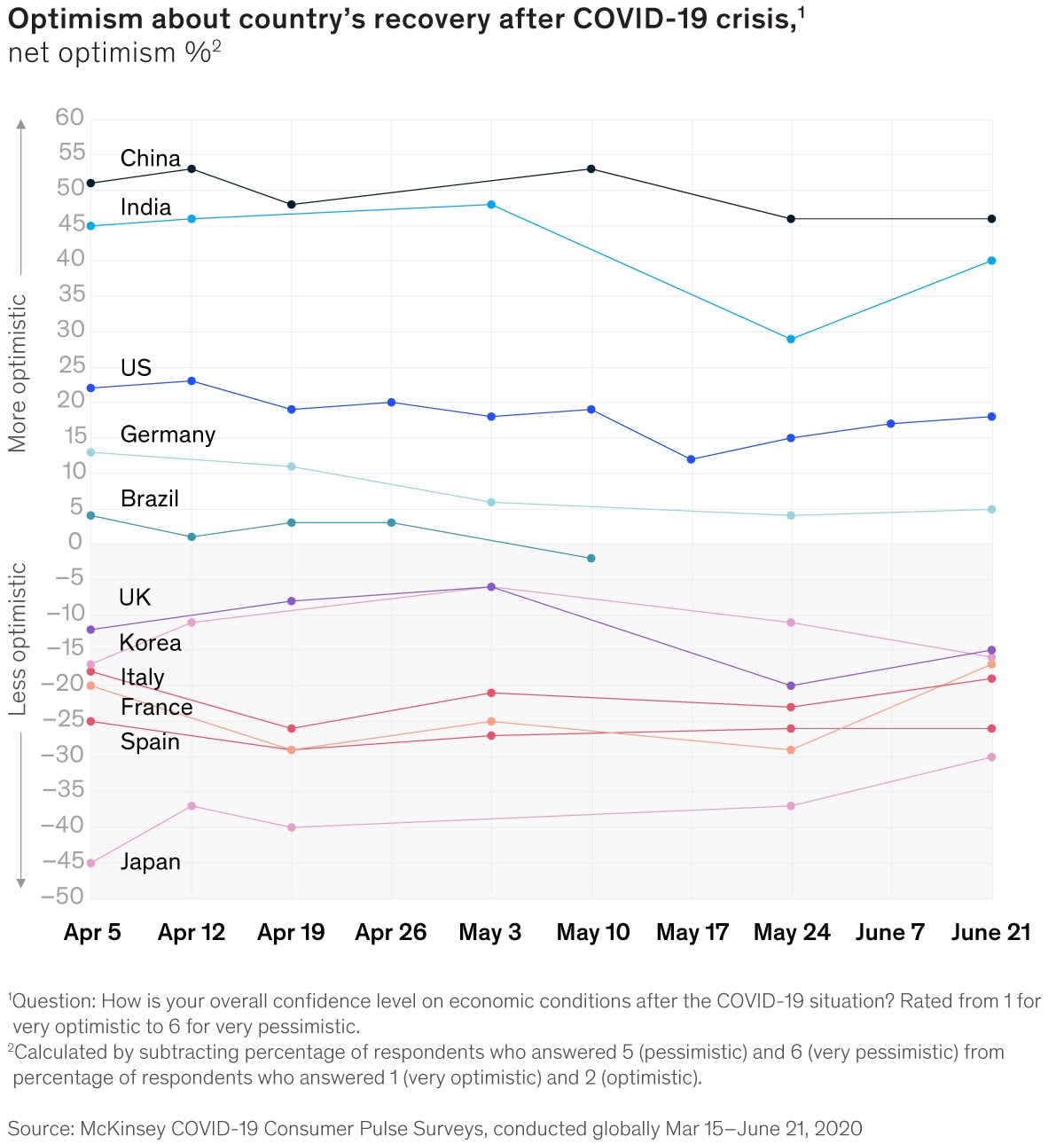
| While tracking consumer behavior in 45 countries, we’ve found that consumer optimism remains muted and spending intent is still below precrisis levels, even in nations that have partially reopened. While sentiment varies greatly across countries—with China and India the most optimistic and countries in Europe among the least optimistic—we’ve seen a few themes emerge, including a shift to value, a flight to digital, and a focus on what could be called the “health and homebody economy.” Those themes reflect a shift to mindful shopping, including some trading down for value. |
|
|
|
|
|
|
|
|
| PODCAST |
| Mellody Hobson: A ‘happy warrior’ |
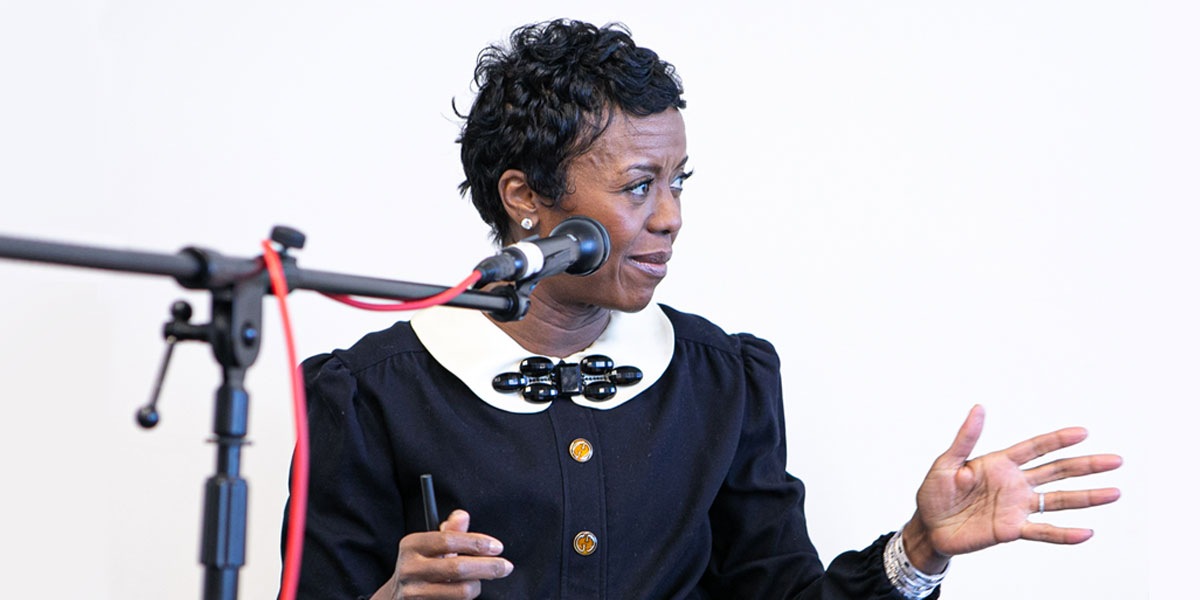
| We recently posted a discussion between the McKinsey Global Institute’s James Manyika and Mellody Hobson, the co-CEO of Ariel Investments. Although it was recorded before the start of the COVID-19 pandemic in the United States and the killing of George Floyd, it’s one of the most thought-provoking, insight-packed interviews you’ll read all year on the push for diversity—and the power of mentorship—in American business. You can also check out Hobson’s 2014 TED Talk “Color blind or color brave,” which has been viewed more than four million times. |
|
|
|
|
| MORE ON MCKINSEY.COM |
| Why shared mobility is poised to make a comeback | In a pandemic, passengers are wary of shared mobility. However, insights gleaned from our new Global COVID-19 Automotive Consumer Survey can help pave the way toward a strong recovery—if done right. |
| The great acceleration | The COVID-19 crisis has widened the gap between those at the top and bottom of the power curve of economic profit. But it has also removed the organizational inertia that usually stands in the way of big strategic moves. |
| The Netflix of gaming? | Many tech giants are betting that the subscription model will become dominant in video games. Here’s why the things that make gaming such an entertainment dynamo are problematic for these types of services. |
|
|
|
|
|
| WHAT WE’RE WATCHING |
| The Next Normal |
| In this excerpt from the newest edition of The Next Normal multimedia series, McKinsey senior partners envision how the COVID-19 crisis will transform business in the coming 12 to 18 months. Dame Vivian Hunt is a senior partner in McKinsey’s London office; Kevin Sneader, based in the Hong Kong office, is the firm’s global managing partner; and Bob Sternfels is a senior partner in the San Francisco office. |
| The reset: Why COVID-19 is like ‘a dangerous criminal’ |
| Kevin Sneader: It’s become very clear just about everywhere that we are going to have to get used to waves of disruption and, as a result, a constant battle. In fact, the way I would describe this is we’ve moved from all-out warfare to the hunt for a dangerous criminal who pops up in many different places, who requires us to take different actions depending on where they appear, and who doesn’t actually go away. COVID-19 is a criminal who will continue to plague us for some time to come. |
| Vivian Hunt: Healthcare and lives, the economy and livelihoods, and also civil liberties have really been challenged during this period. The concerns about the treatment of Black Americans at the hands of the police, the reactions to George Floyd’s killing, and basically a re-exposure on these global digital platforms of bias and concerns about fair treatment have created a desire to address that as we think about ways to build back better. |
| Bob Sternfels: If I think about some of the potential pitfalls that I’m seeing senior executives [fall into], it’s thinking about this next phase as “a return to what I had before” as opposed to taking the opportunity to say, “Can I reset or reimagine my organization?” I think some of the most inspiring conversations I’ve had with CEOs are about, “How do I rewire my organization for this speed that’s based on design versus adrenaline?” |
| Dashboards and data: What’s happening on the ground |
| Kevin Sneader: The first piece of advice I’d offer a CEO is forecasts are out, dashboards are in. The notion that you can now forecast the economy, healthcare, and other aspects of what can disrupt life, I think, is gone. Now we’re in an environment where we’ve also learned that what you really need to have a handle on are the metrics, insights, and what’s actually happening on the ground—the dashboard of daily life. |
| Bob Sternfels: Are you investing enough in understanding the different sources of data and information to be able to adjust and make decisions? It comes with this notion of, “I’m going to have to make a lot of decisions and be agile, so am I investing to have my fingers on the sources of different parts of input?” Some of that may be input about my customers. Some of it may be input about regulatory environments changing. And some of it may be input about my suppliers and partners. |
| Vivian Hunt: It also requires CEOs and other leaders to be knowledgeable enough about data and technology to be able to make informed decisions. The chief information officer, the chief technology officer, marketing—every decision is now powered by a set of data and analytics that you have to understand quite deeply. |
| What leadership looks like: Think like an attacker |
| Kevin Sneader: You really do have to think like an attacker all over again. Even if you were the incumbent, even if you were the leader before this pandemic, you’re now the attacker, so you must take the steps that attackers take. Think very differently. Look for new opportunities, new markets. Reshape the portfolio and, yes, look at mergers and acquisitions. Plan to do things quite differently as the future unfolds. |
| Vivian Hunt: For business leaders, I think it’s been really challenging to find the resilience to really lead in a more human way. Particularly when you think about some of the issues around inclusion, equality, social justice, and how to build back better toward a net-zero economy, how do you make sure you’ve got the resilience to be able to lead in a bold, empathetic, and ethical way? And if you never knew that you needed all of those skills, you know it for sure now. I think that’s been an important insight for many leaders. |
|
|
|
Share what we’re watching
|

|

|

|
|
|
|
|
| BACKTALK |
| Have feedback or other ideas? We’d love to hear from you. |
|
|
|
|
|
Copyright © 2020 | McKinsey & Company, 3 World Trade Center, 175 Greenwich Street, New York, NY 10007
|
|
|
|