| This week, we take a spin through global banking trends in this late stage of the economic cycle. Plus, sustainable sourcing in fashion and questions for Carolyn Dewar, a McKinsey senior partner and org expert. |
|
|
|
| Growth has been slowing. Yield curves are flattening. A downturn is on the horizon, and now, a decade from the financial crisis, global banks are taking stock. At least, they better be. Hot off the pixels: McKinsey’s Global banking annual review 2019, which offers some straight talk to help banks navigate the often-treacherous late stage of the economic cycle. |
| The US retail-banking industry, having returned to stable ground and greater liquidity since the crisis, is again at an inflection point. The once-sleepy global transaction-banking industry is facing market disruption, and a new survey reveals how leaders are planning for change. |
| Even private banking, long the most profitable sector in the industry, is facing headwinds: market deterioration, emerging structural challenges, dropping profit margins—and a resounding call to action. Similar sober truths, including thinning margins and higher capital requirements, have emerged in the once-booming Asia–Pacific. When it comes to successfully braving a likely wave of consolidation, two options remain for those in the world’s largest regional market: reinvent yourself or risk disappearing. |
| It’s not all tough love. How about sweet talk? The global payments sector is still enjoying robust growth—which means a rush of nonbanks and nontraditional players trying to get in on the opportunity. For both incumbents and challengers, finding the rich seams will mean going deep into regional and segment details. |
| We all know it’s not a question of if but when—that is, when the economic cycle, now in its late stage, will complete the current rotation. One way that banks can stand out is almost too obvious: by building trust. Daniel Moore, group head and chief risk officer at Scotiabank, is leading the Canadian bank’s work on anti–money laundering. “We need to know our customers and understand that the capacities we’ve created, which are extraordinary and highly efficient and highly tuned, are used for the betterment of society, its communities, and its individuals.” |
|
|

|
| OFF THE CHARTS |
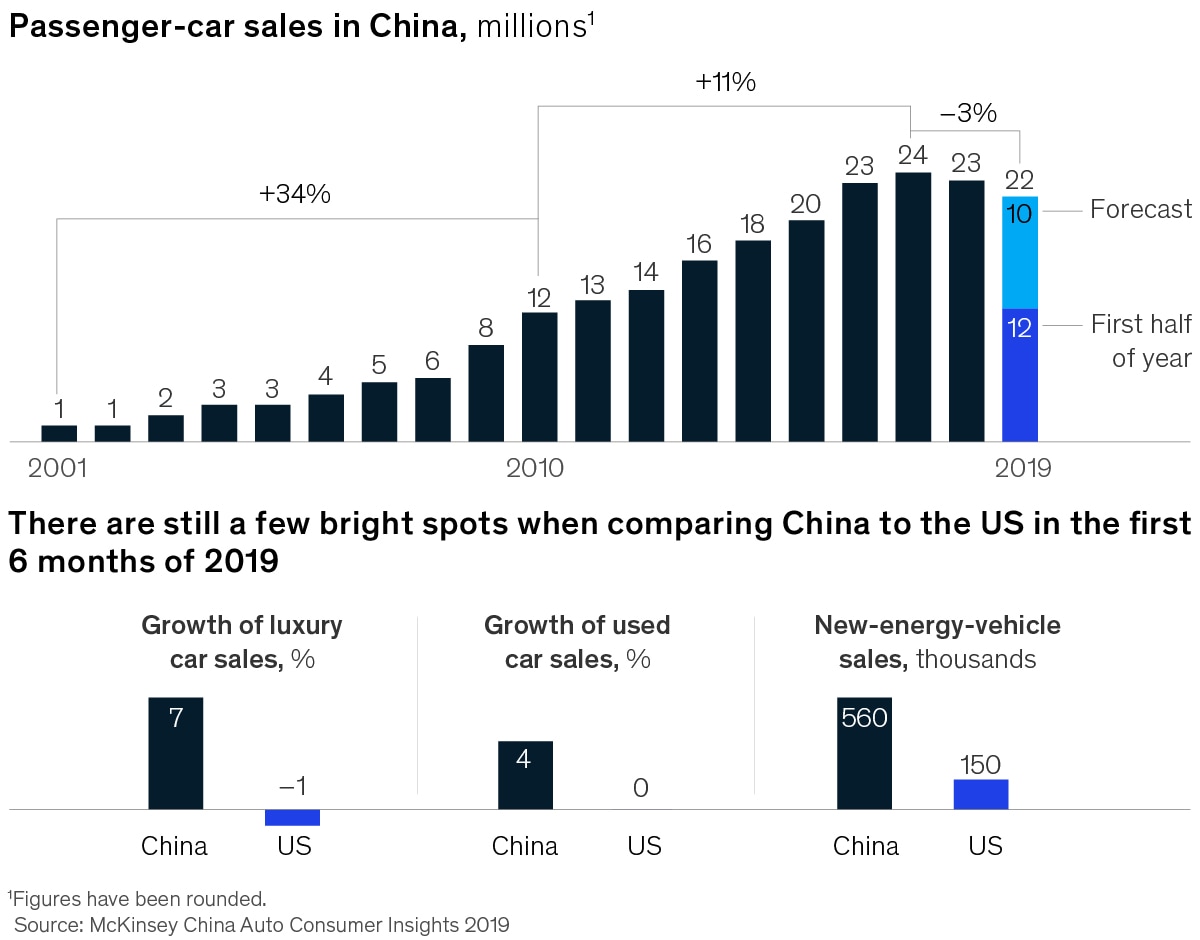
| China auto sales hit a bump in the road |
| As slowing economic growth becomes the new norm in China, the Chinese passenger-vehicle market has bid farewell to years of high-speed growth and entered a new phase of development. In the short term, this era is characterized by falling overall sales. But the decline is more a pause than the end of the road, since the potential for growth remains strong. |
|
|
|
|
|
|
|
|
| INTERVIEW |
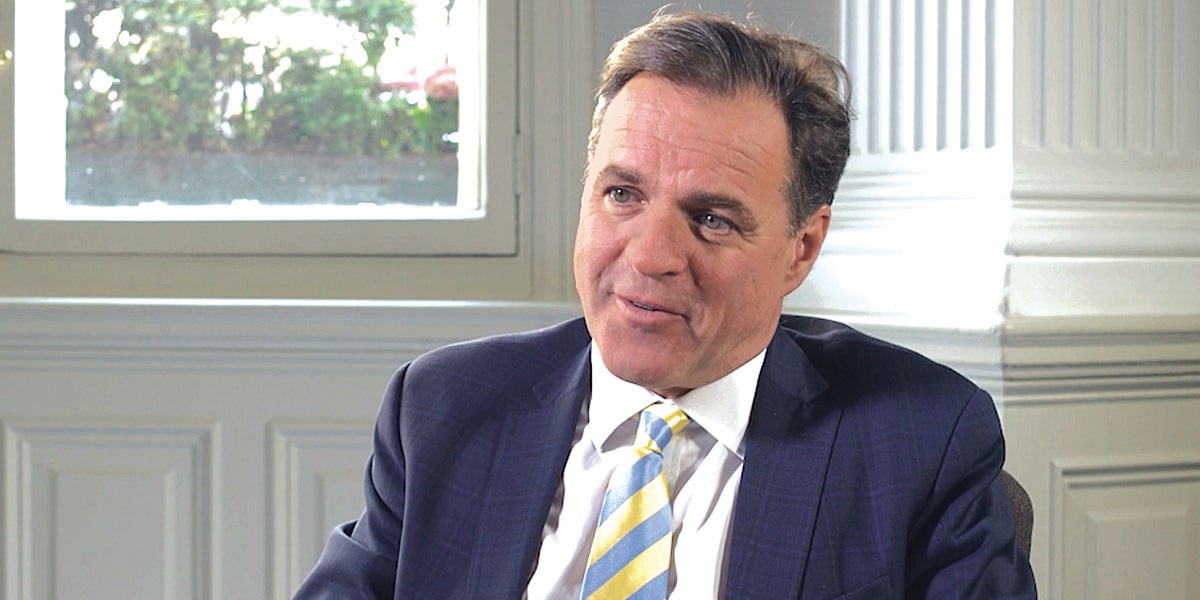
| Niall Ferguson: Tweeting past the graveyard |
| If you think today’s tumultuous business environment is unique, you’re mistaken. The roots of discontent with global capitalism run deep, according to historian Niall Ferguson. If you feel relief when a rival is the target of a tweet storm, don’t. That could, and probably will, be your company—and soon. It’s a fact of business now, he told McKinsey recently. Ferguson also notes that John D. Rockefeller became the villain of the original antitrust movement in a way that Andrew Carnegie avoided. The reasons behind that are lessons for today’s companies—tech companies, in particular. By looking back to earlier moments of discontent with the system, business leaders can get a clearer view of what’s coming. |
|
|
|
|
|
|
| THREE QUESTIONS FOR
|
| Carolyn Dewar |
| Carolyn Dewar, a senior partner in McKinsey’s San Francisco office, leads the culture, change, and executive-transition work in the firm’s global Organization Practice. An expert on culture dynamics, she helps organizations design and implement changes that improve performance, build capabilities, and shift behavior. She created McKinsey’s CEO Portal, a resource that offers insight on effectiveness in the CEO role.
|
|
|
|
|
| You’ve had the privilege of working with CEOs across a variety of industries and business challenges. What’s most surprising to you in these conversations? |
| They’re all struggling with similar things. Yes, their strategic issues are unique, and industry dynamics can be quite different. But most smart business leaders can think through strategic questions effectively. When it comes down to people matters, though, the challenges that CEOs describe are pretty universal: How do I make tough decisions about my top team? How do I navigate engaging with my board, which is such a unique dynamic? How do I make sure we have the right culture?
|
| Hands down, the number-one regret I hear is that they wish they’d moved faster on people. No one ever regrets having moved too quickly. CEOs might be able to carry the business for a few months with their own energy, but they need a high-performing top team to scale that across the organization. We think about this in terms of team members’ “skill and will.” CEOs need highly talented people who are willing and able to take the company in the direction the CEO has set—who won’t just do what’s been done in the past. If they don’t, then a CEO needs to make tough changes quickly. This is always the thing that CEOs wish that they had done sooner.
|
| Apple CEO Tim Cook famously called the CEO role ‘sort of a lonely job.’ How do you see CEOs handling that effectively? |
| Everyone says it’s the loneliest job—without prompting, that’s the word CEOs use when they reflect on their role. It’s not only a peerless role, but it’s also the only role where you’re not part of a team. Even when you’re leading one of your company’s biggest business units or functions, you are part of an executive committee. As a CEO, you’re elevated to a team of one.
|
| That does feel different. When you become the CEO, it’s hard to discern who is framing their messages to further their own agenda. Many CEOs become skeptical of everything anyone tells them. On the flip side, they also become wary of revealing their own vulnerability about things they don’t know as much about. It’s important to have a kitchen cabinet—two or three trusted people they can problem solve with or ask advice of.
|
| What’s the biggest adjustment CEOs must make when they take on the role? |
| Many transitioning CEOs have trouble adjusting to not running a business anymore. They’re used to running a P&L [profit and loss], to driving a core business for the company. They know that’s not their role anymore, but they also don’t want to get so far removed from it that they become irrelevant. If they’re not running a business, what exactly is the value they’re adding? |
| Great CEOs walk the line in three ways. First, they set a bold vision. Getting the aspiration and the corresponding strategy right is probably the most critical challenge that only the CEO can do. Then, they step back and ask tough questions about the execution of that strategy—questions that business leaders might not have considered. Finally, they hold those leaders accountable. |
| We often talk with transitioning CEOs about taking stock and taking action. As a CEO, you should think through the elements of your role and be honest with yourself about whether your approach to any of those elements is truly broken. If it is, then you have to address that first—with broken strategy components at the very top of the priority list. If there’s no bold vision for big moves, or if the organization isn’t aligned to those, then most of the rest is for naught. |
|
|
|
| BACKTALK |
| Have feedback or other ideas? We’d love to hear from you. |
|
|
|
|
|
Copyright © 2019 | McKinsey & Company, 3 World Trade Center, 175 Greenwich Street, New York, NY 10007
|
|
|
|
| |